Exploring Geometry and Grid through Medieval Square Kufic Script
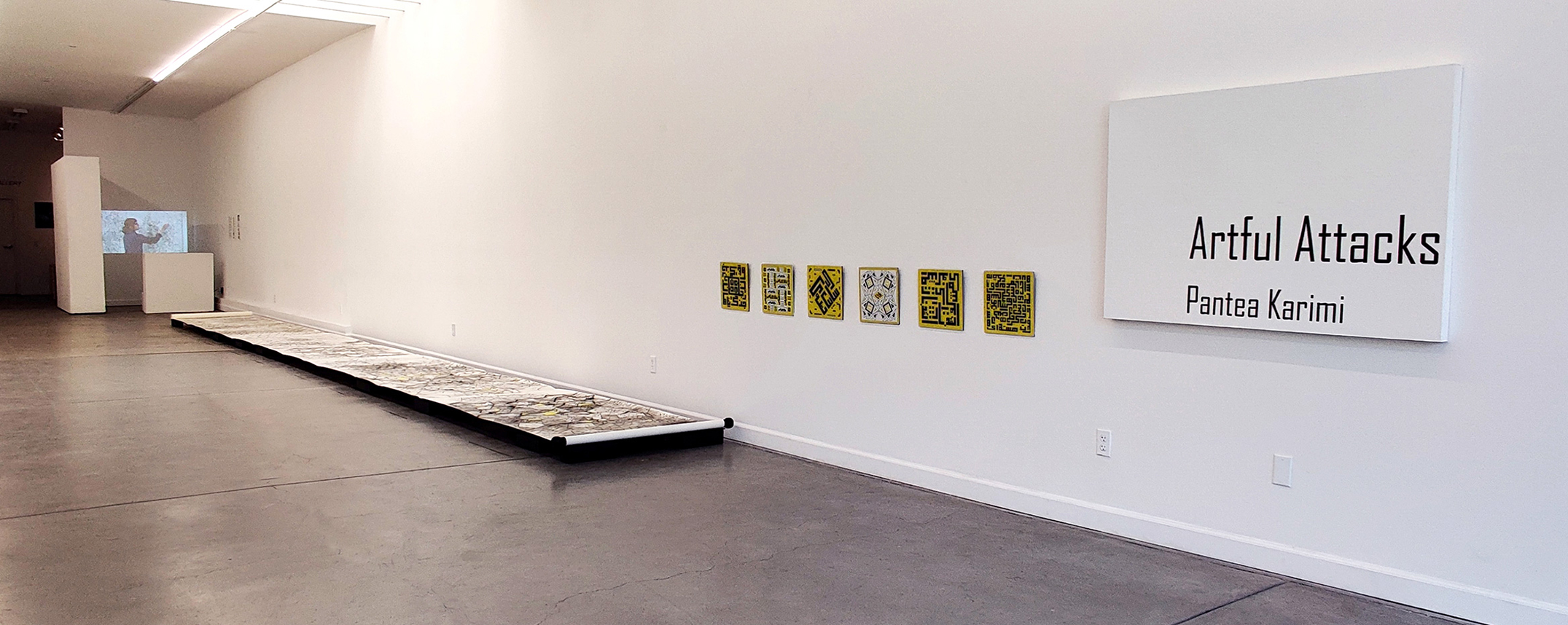
Artful Attacks, 2021
Solo Exhibition, Mercury 20 Gallery, Oakland, CA
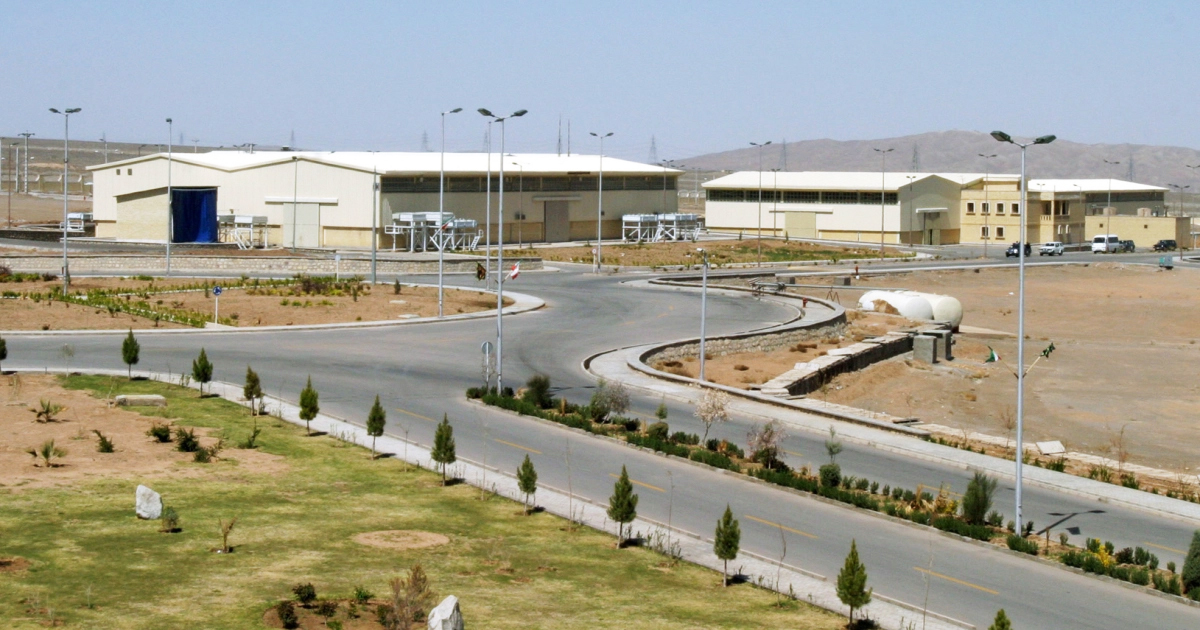
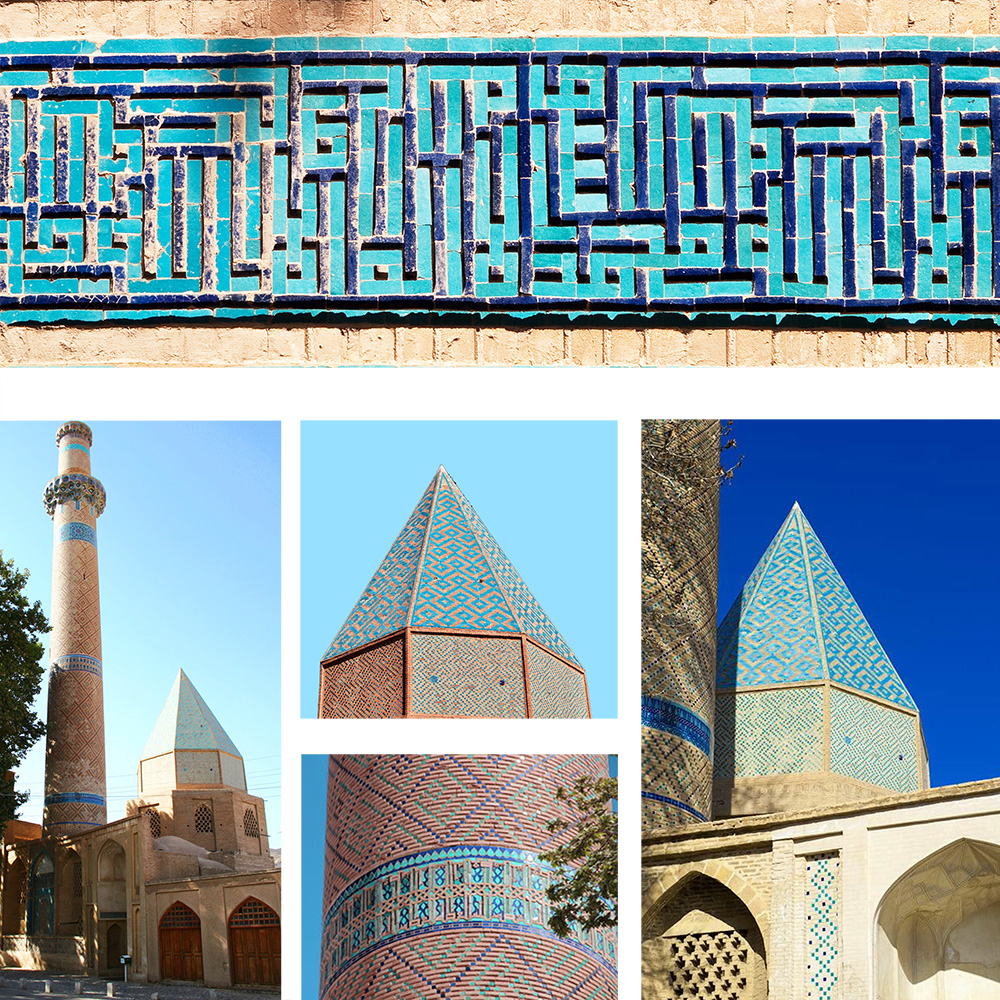
Iran, a Non-Proliferation Treaty member, has been subject to severe sanctions by Western powers for decades. Nuclear development has been used as justification to pressure the government. Artful Attacks refers to the mysterious explosions that targeted Iran’s nuclear site near the historic city of Natanz, home to a 13th-century cultural heritage complex, in 2020 and 2021.
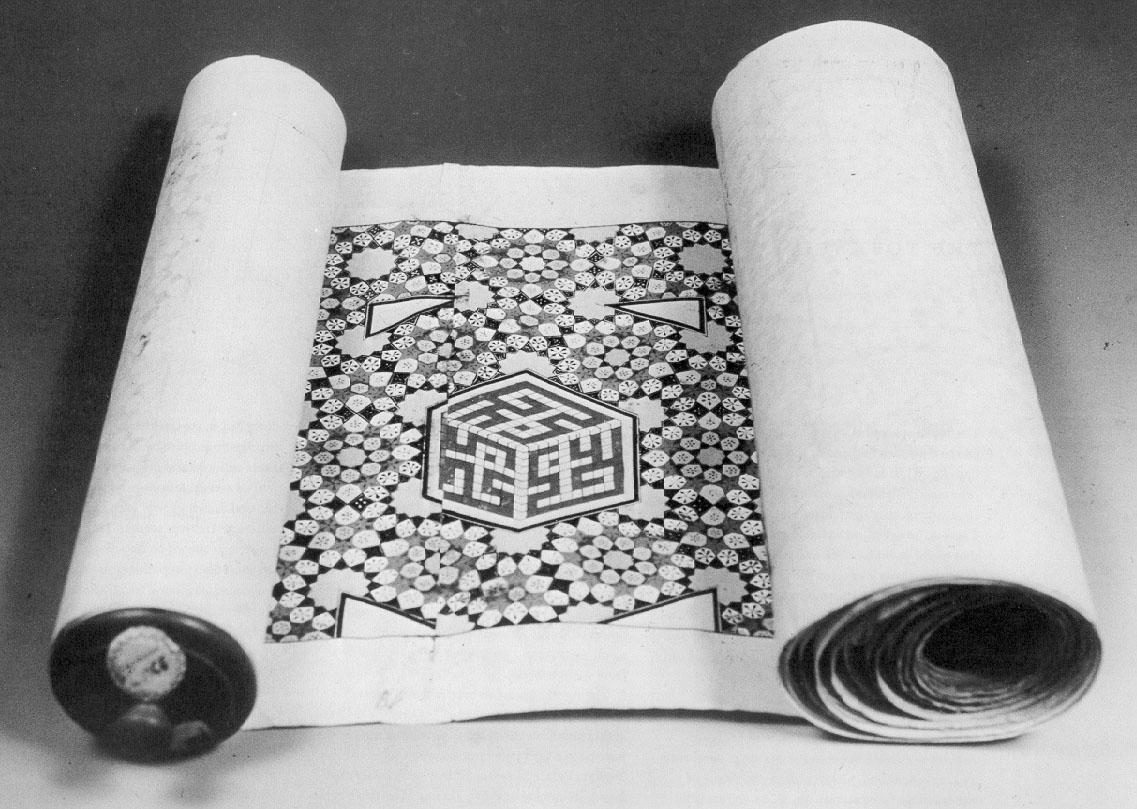
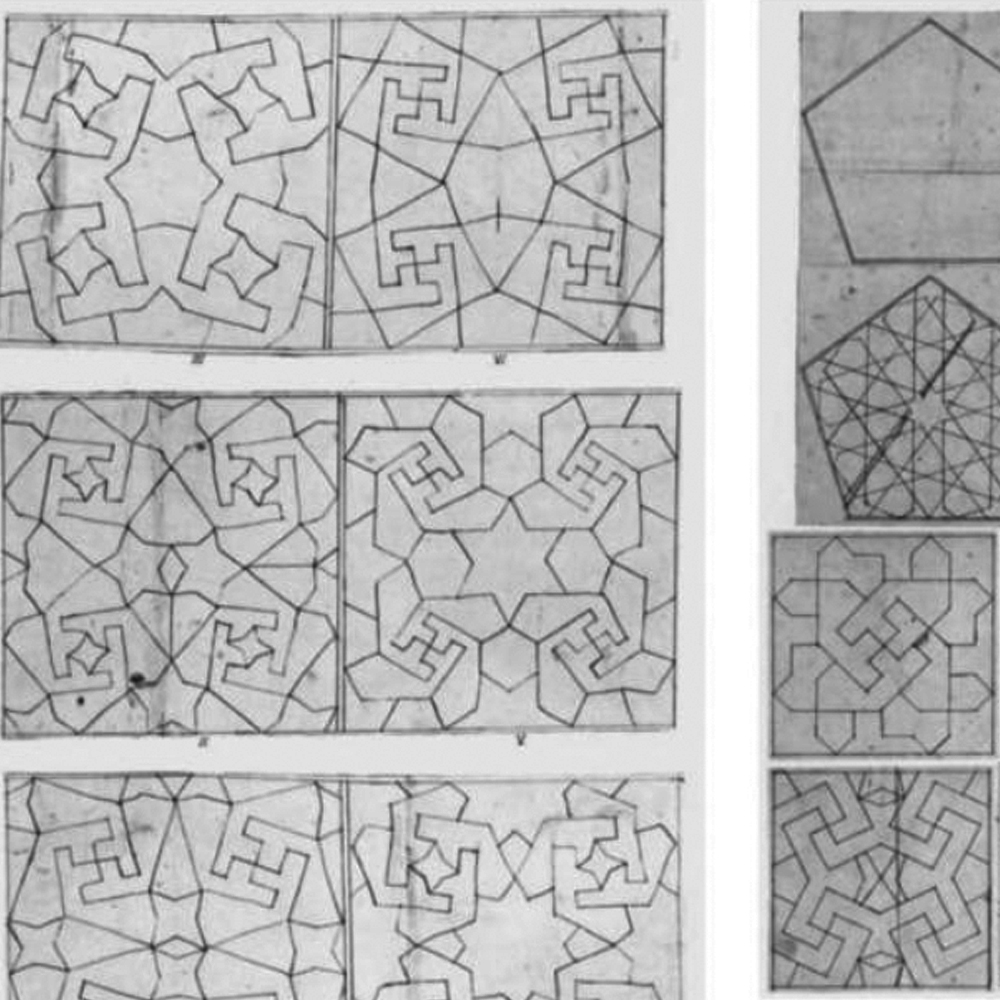
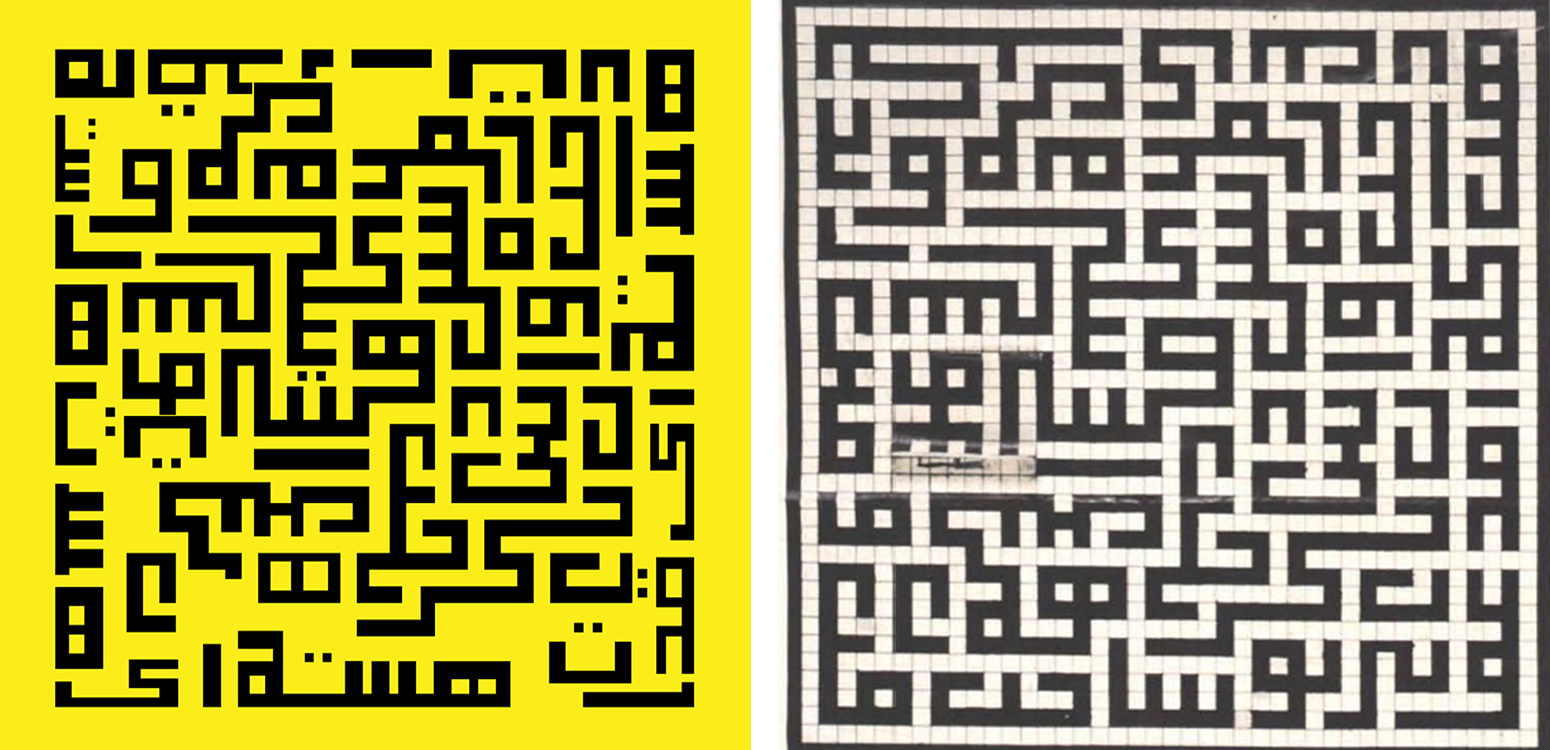
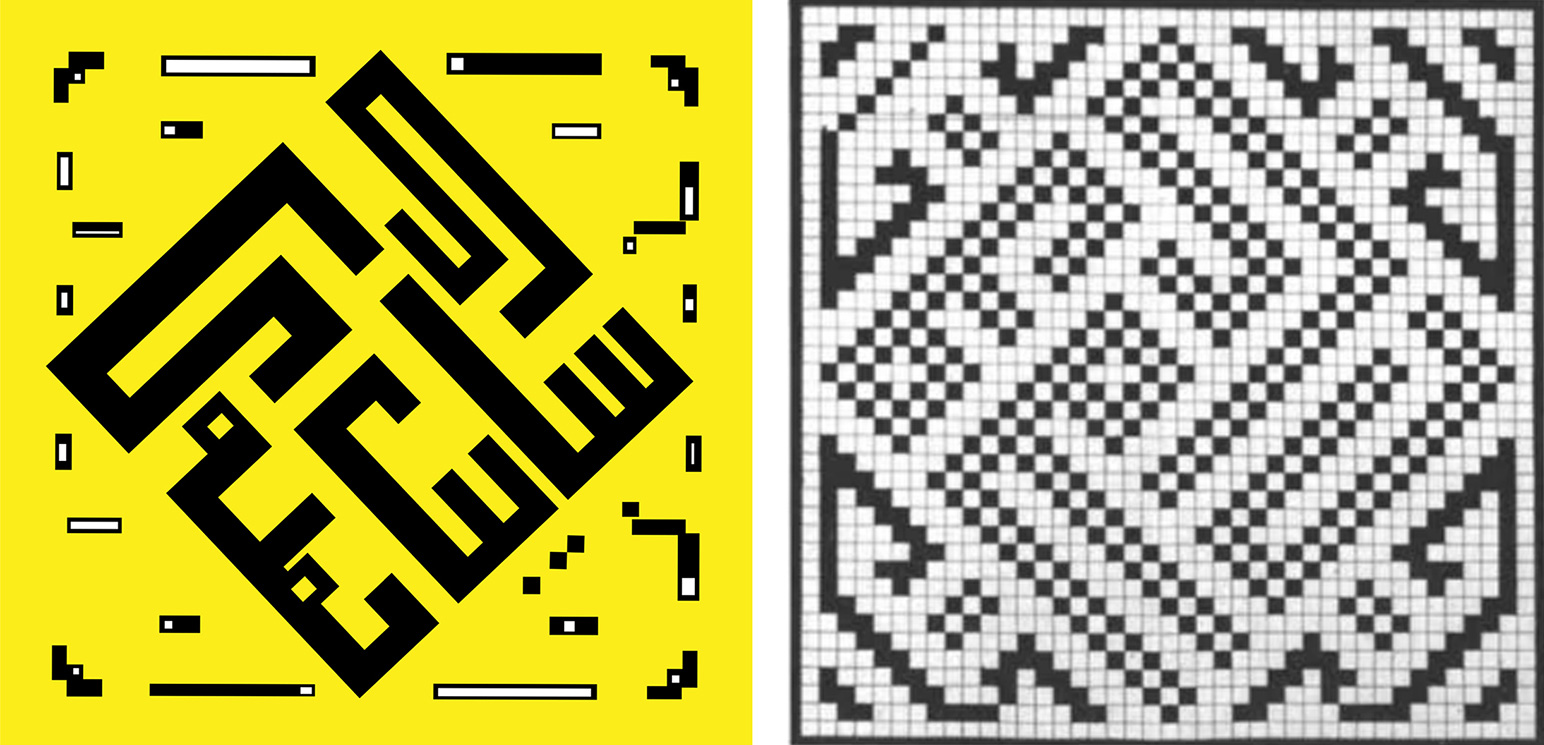
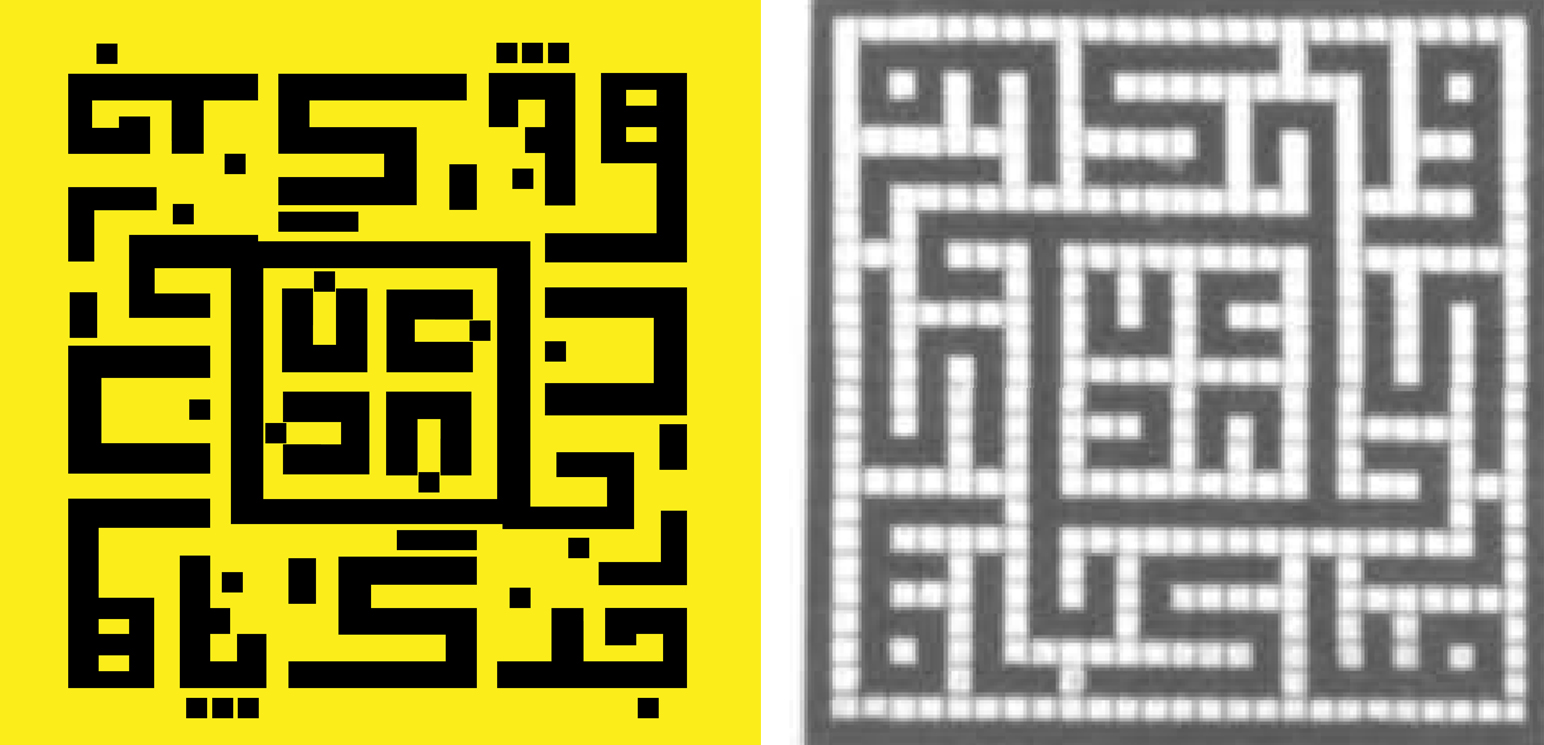
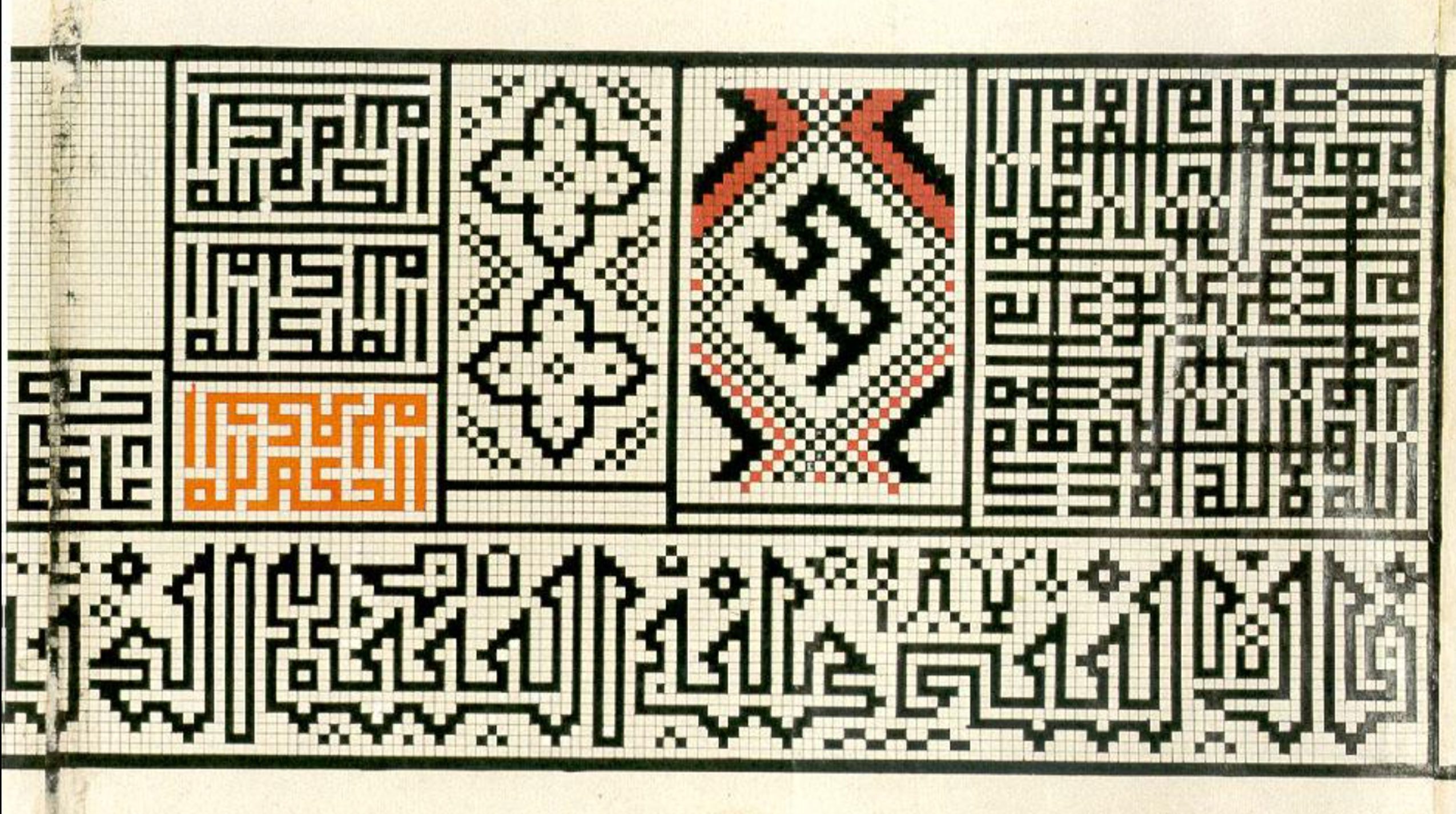
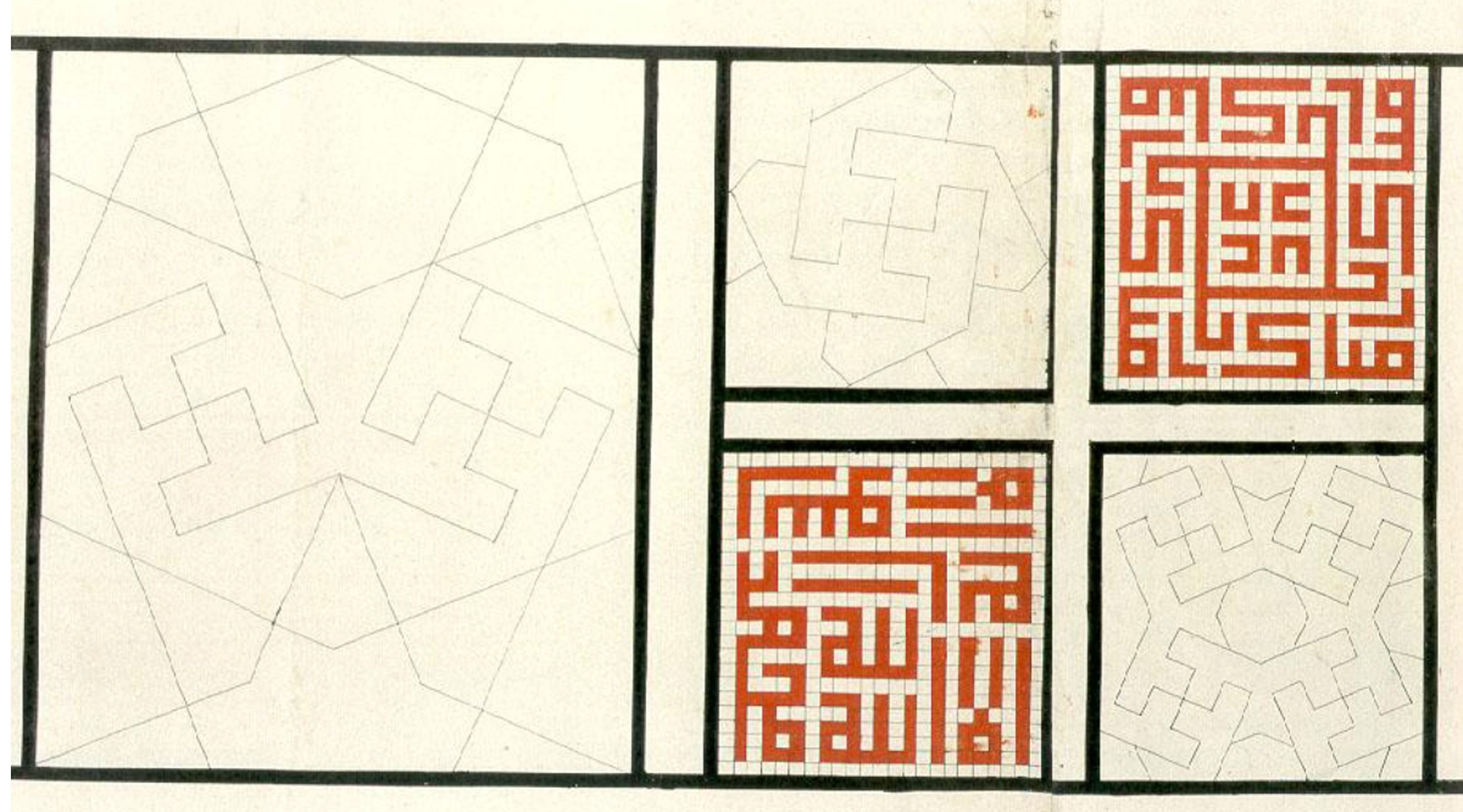
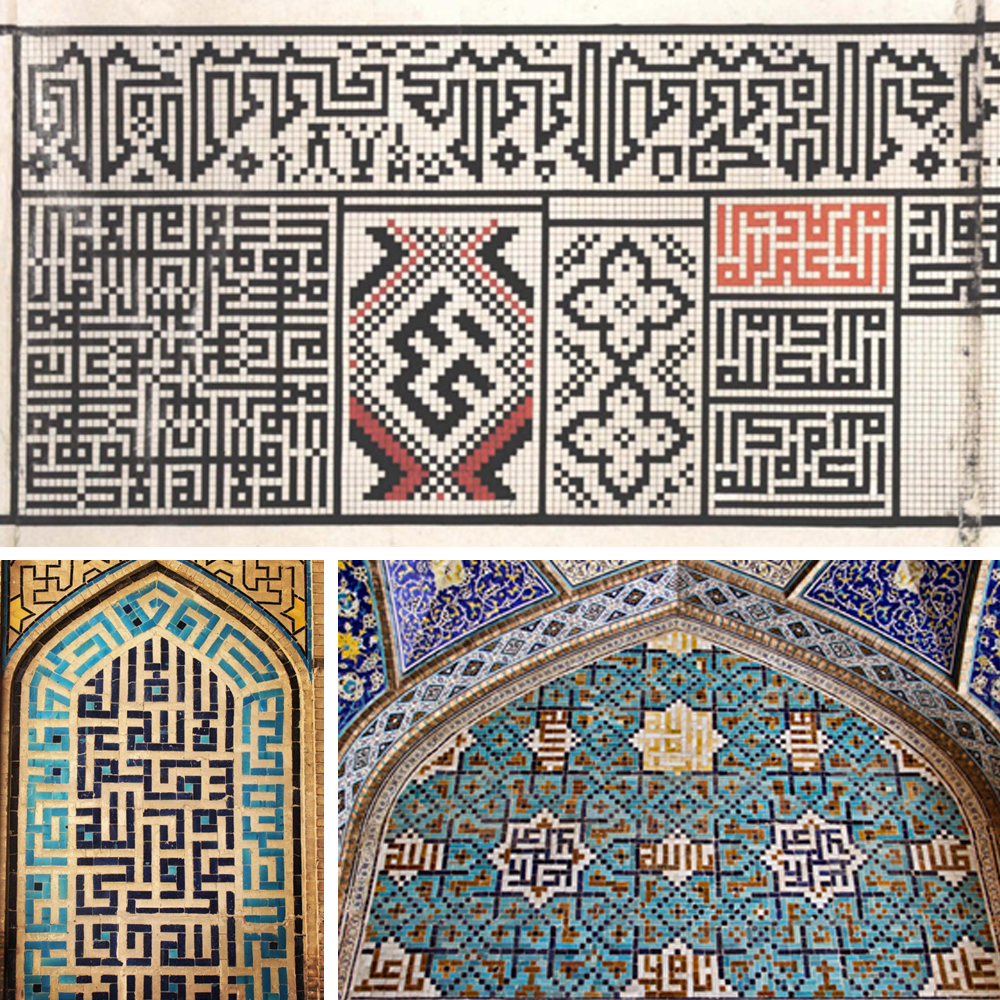
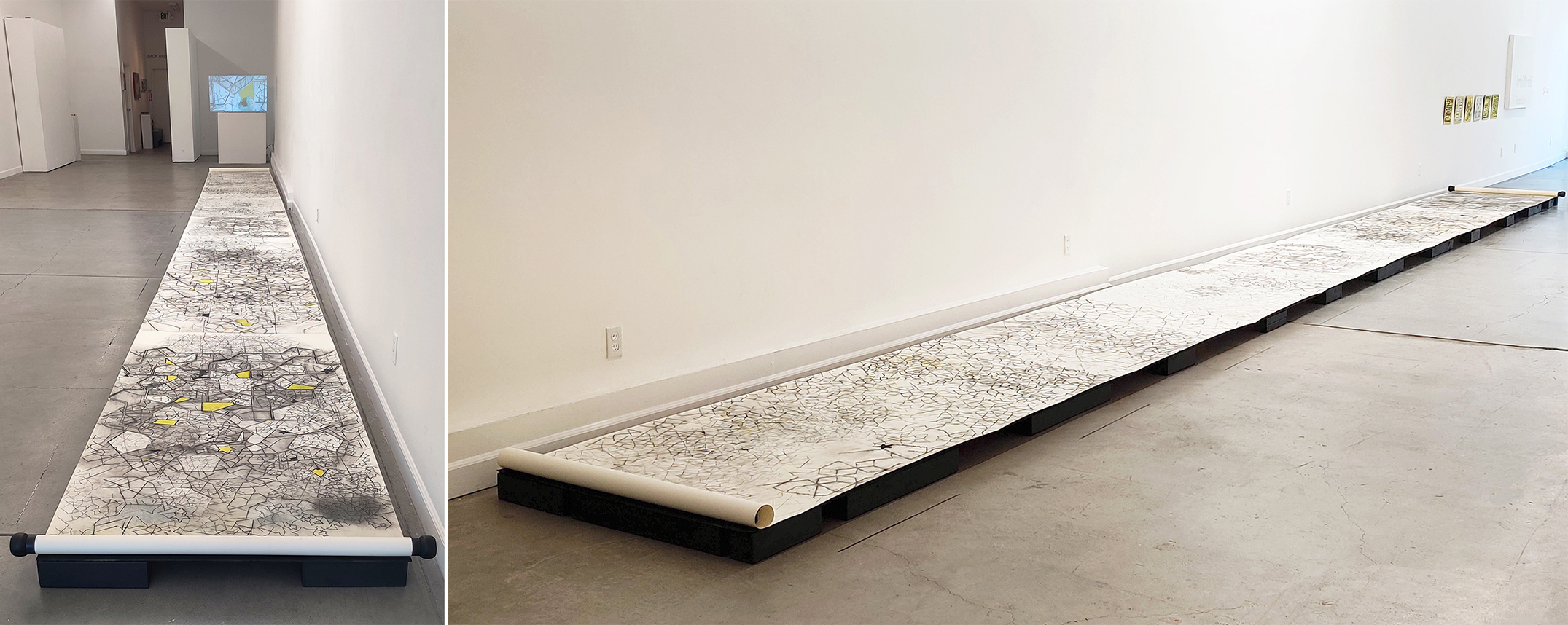
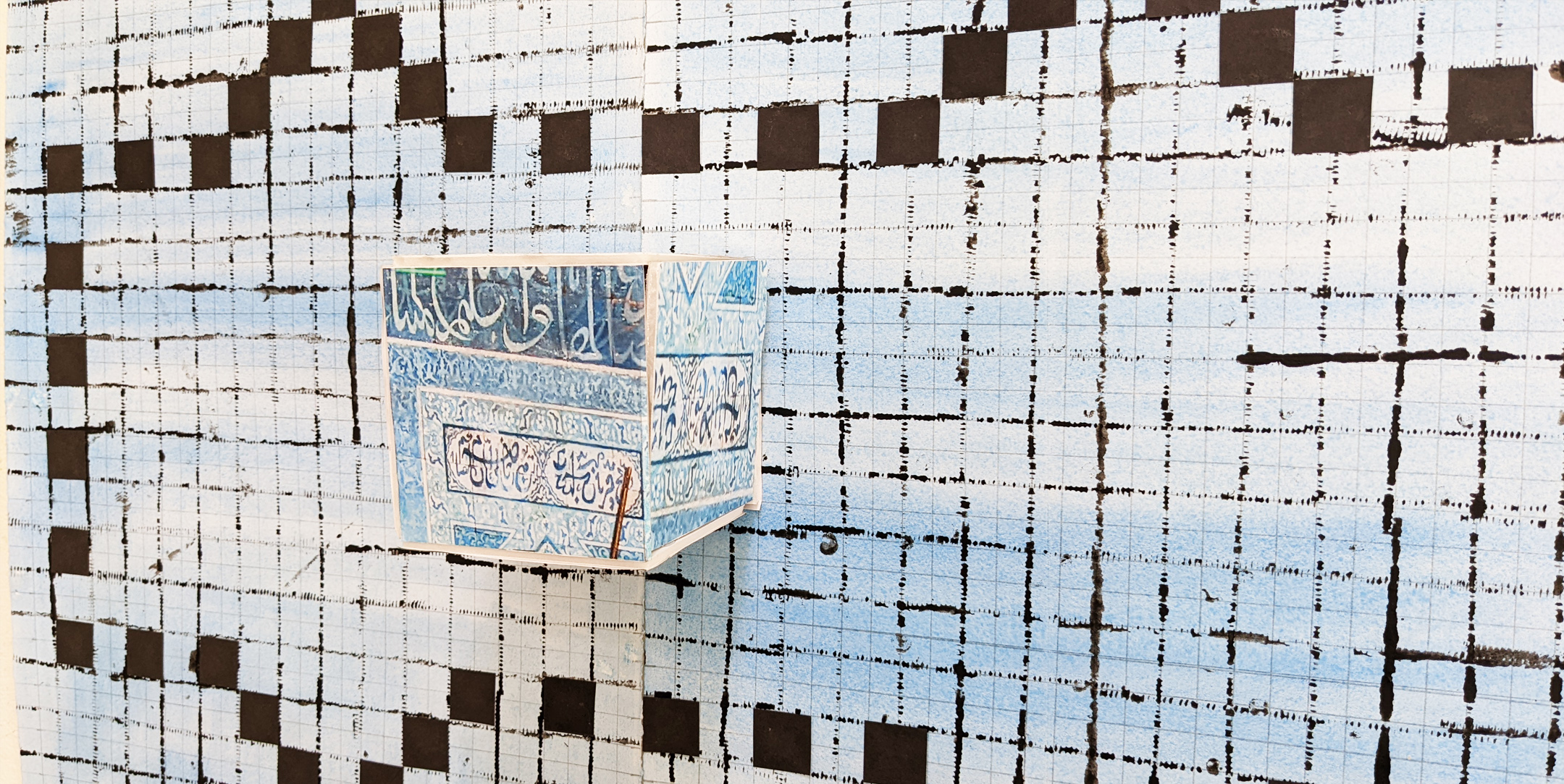
In this project, I appropriate patterns from the Topkapi scroll (13 x 96 inches), a late medieval Iranian document housed at Topkapi Palace in Türkiye. This paper scroll compiles geometric architectural drawings and Square Kufic tiling patterns. Square Kufic script is a 90-degree-angled geometric font that transforms text into patterns strikingly similar to QR codes. Natanz’s shrine complex contains Square Kufic ceramic tiles similar to those found in the Topkapi scroll.
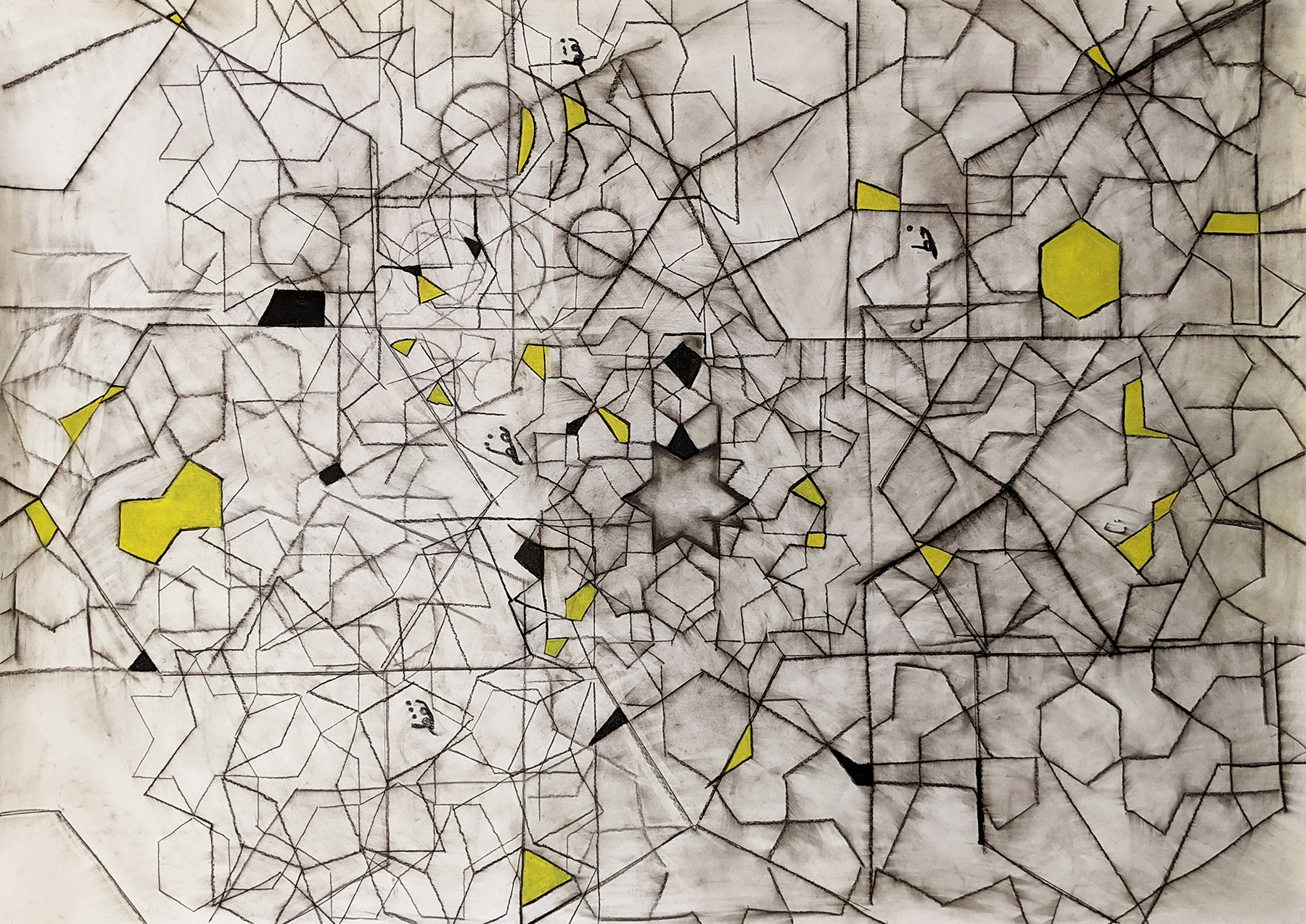
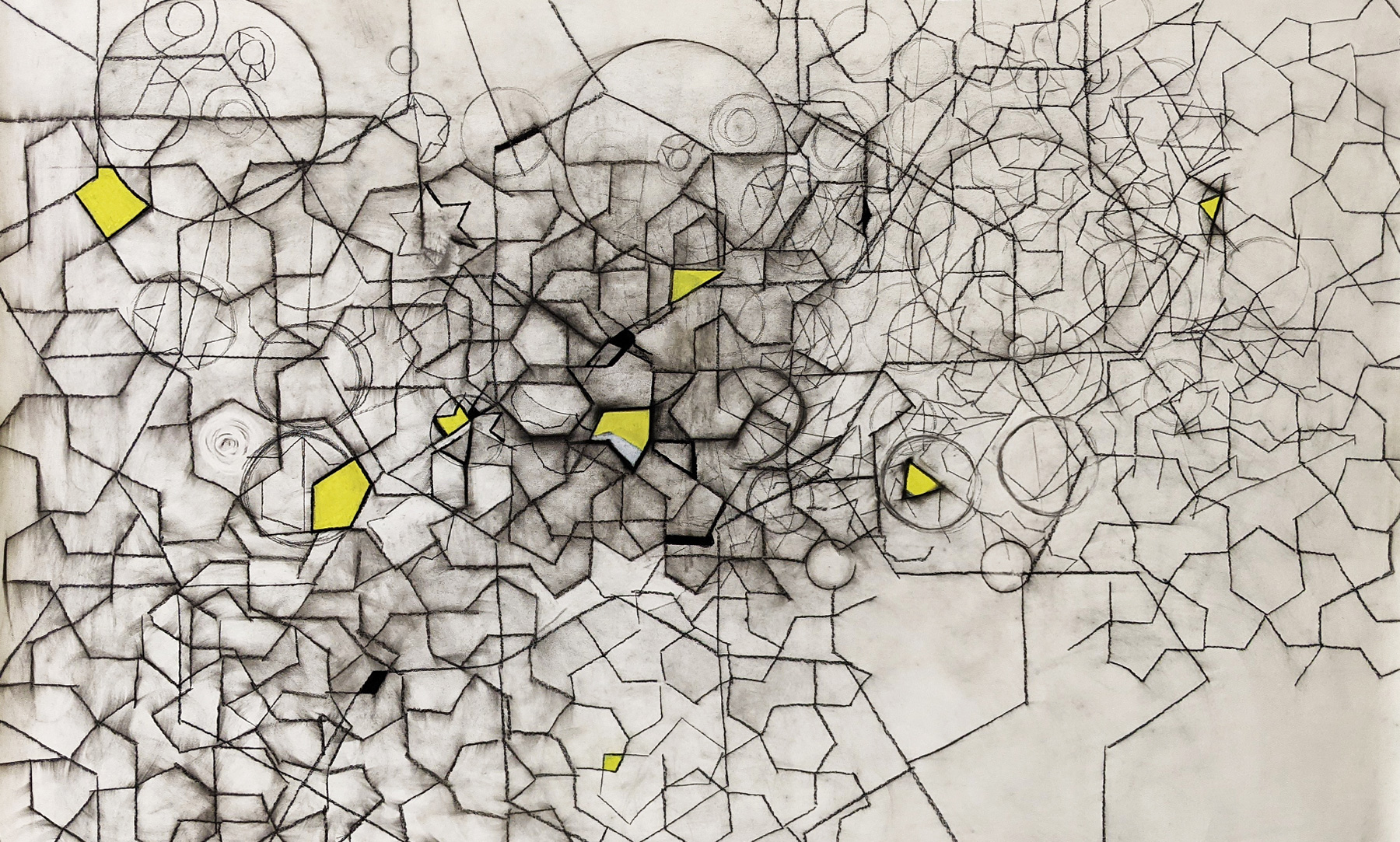
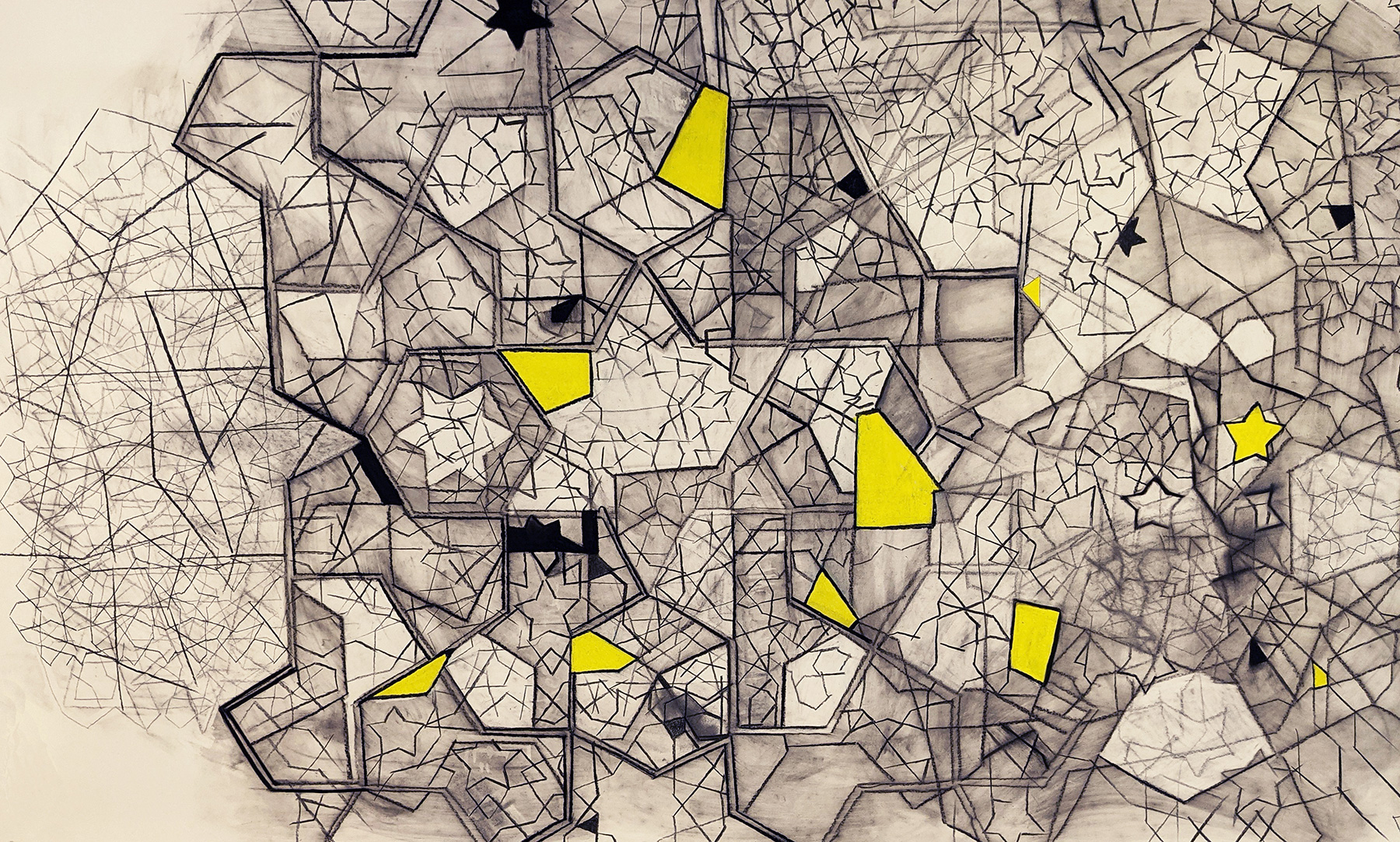
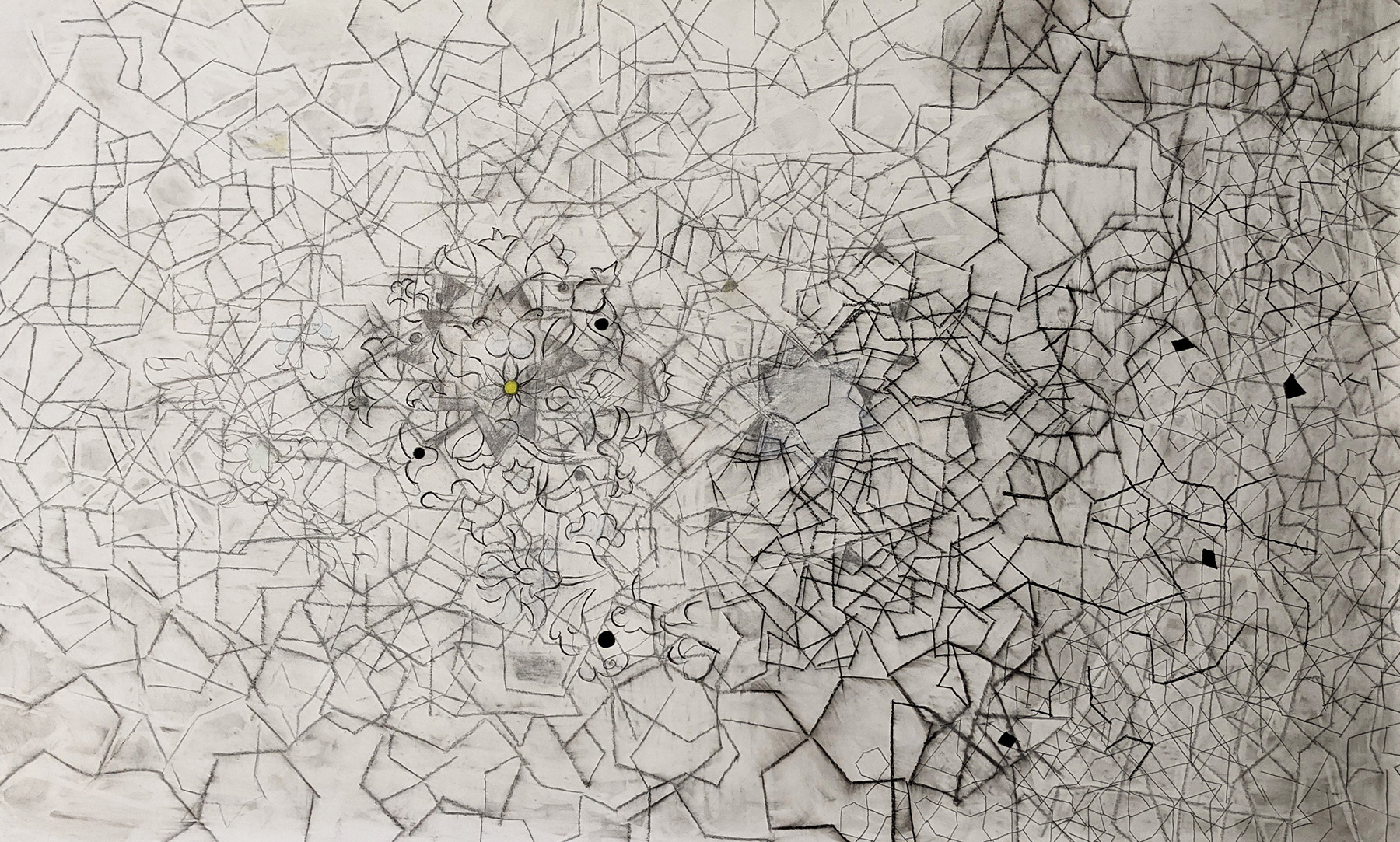
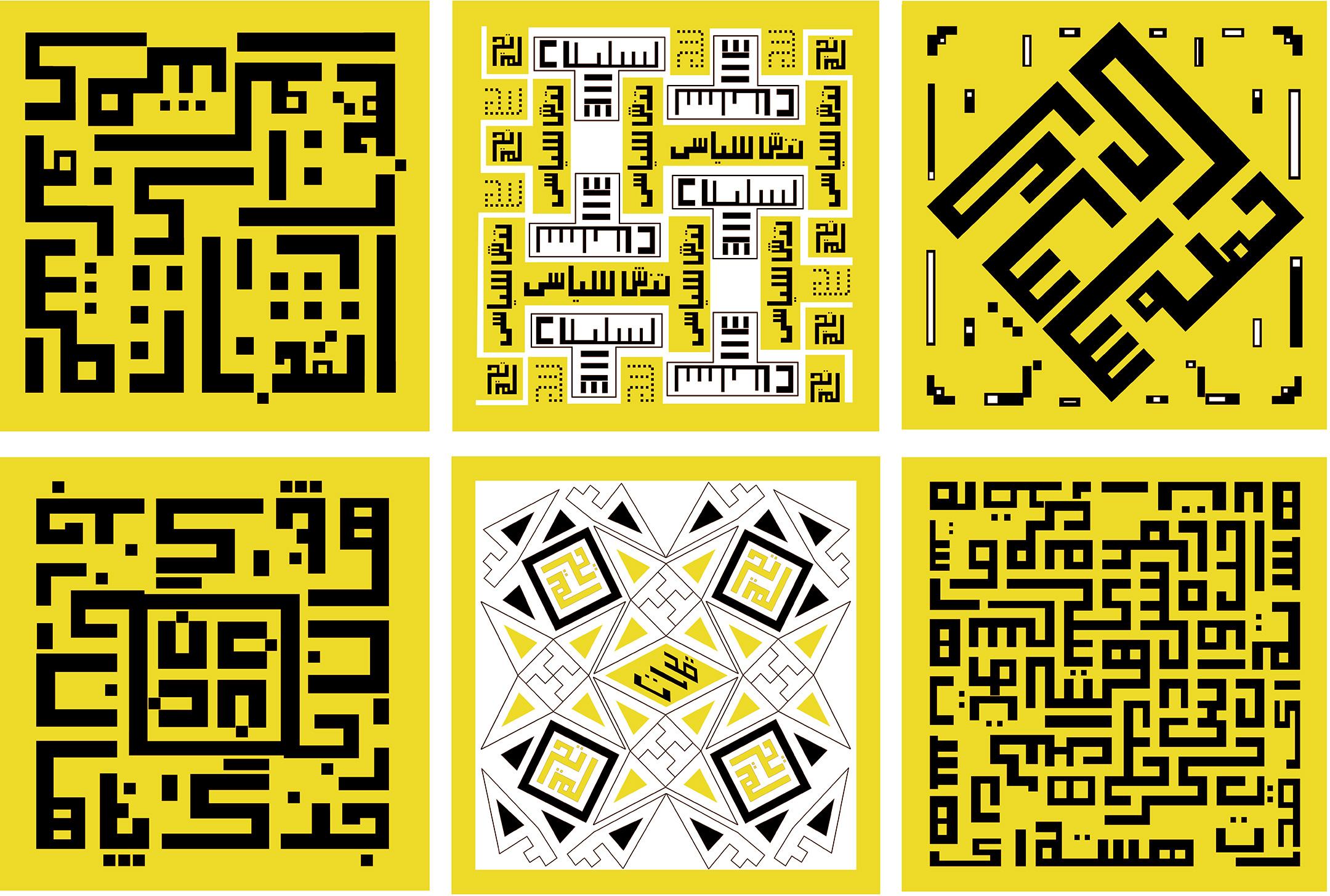
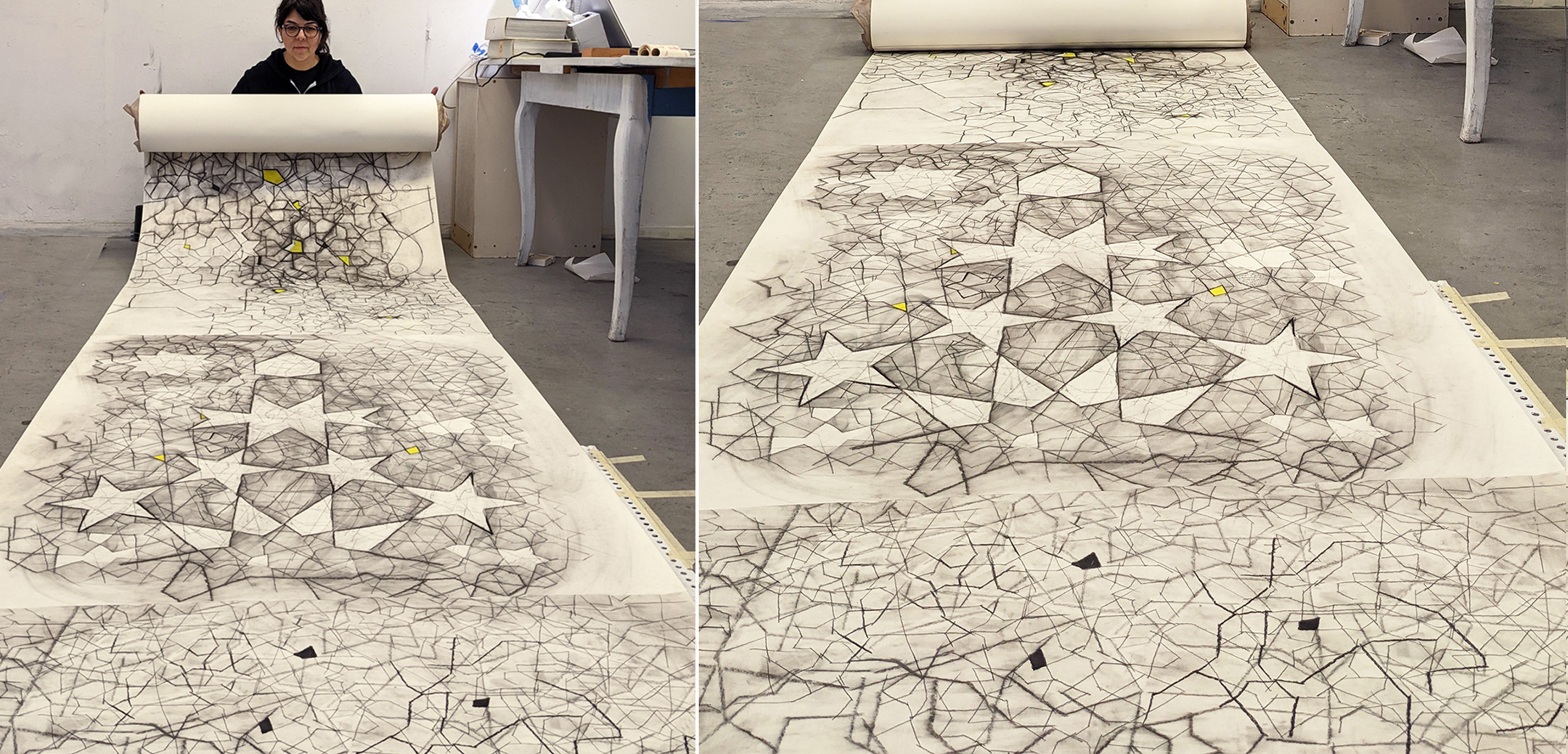
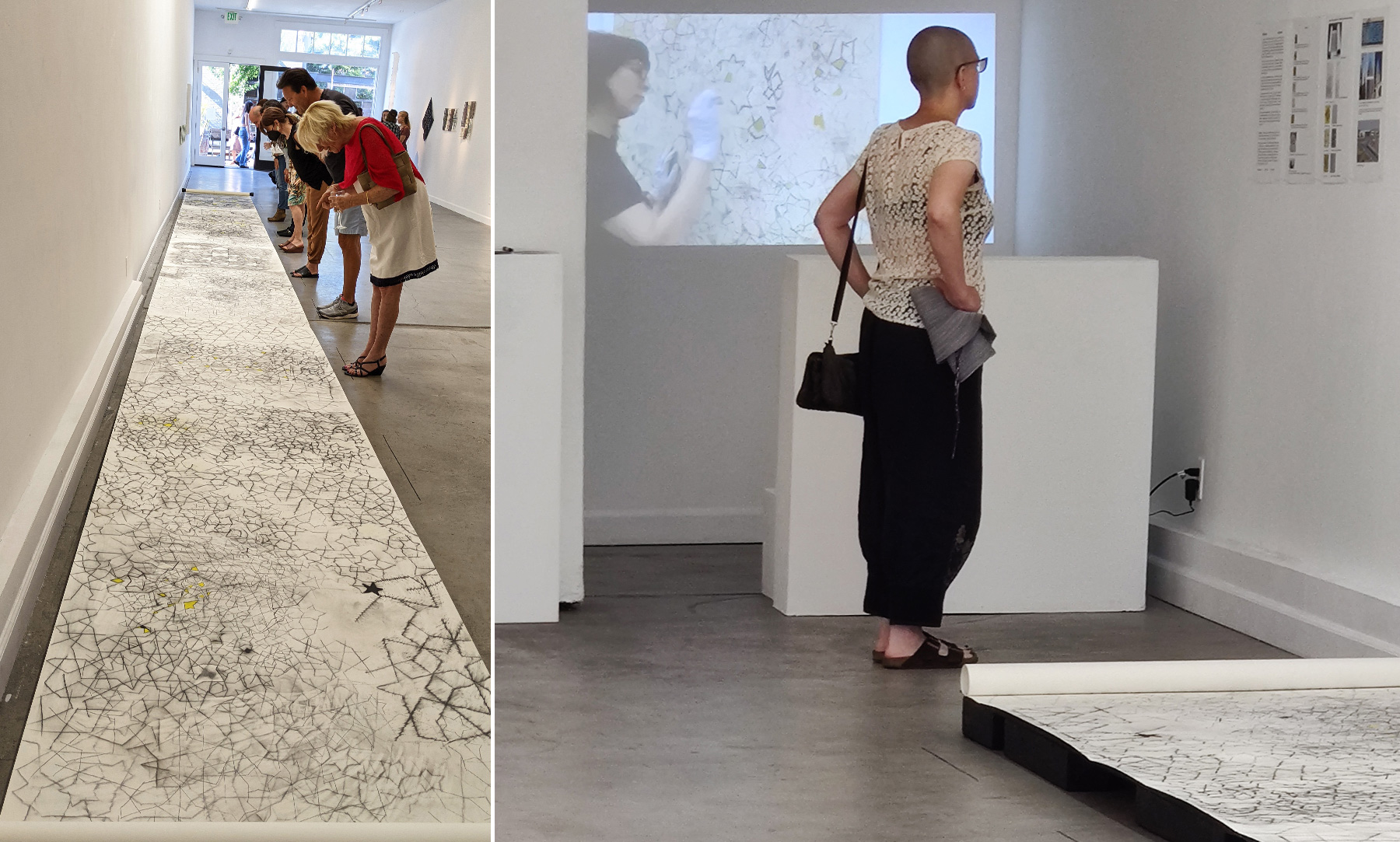
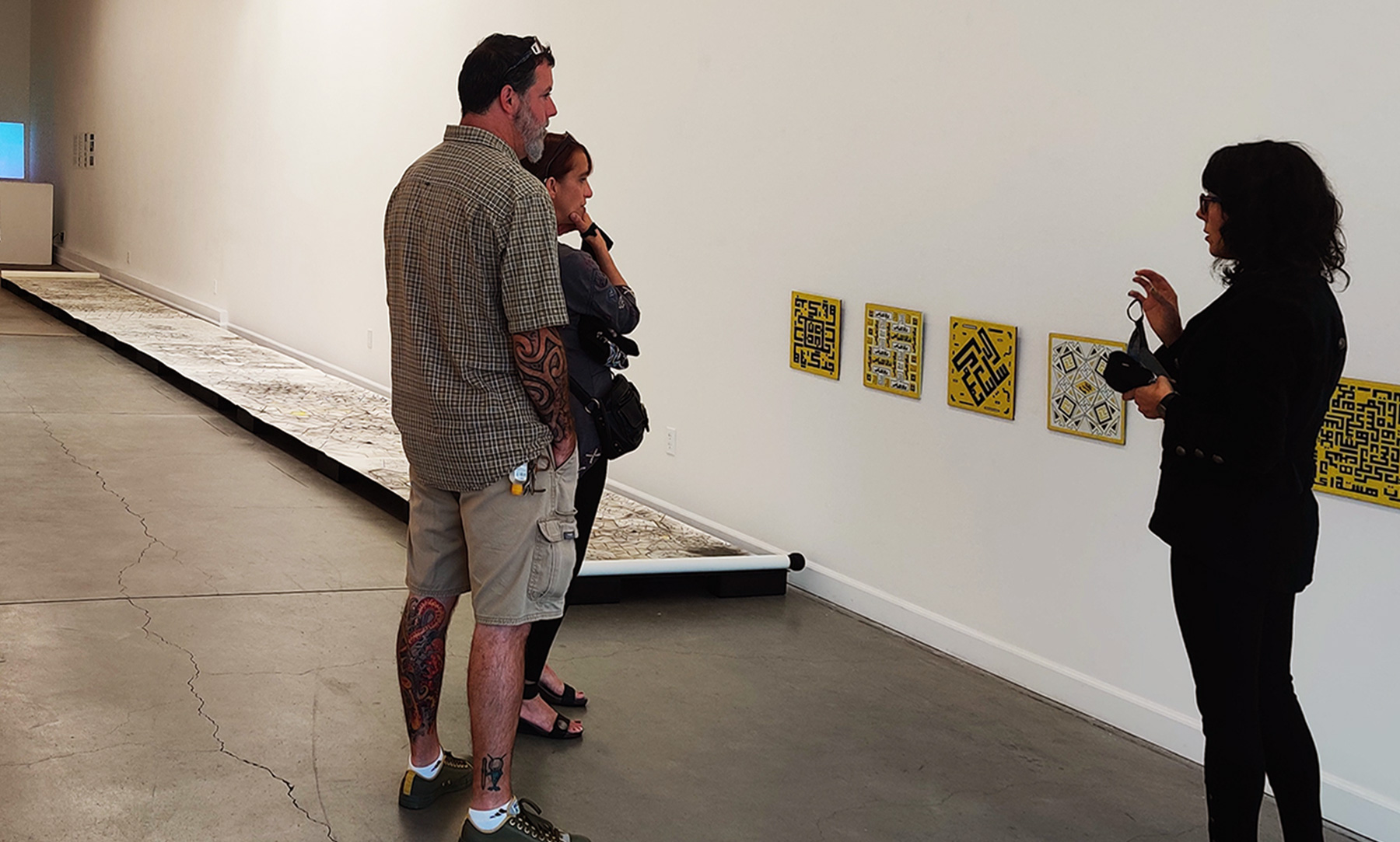
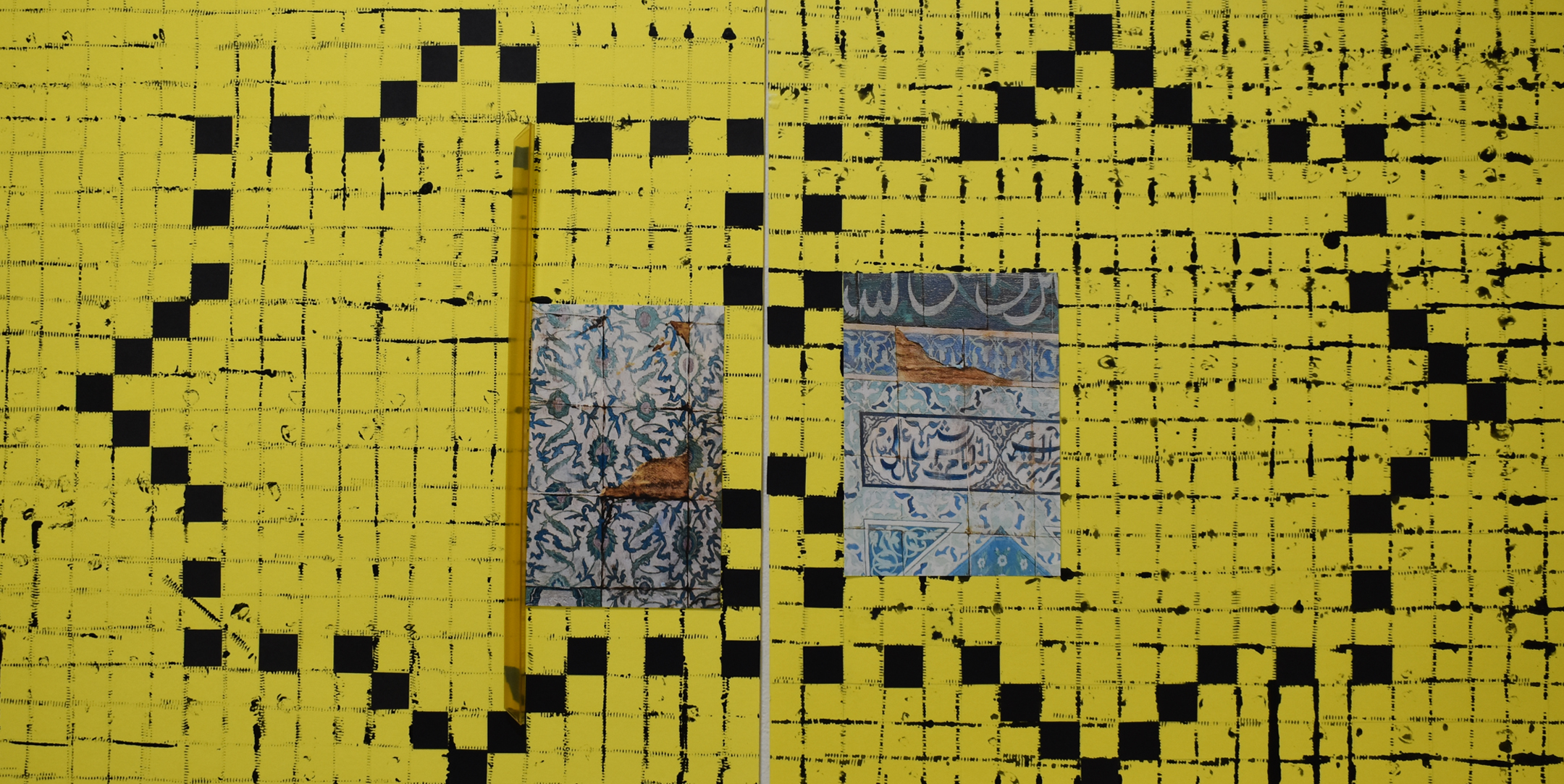
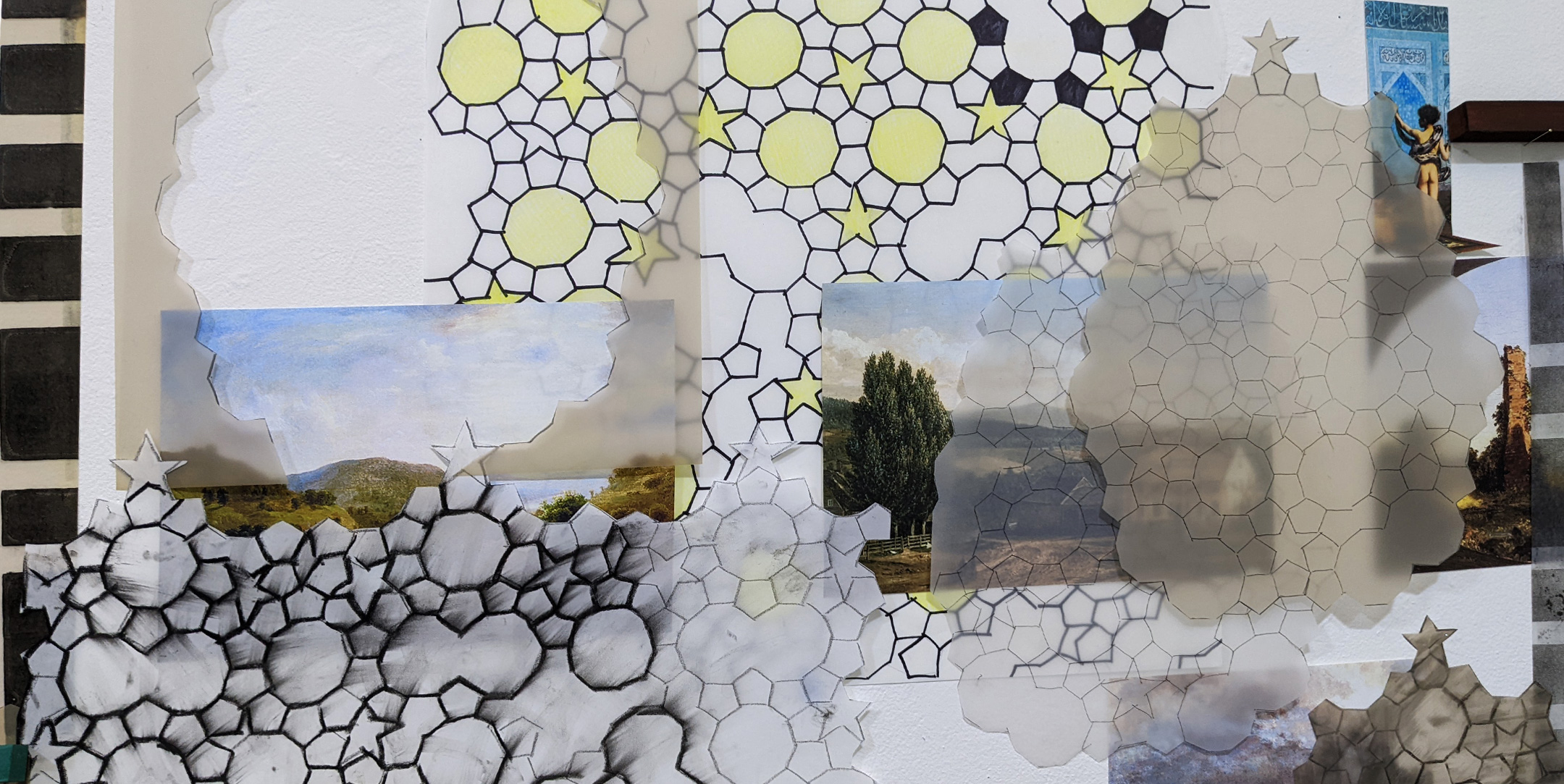
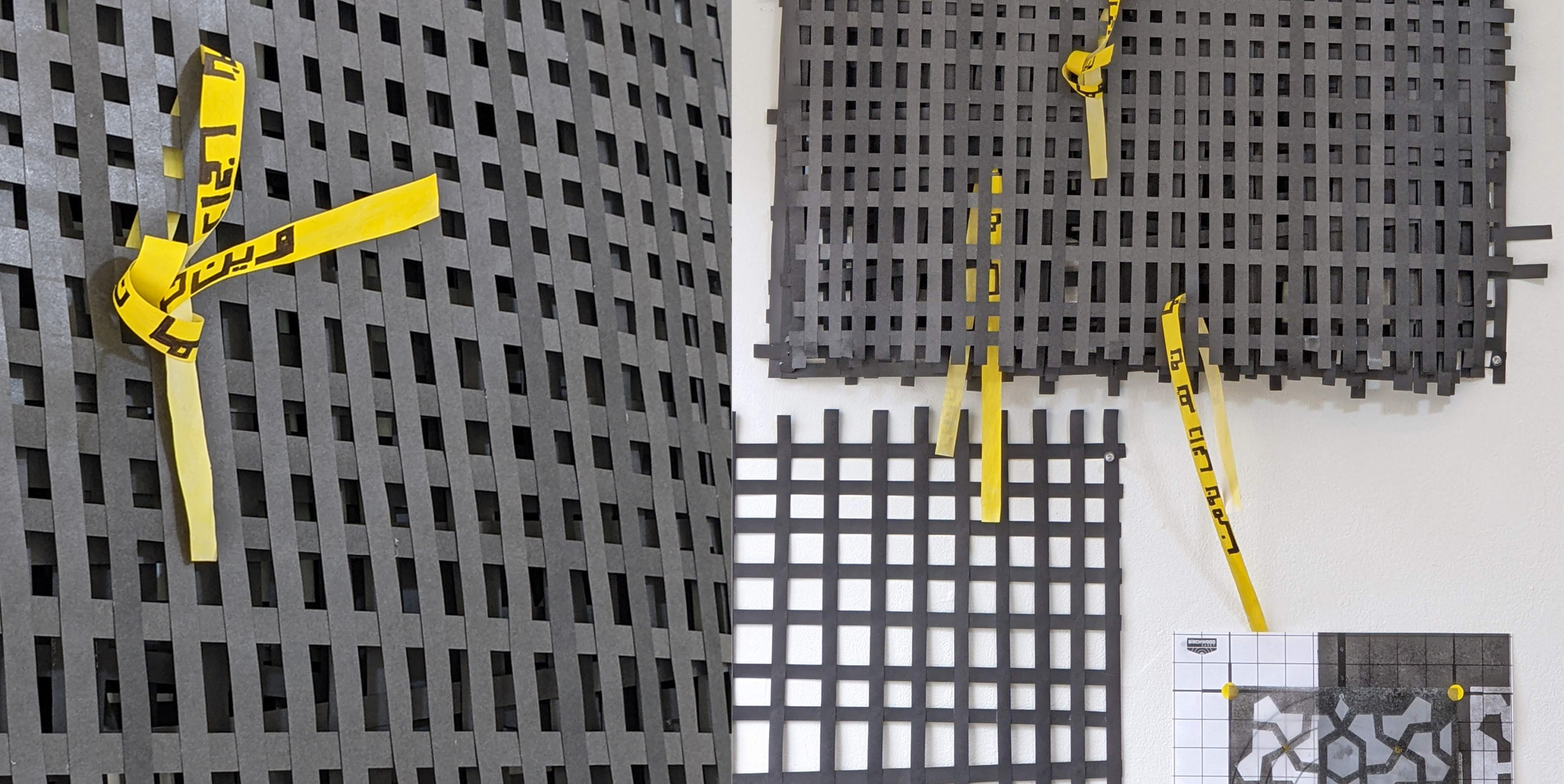
In the Artful Attacks project, on six ceramic tiles, I use words that surfaced in the Iranian press: cyberattack, sanctions, nuclear power, covert war, mysterious explosion, and political tension. I carefully design these words to substitute the original religious word compositions that I found in the Topkapi Scroll. I also change the colors from blue and terracotta to black and yellow, borrowed from the standard nuclear warning symbol. On my 42-foot scroll, I use charcoal to erase, blur, redraw, decolor, and recolor repeating motifs from the Topkapi Scroll, creating disrupted surfaces that serve as metaphors for political pressure and tension. In creating my scroll, erasure is a rejection of culture and history, and it is a form of an “attack” to eliminate them. Alter in Every Direction, a three-part performative video, captures my emotions toward the elimination of history and culture.
My large scroll, ceramic Kufic tiles, and performative videos reflect both my emotional unease and the threats facing the historic city of Natanz and its medieval architecture. For me, these works speak to the ways political power and conflict can put cultural identity, memory, and heritage at risk.
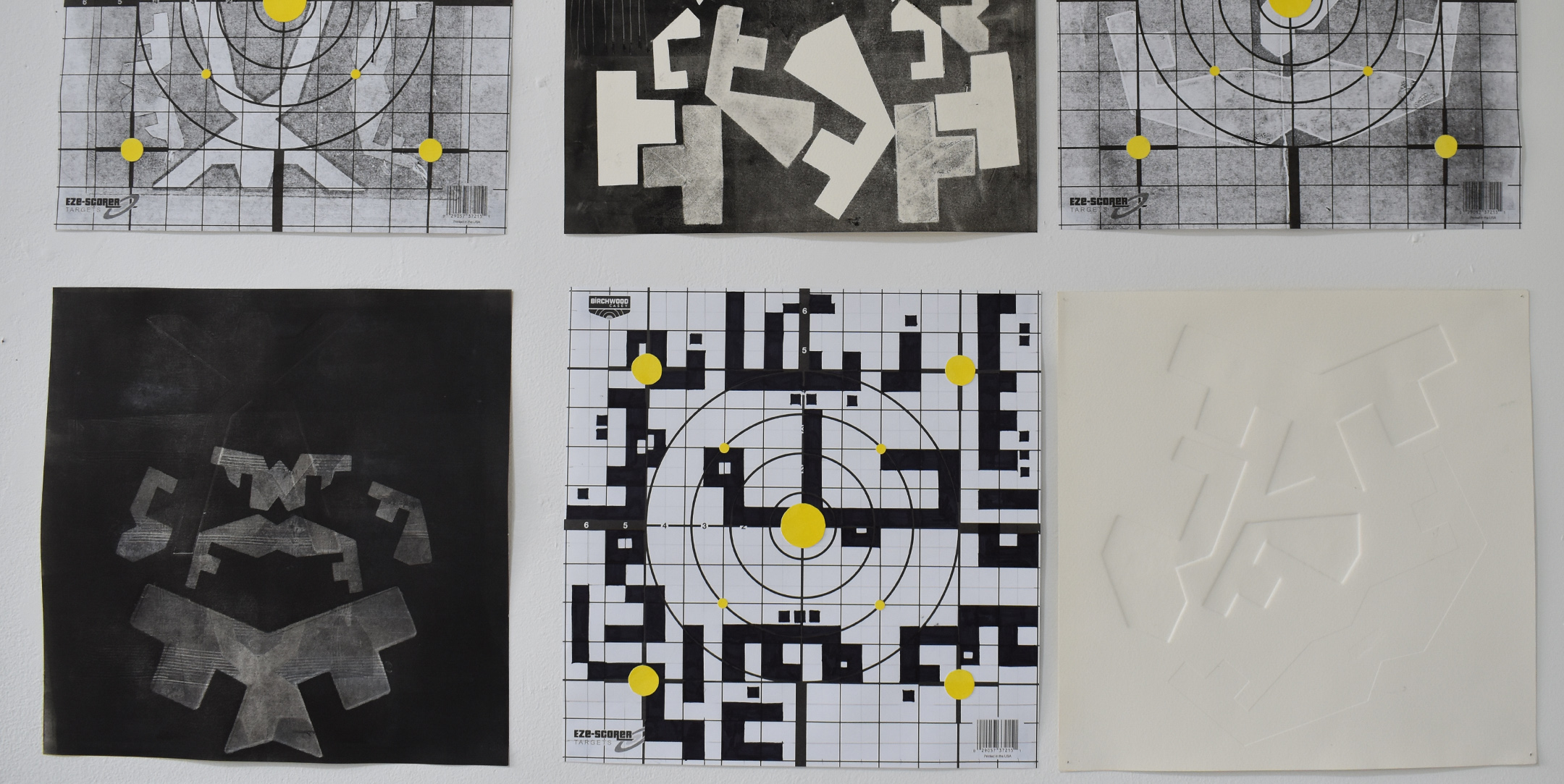
The words from left to right on From Faith to Fallout ceramic tiles read:
Enfejaar Mashkook in Persian (Suspicious Explosion)
Tanesh Siyaasee in Persian (Political Tension)
Hamleh Cyberee in Persian (Cyber Attack)
Jang-eh Penhaan in Persian (Covert War)
Tah-reem & Godrat in Persian (Sanctions & Power)
Godrat Hasteh-ee in Persian (Nuclear Power)


Performative Videos
Alter in Every Direction, Part I, II, III, 2021
Carolyn Smith, guitar performance, July 2021. Piece: Koyunbaba by Domeniconi, 1991
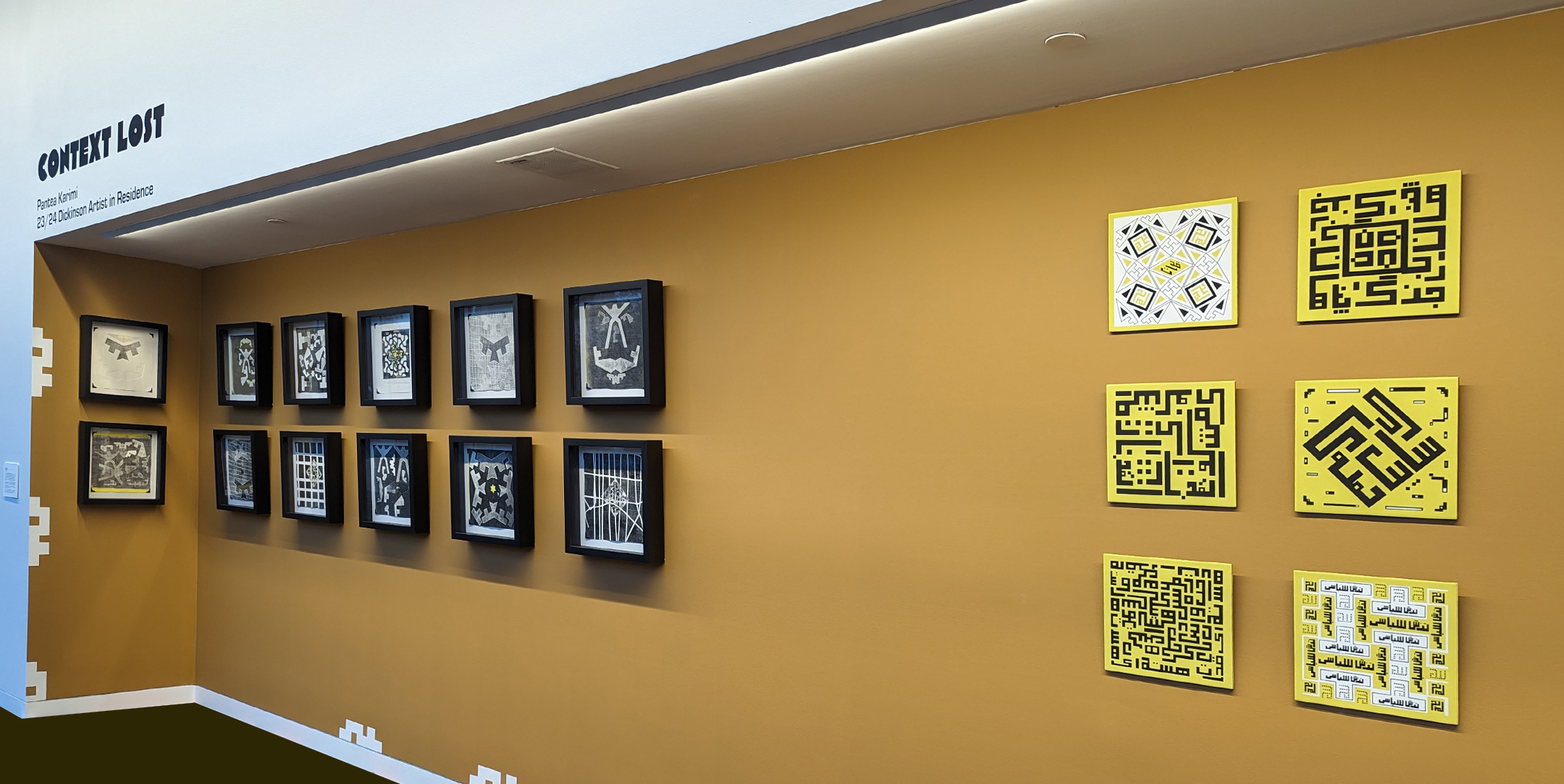
Context Lost, 2022-2023
Solo Exhibition, Krishna Murthi Gallery, Rothschild Performing Arts Center at Harker School, San Jose, CA
Much of Iran’s customs, heritage, and cultural values remain little known outside the country, while geopolitical narratives often obscure or misrepresent them. As a result, my work is often viewed through an arbitrary, syncretic, or invented lens.
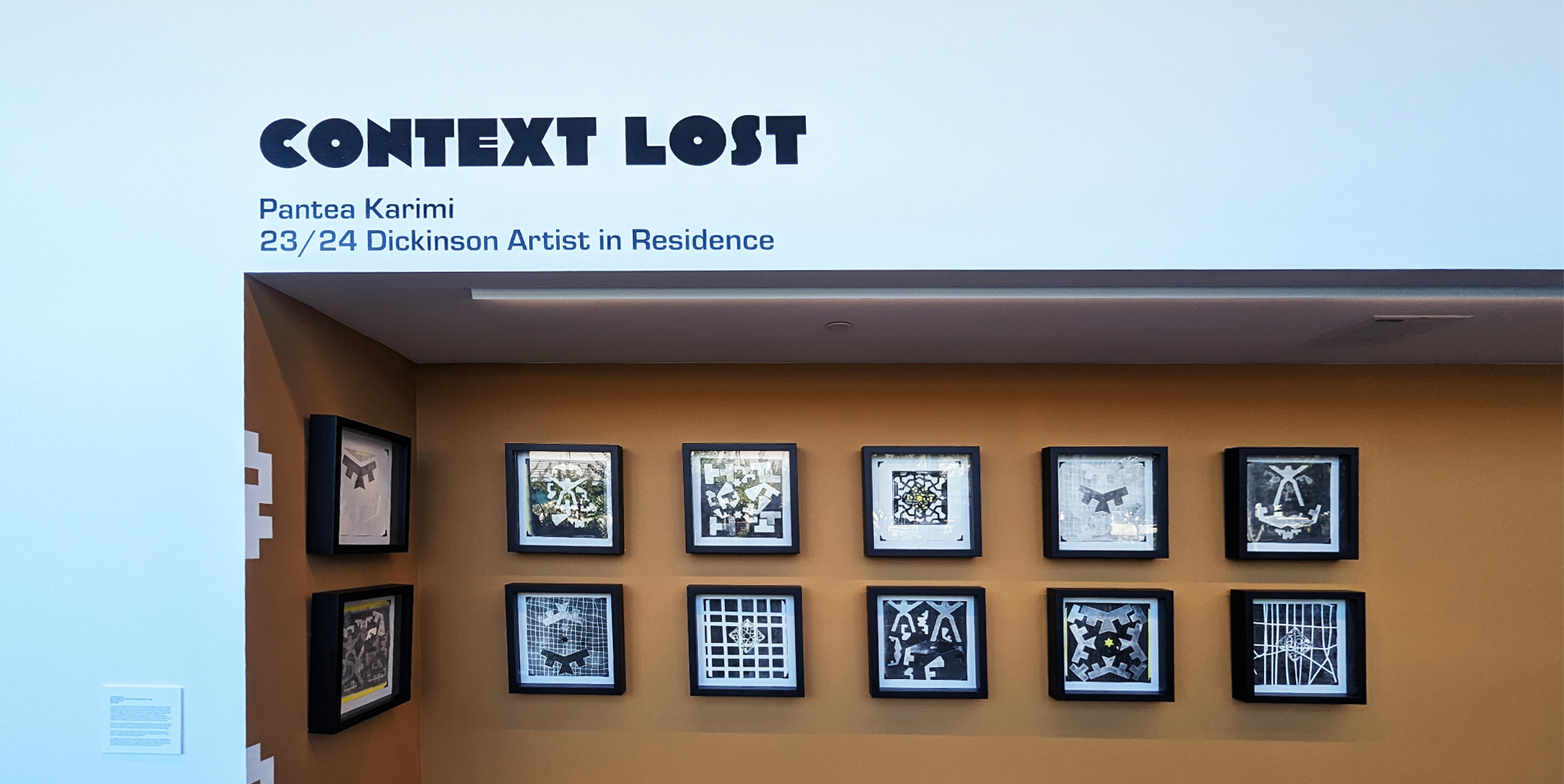
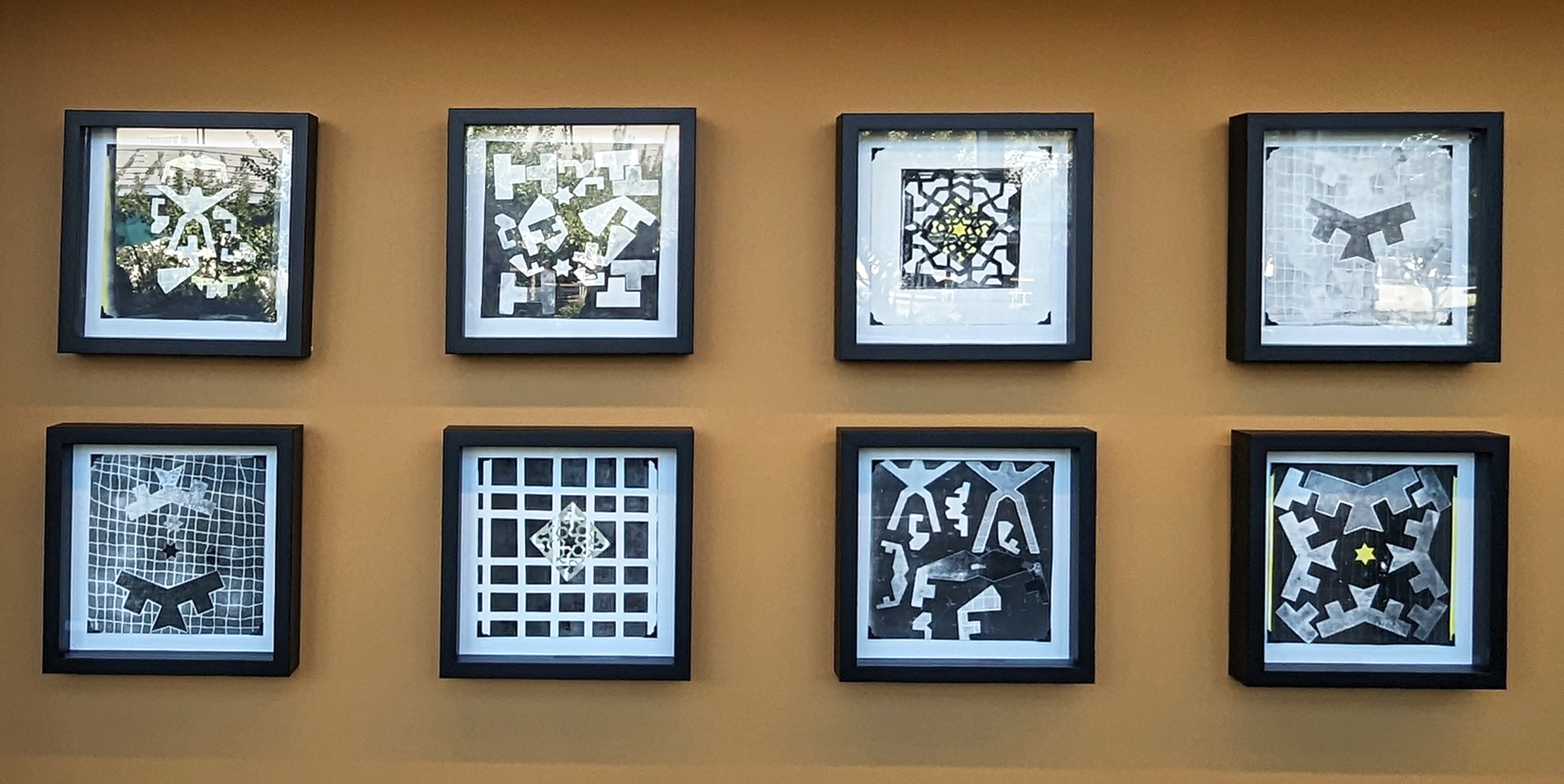
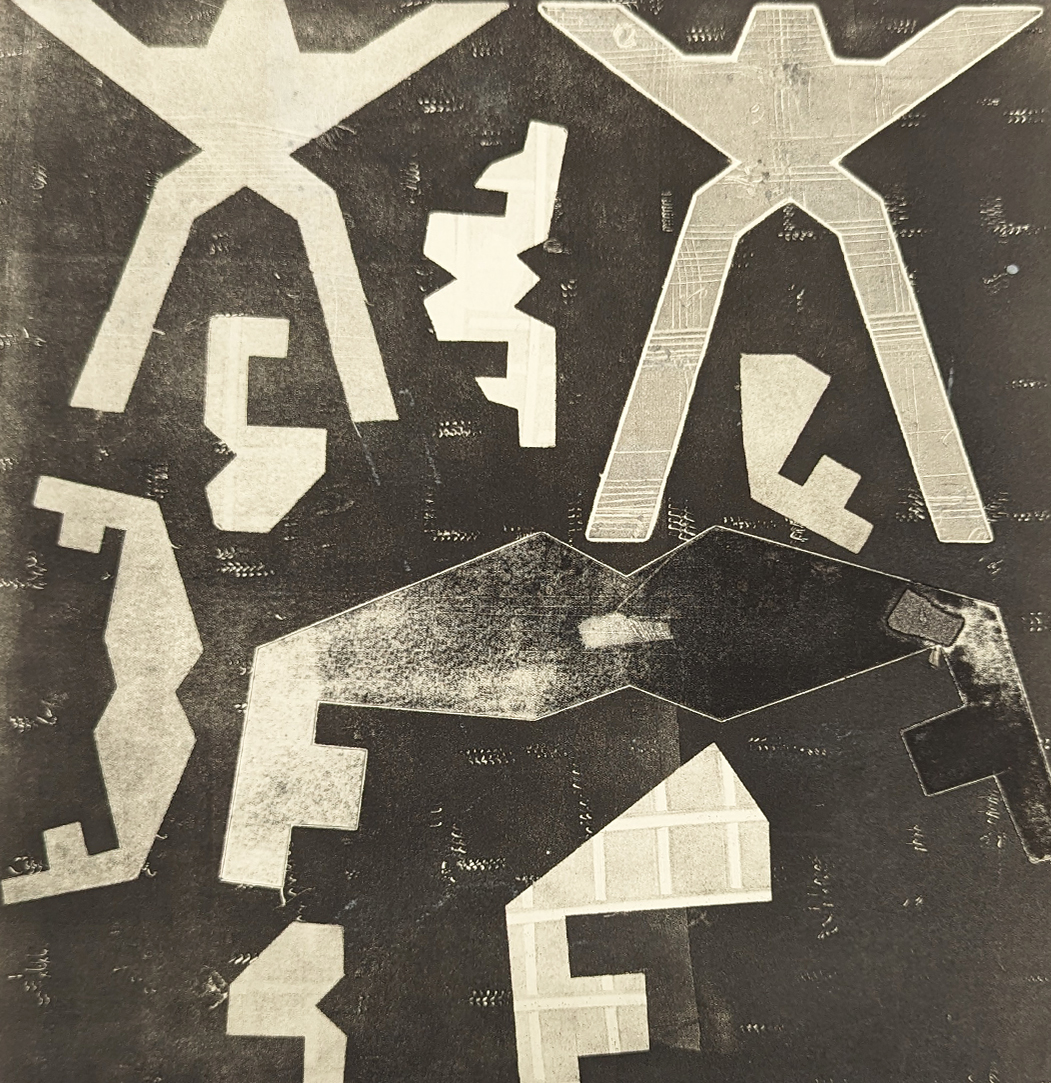
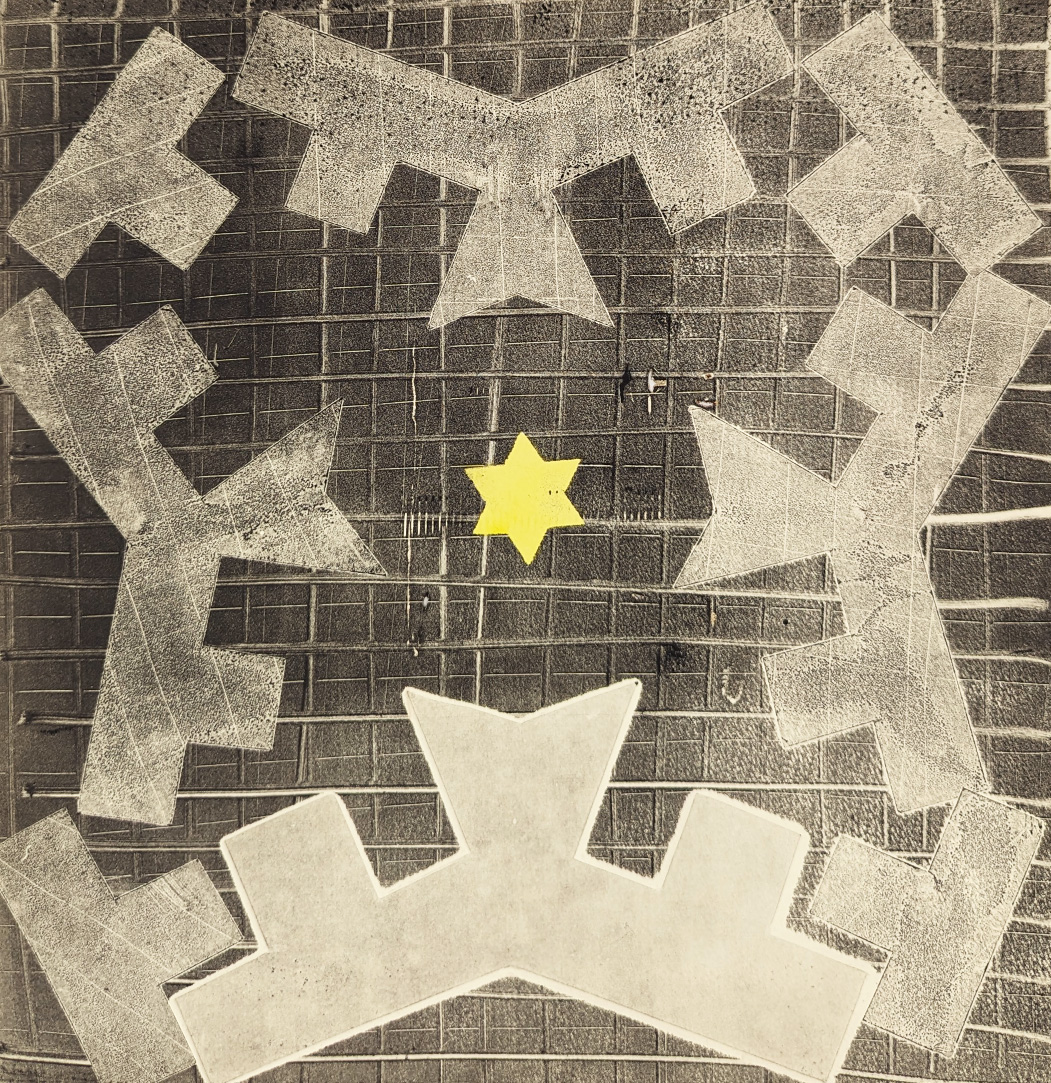
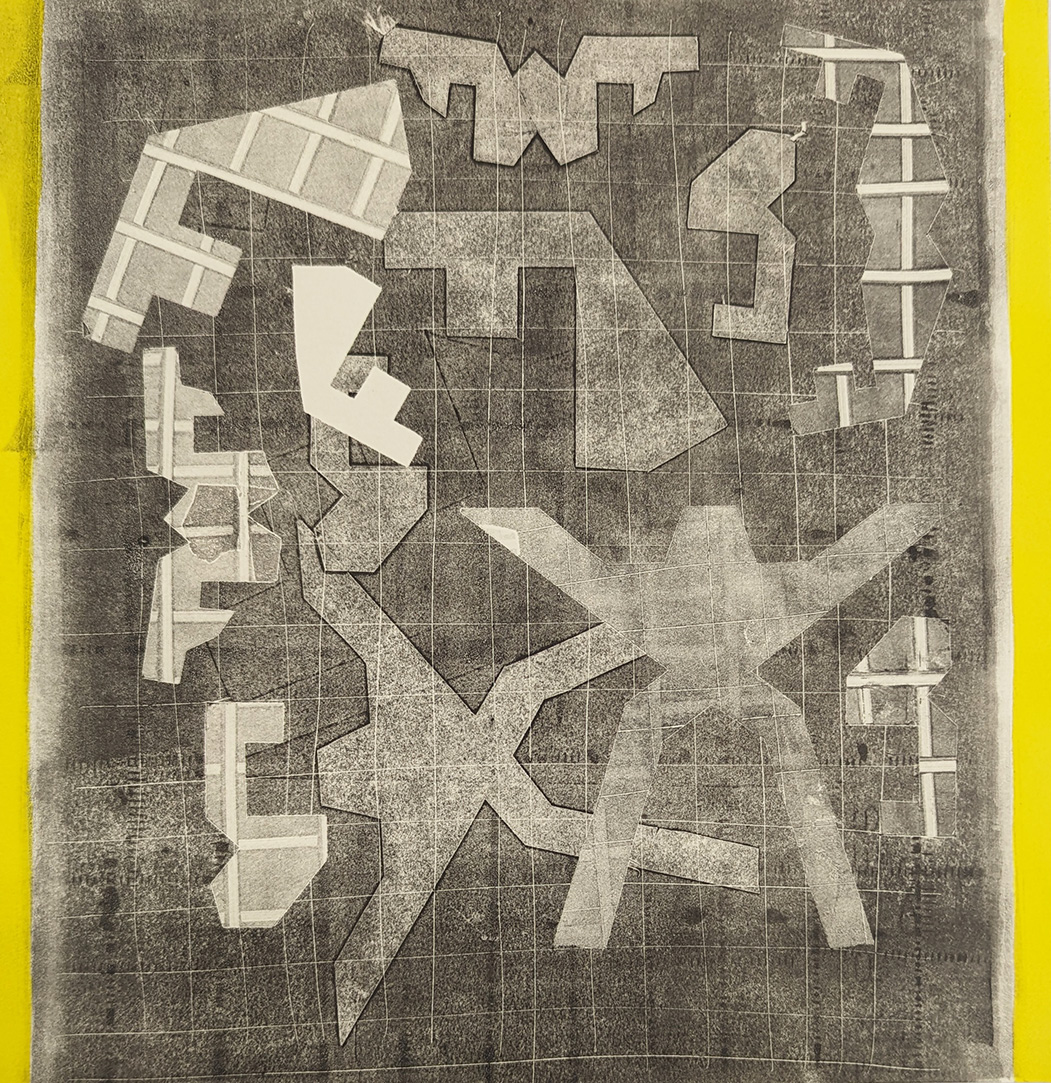
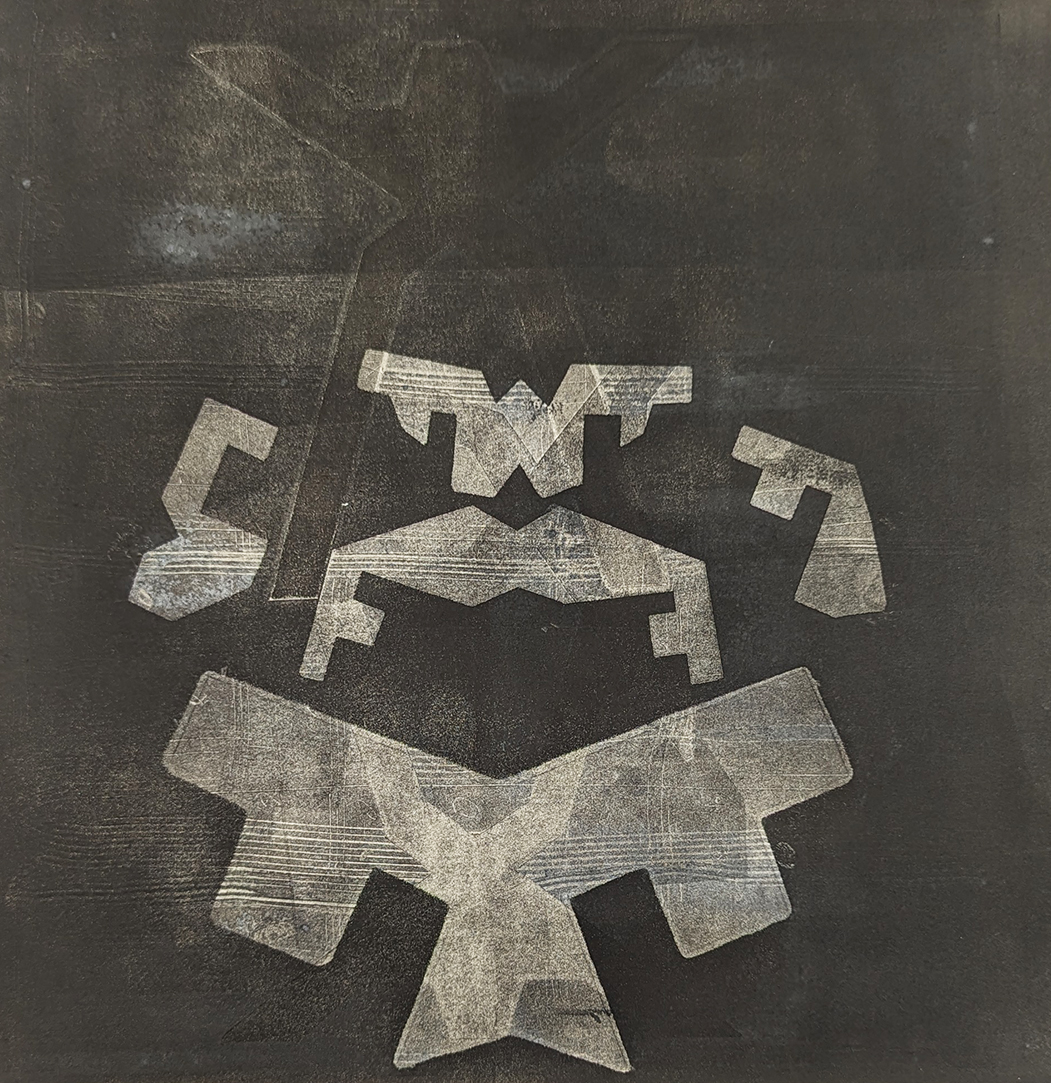
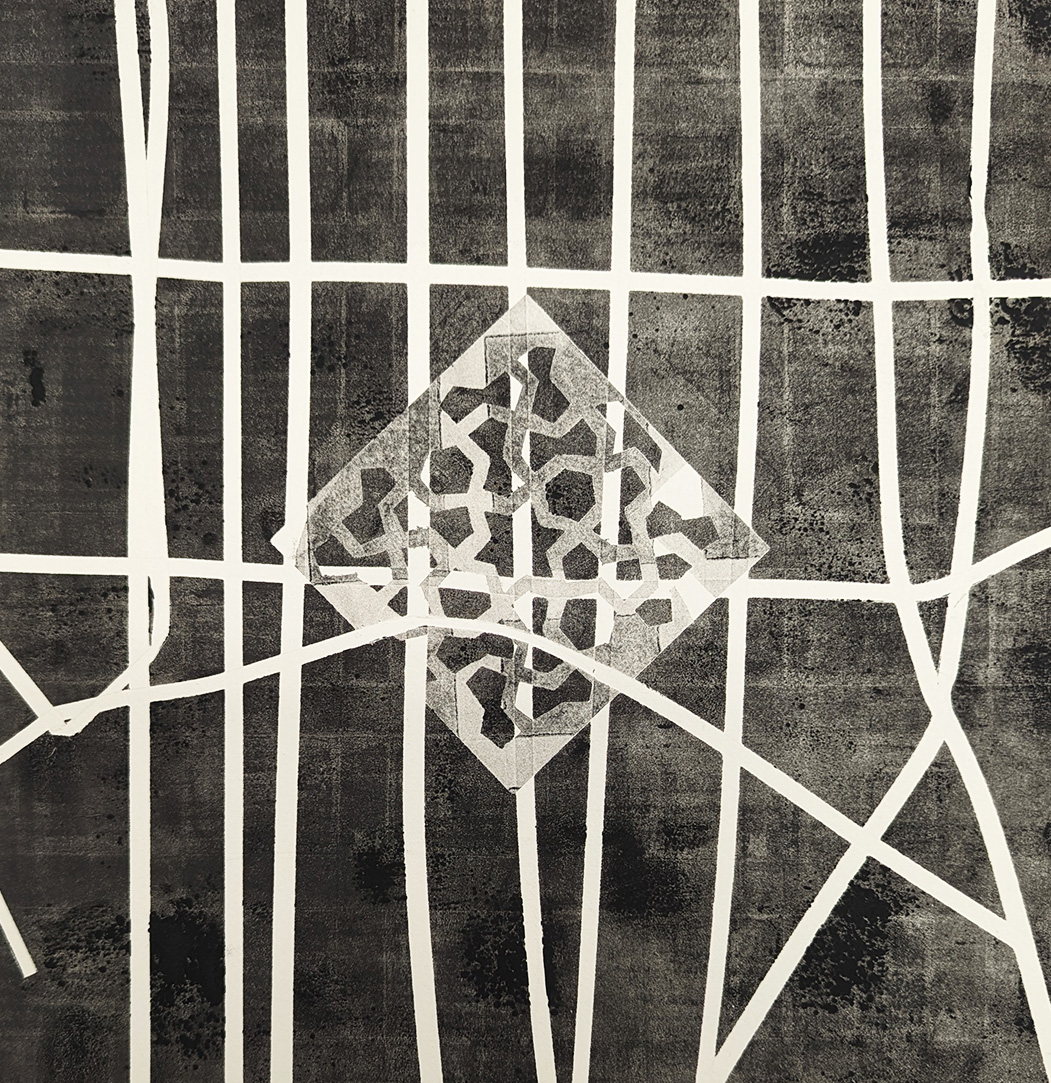
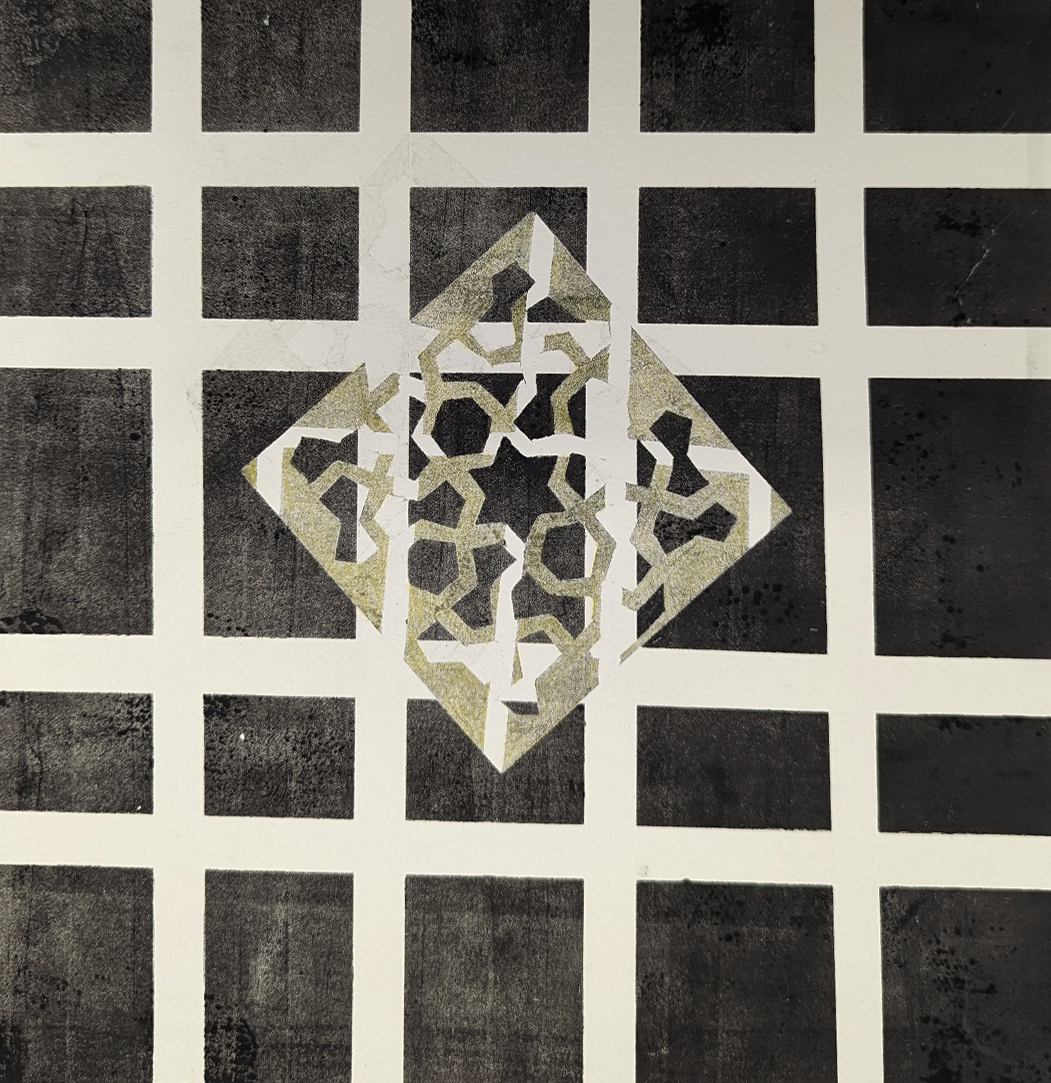
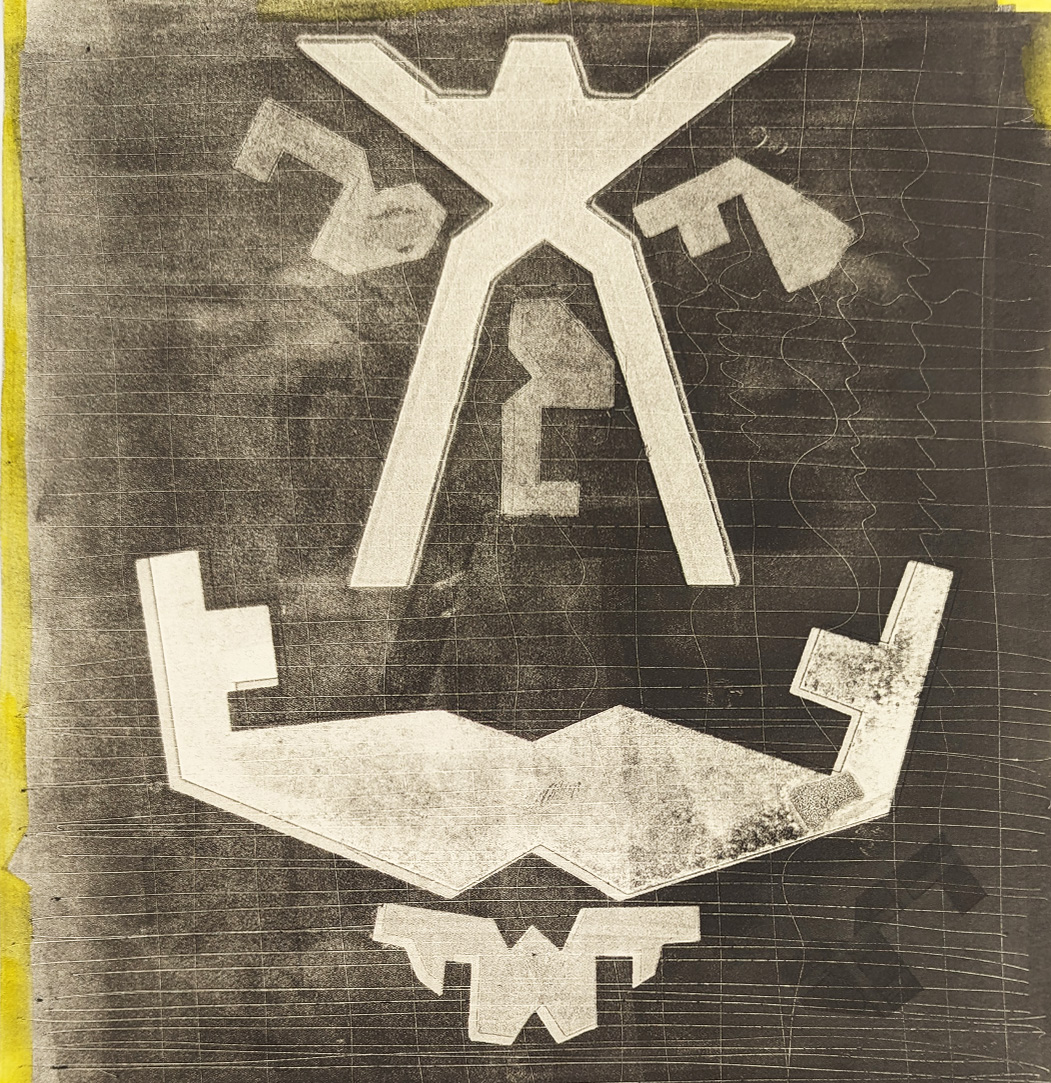
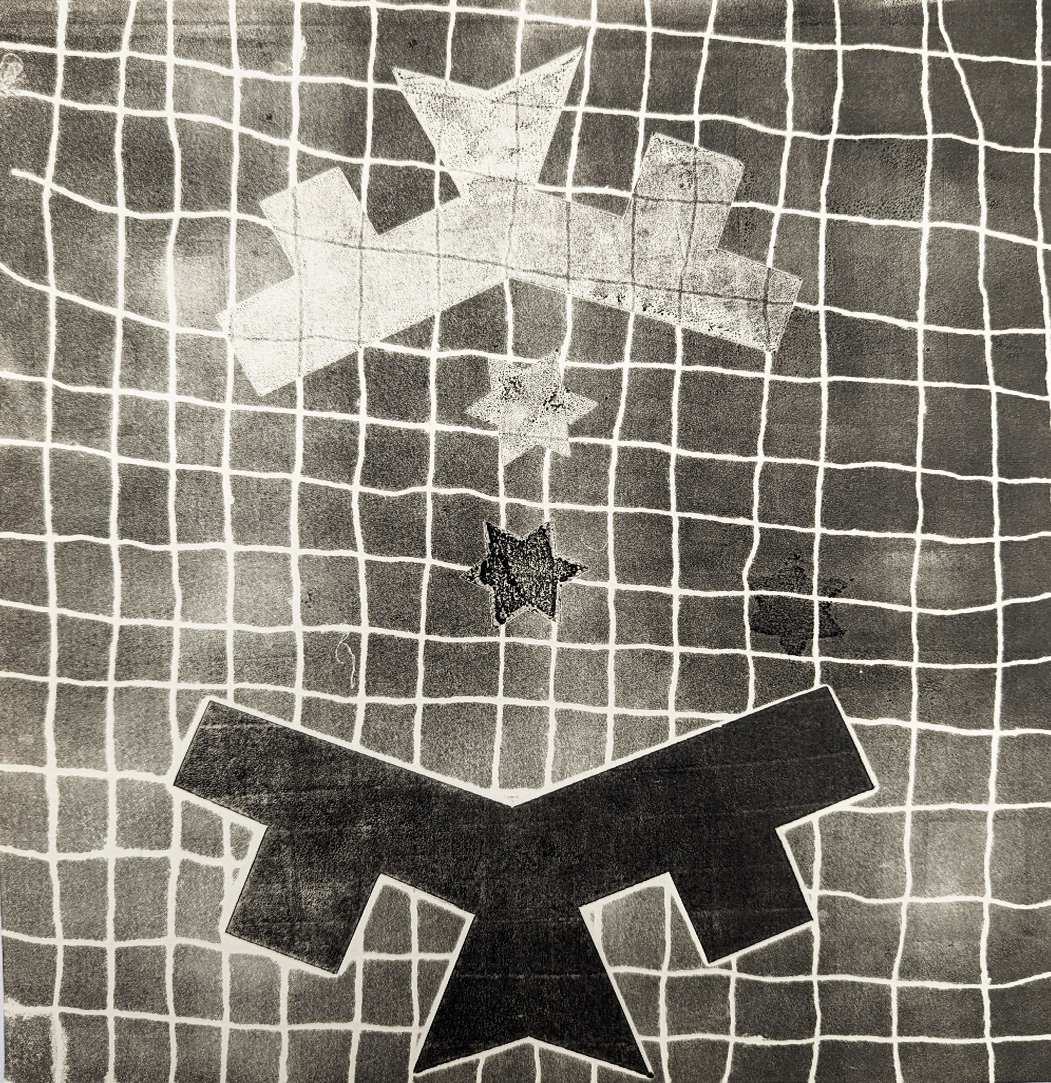
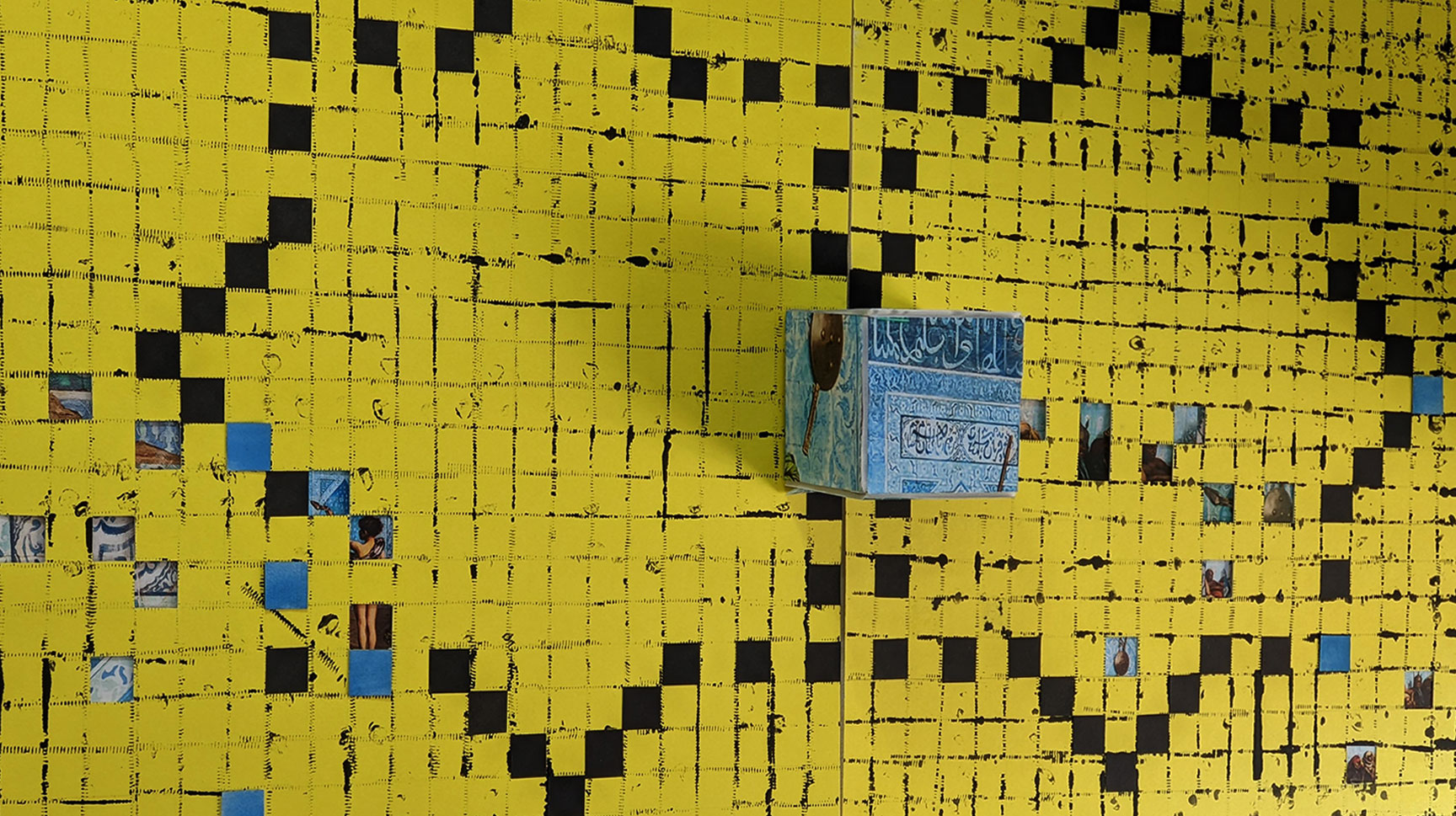
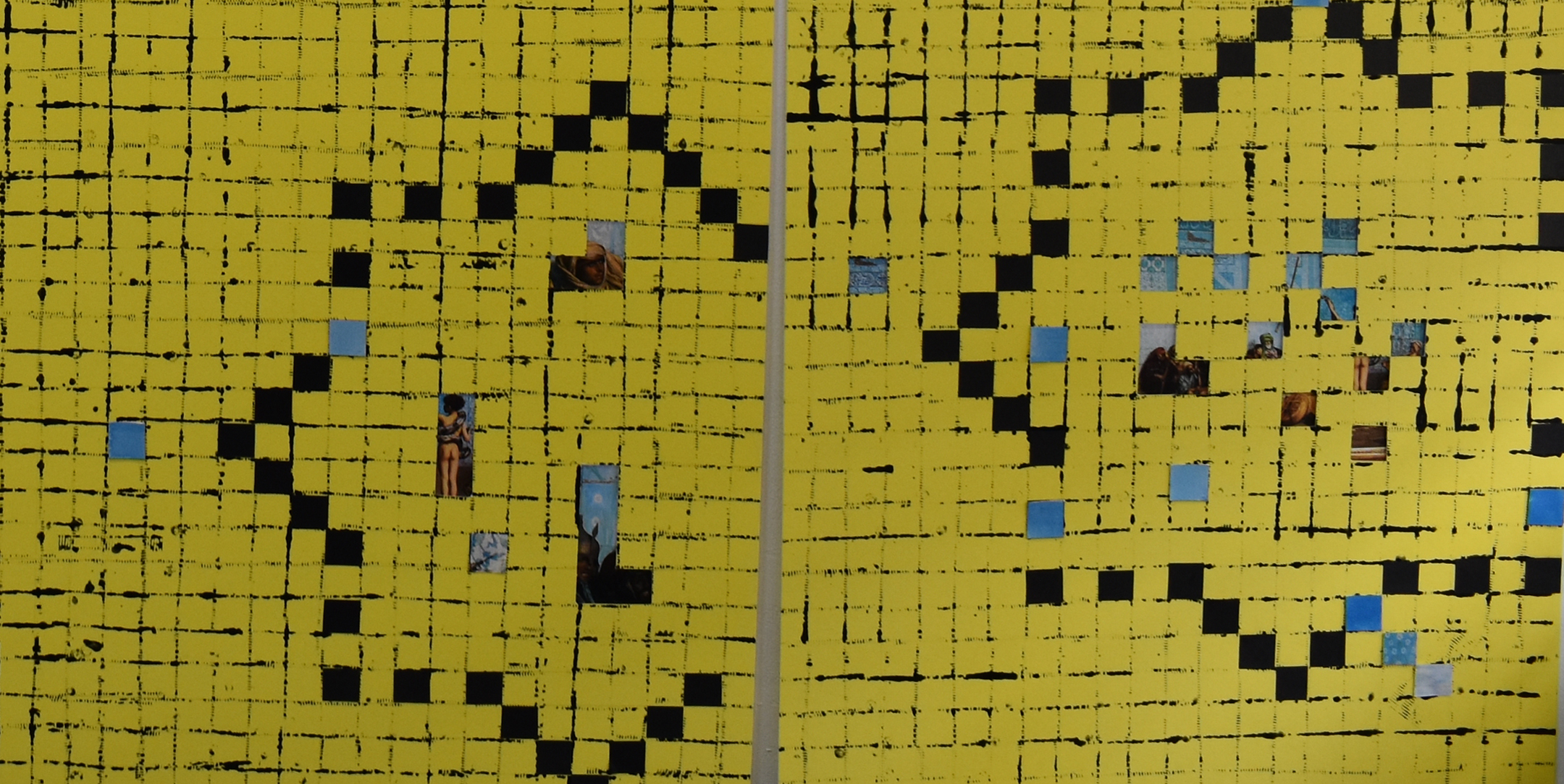
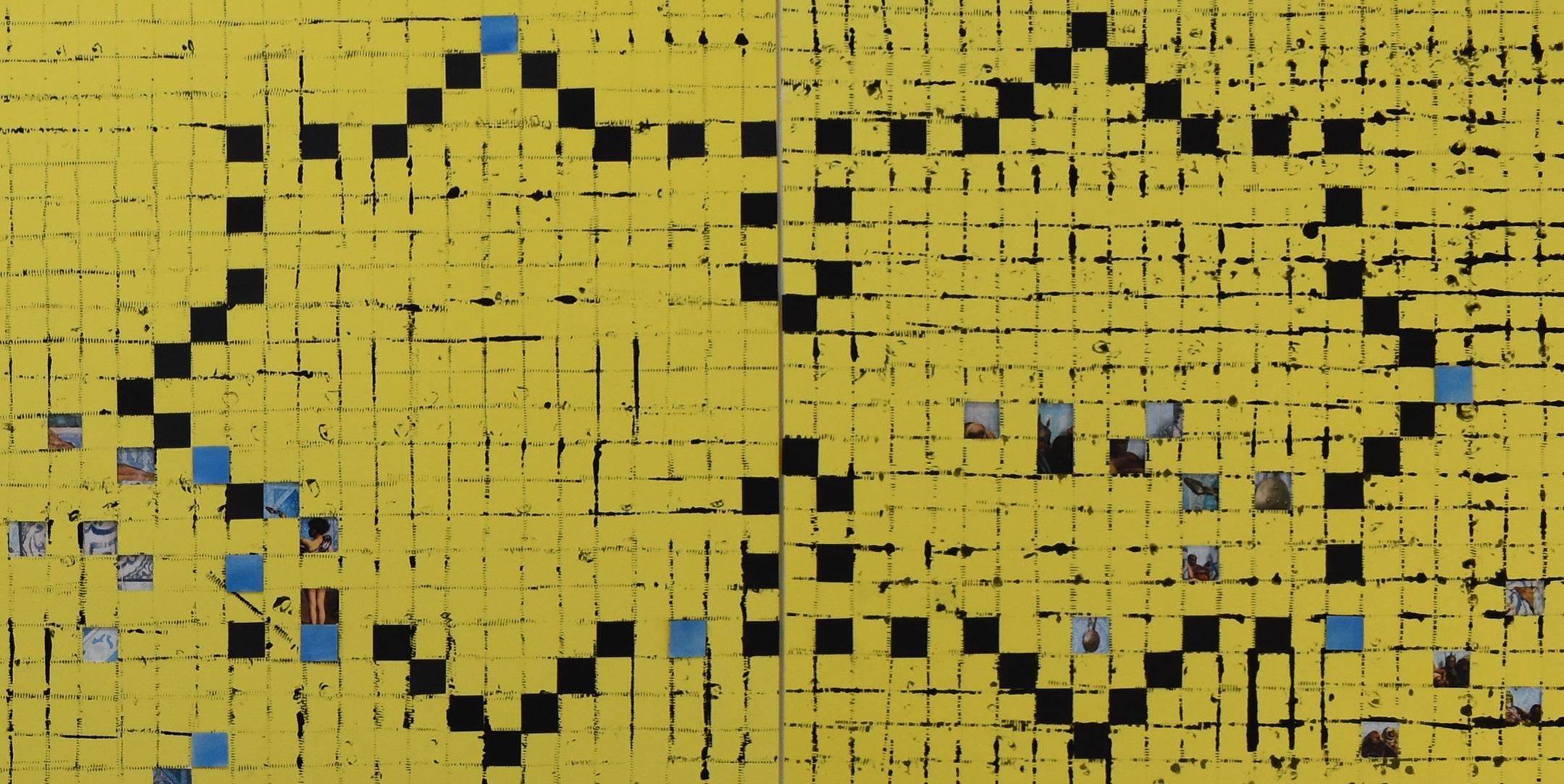
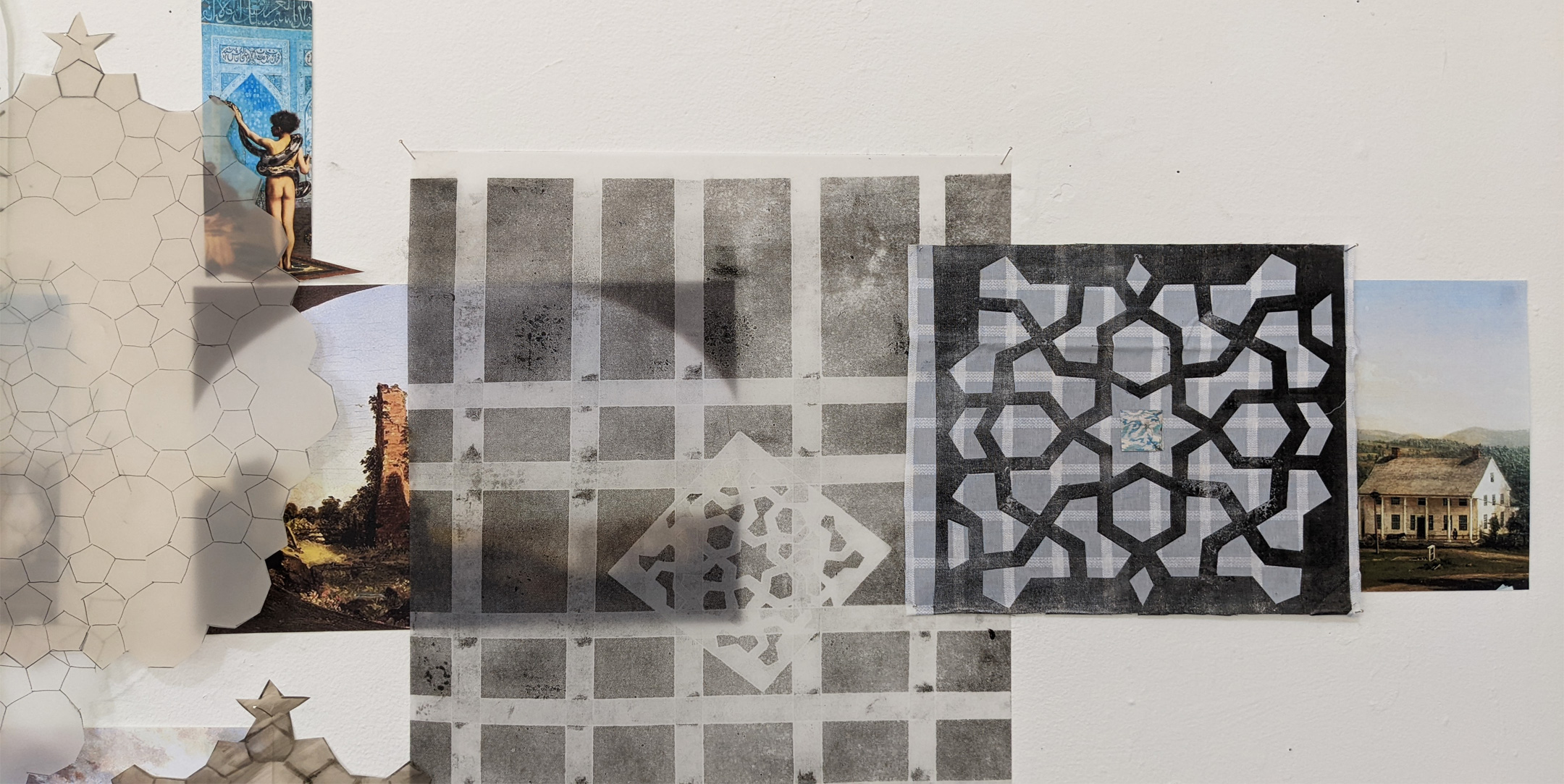
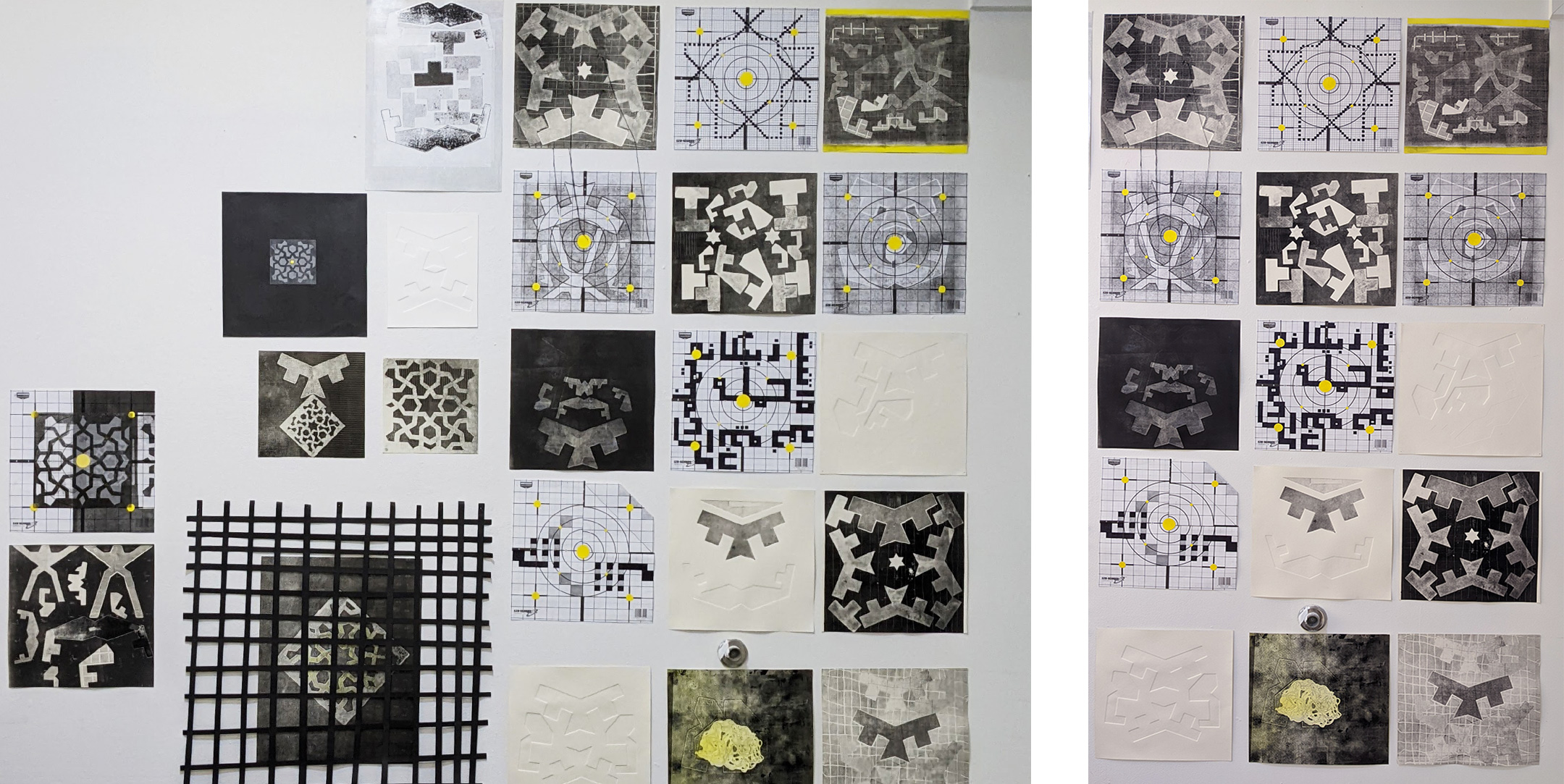
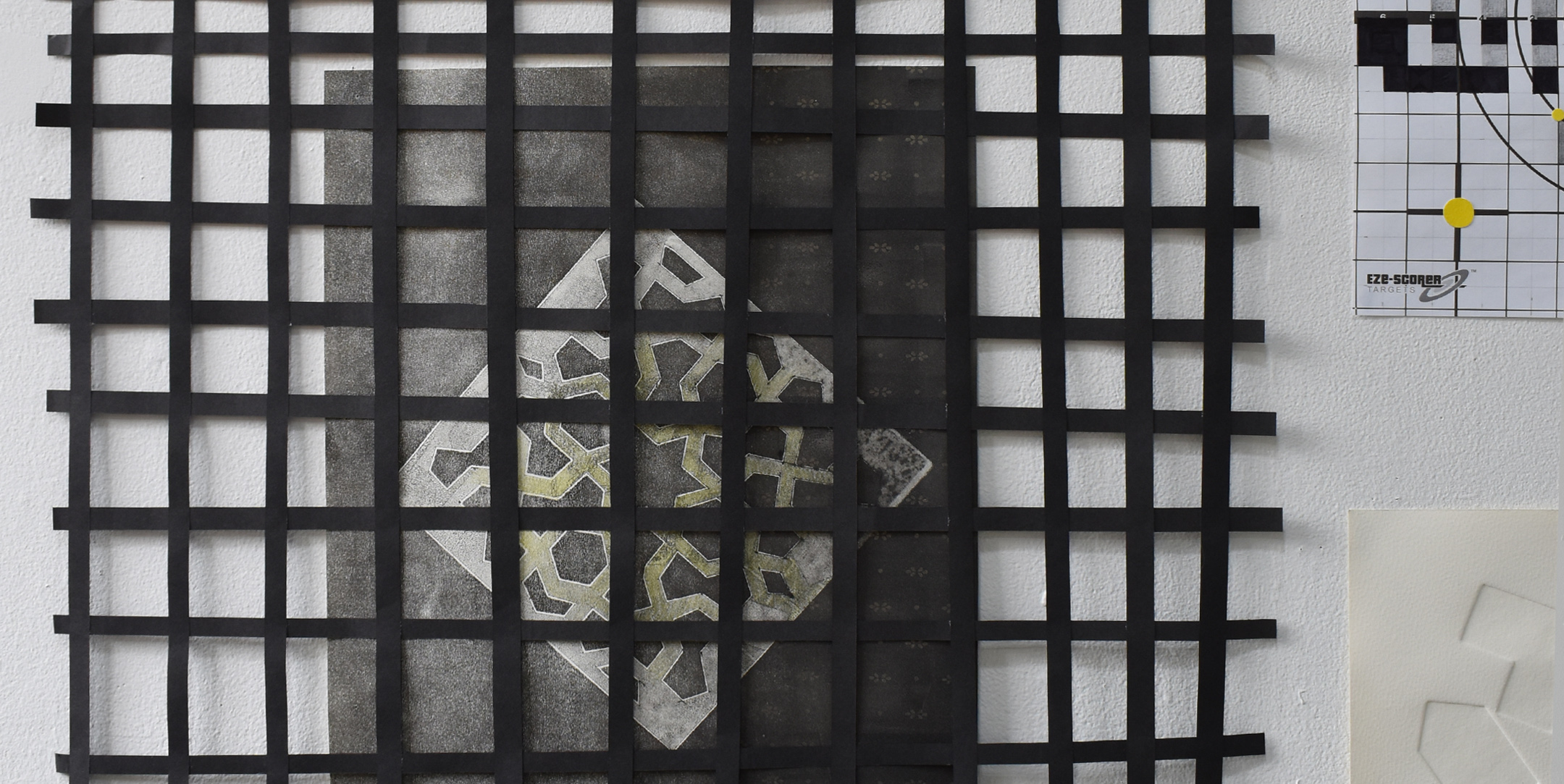
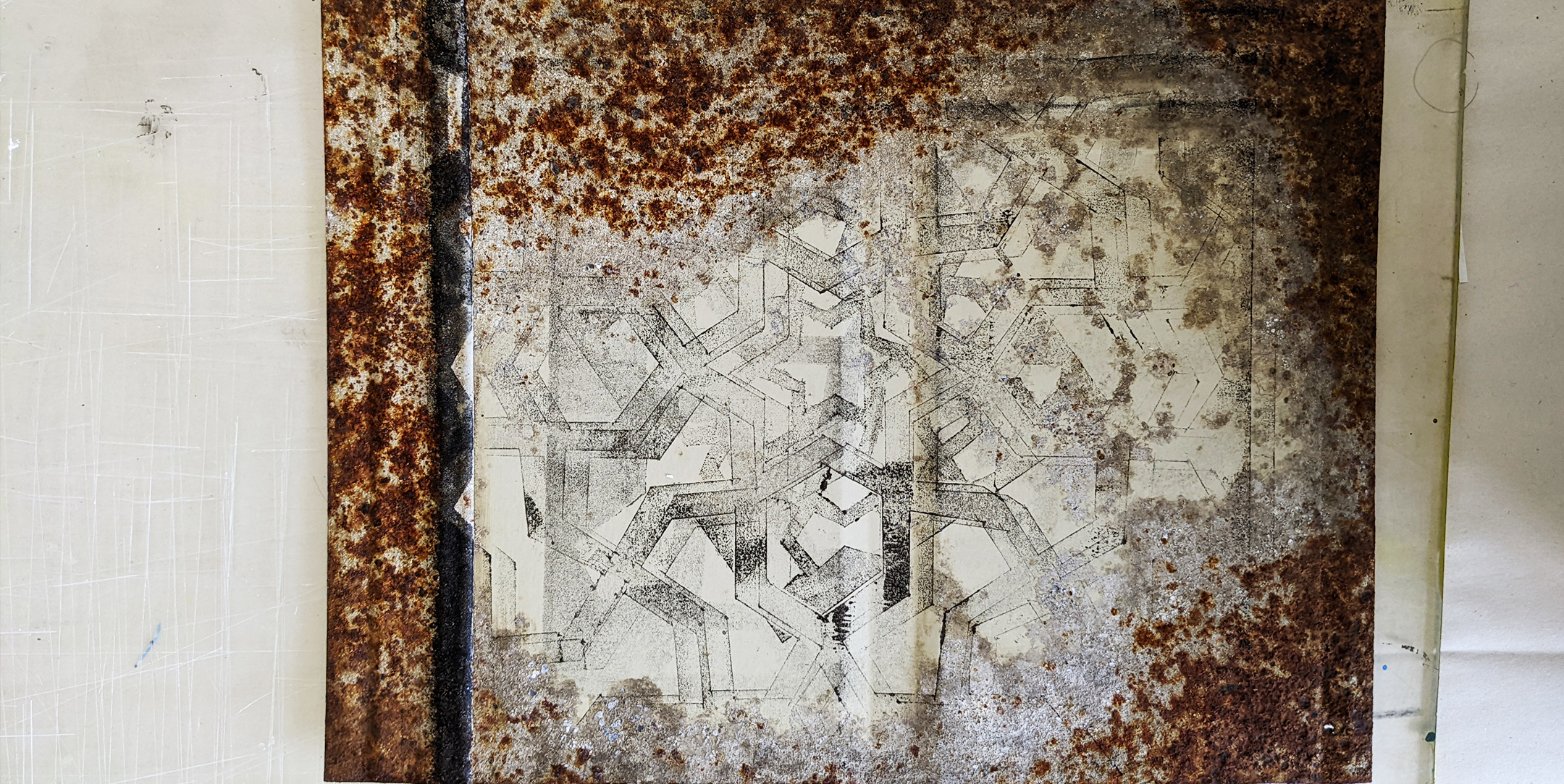
Context Lost, an exhibition presented at the Harker School in 2023, featured Broken Grid (2022) and the ceramic tiles From Faith to Fallout (2021) from the Artful Attacks project. These works emerged from my ongoing research into the Topkapi scroll and Square Kufic geometric text design. In Broken Grid, I deliberately remove the geometric shapes from their original context and symmetrical arrangements and instead arrange them asymmetrically in distorted grids to reflect on the impact of ongoing political conflicts on Iranian history. Through this process, I seek to raise questions about the impact of political conflict on Iran’s history of scientific, artistic, and cultural achievement, revealing contexts that have been lost or overlooked.
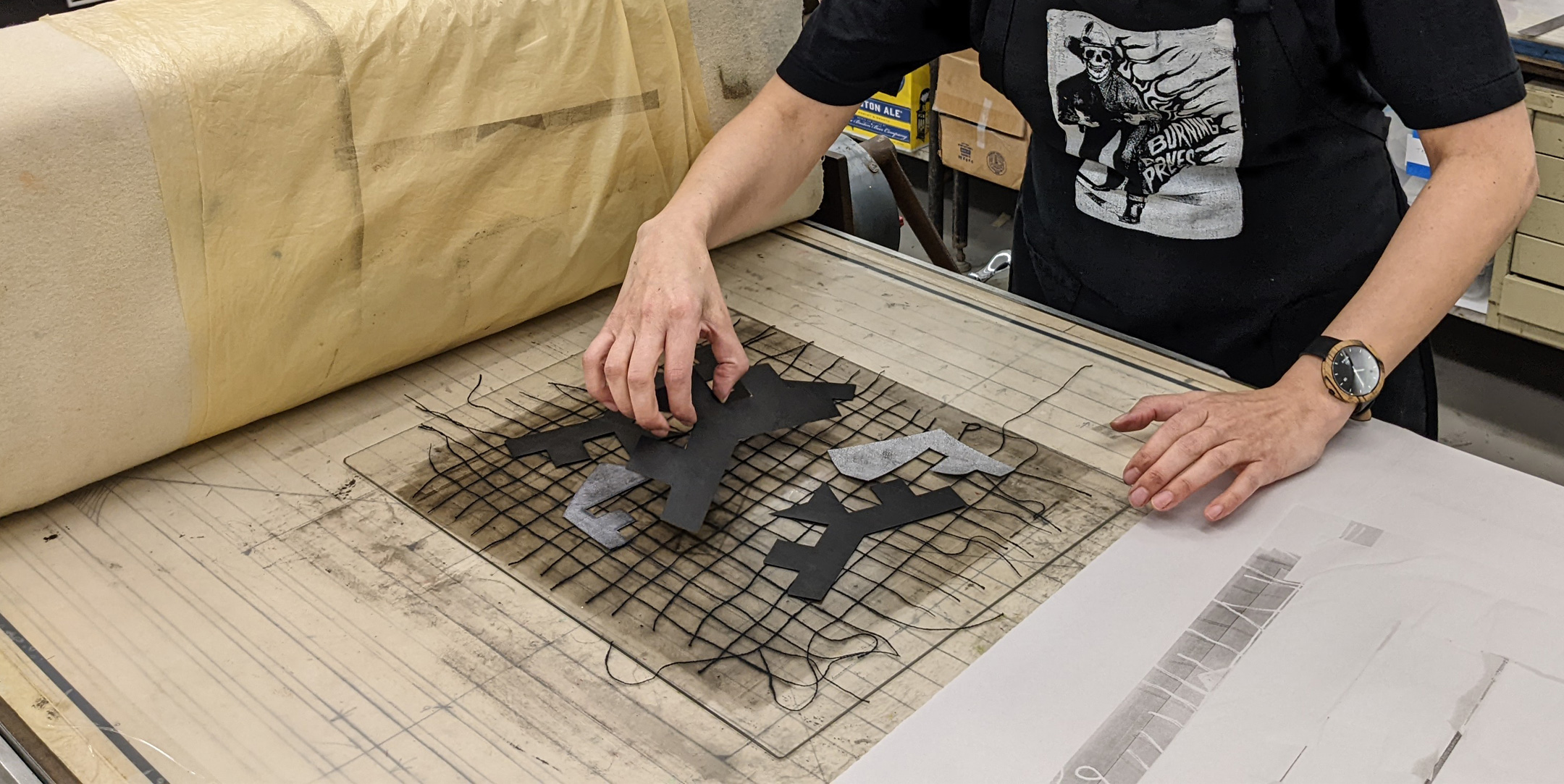
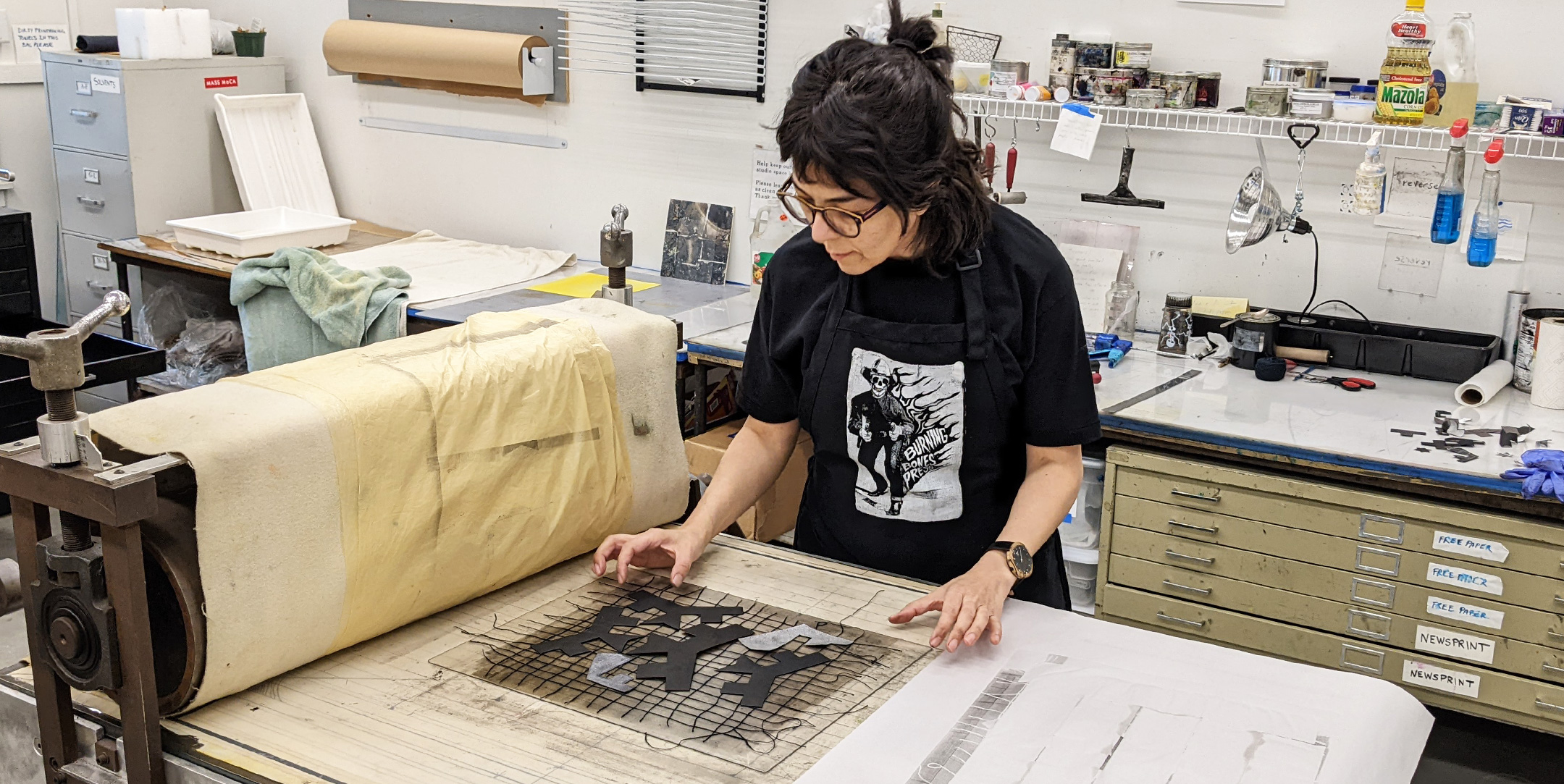
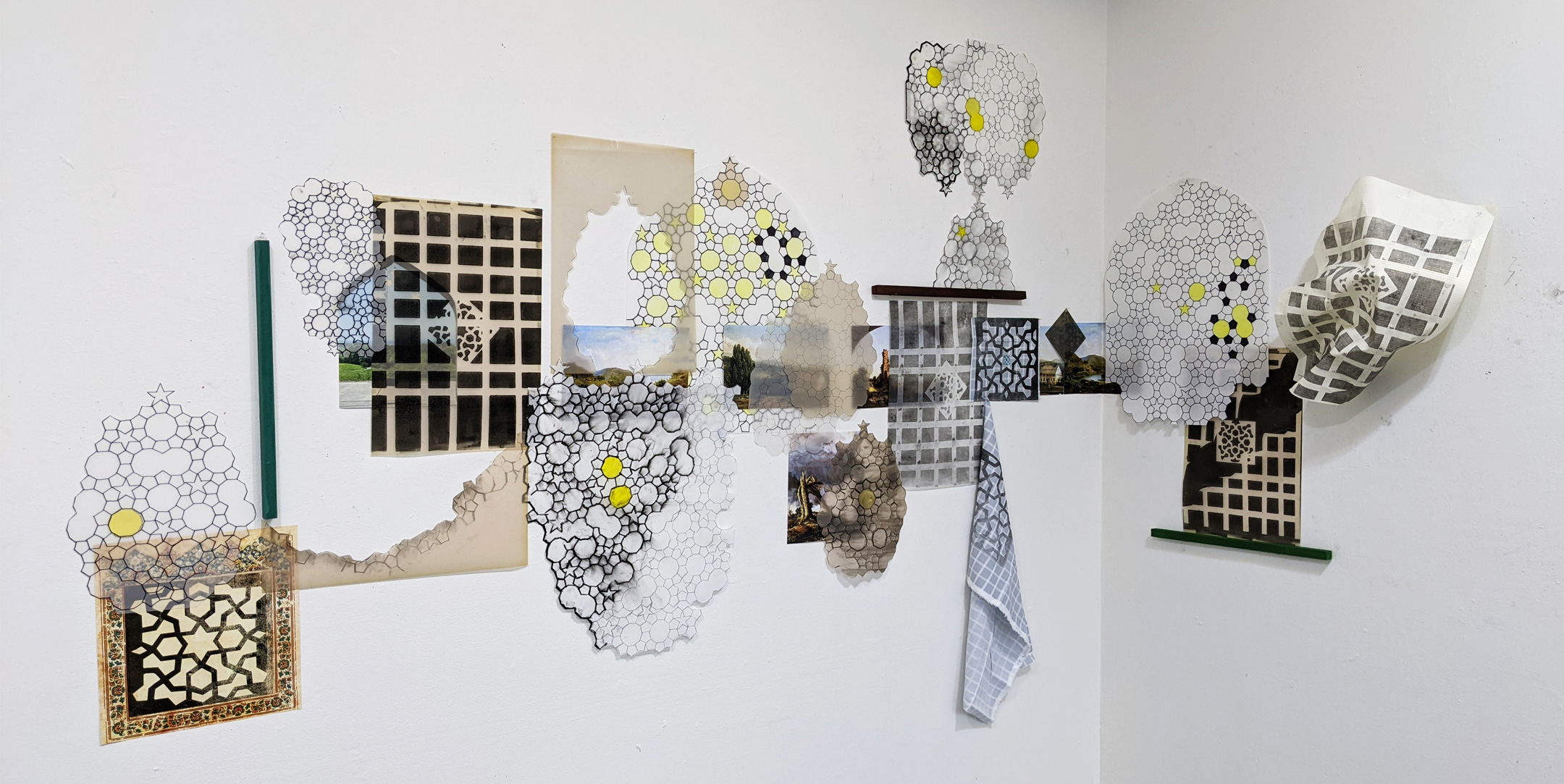
I created the monotype-printed paper tiles (Broken Grid) and the wall installation (Persian Interiority, American Exteriority) during my residency at MASS MoCA in 2022.
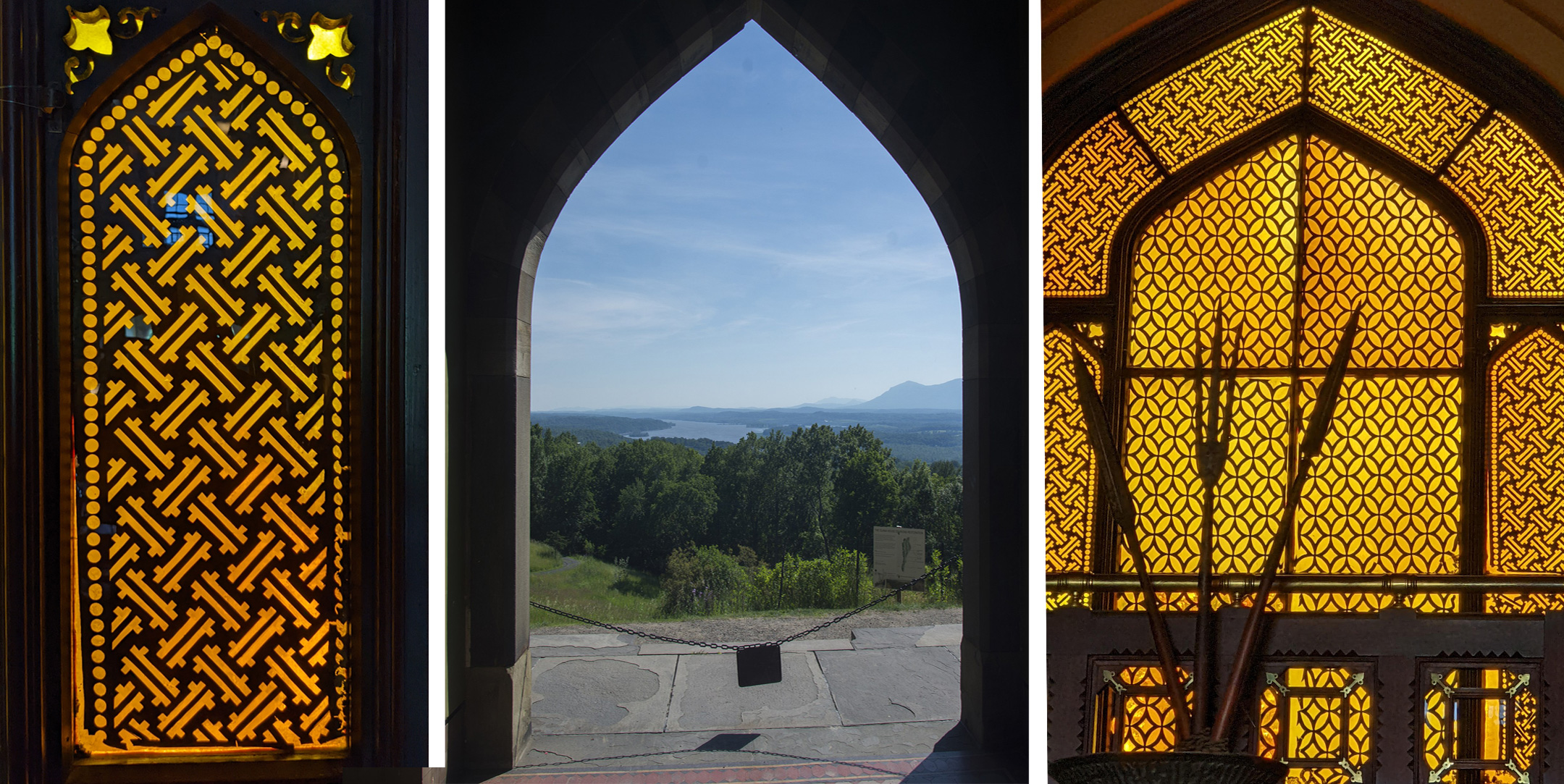
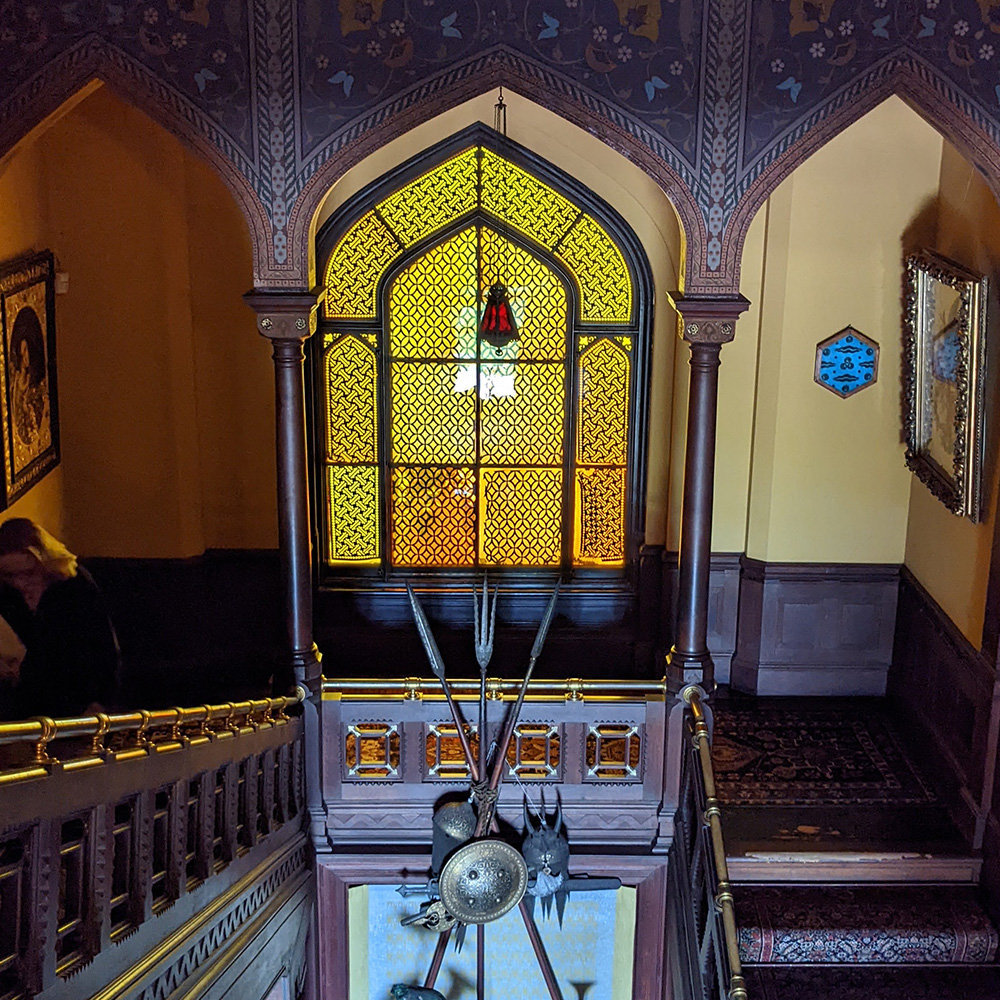
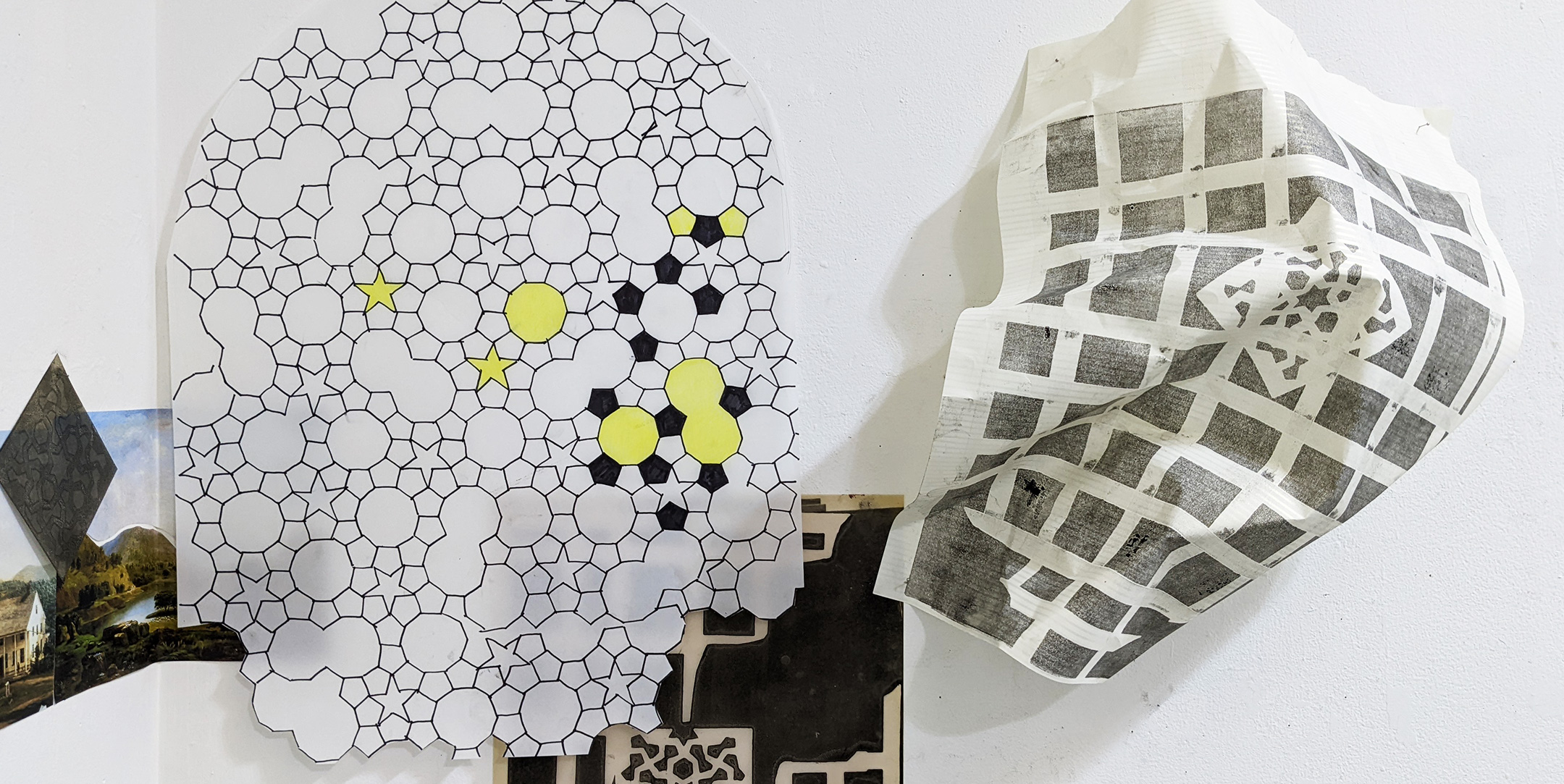
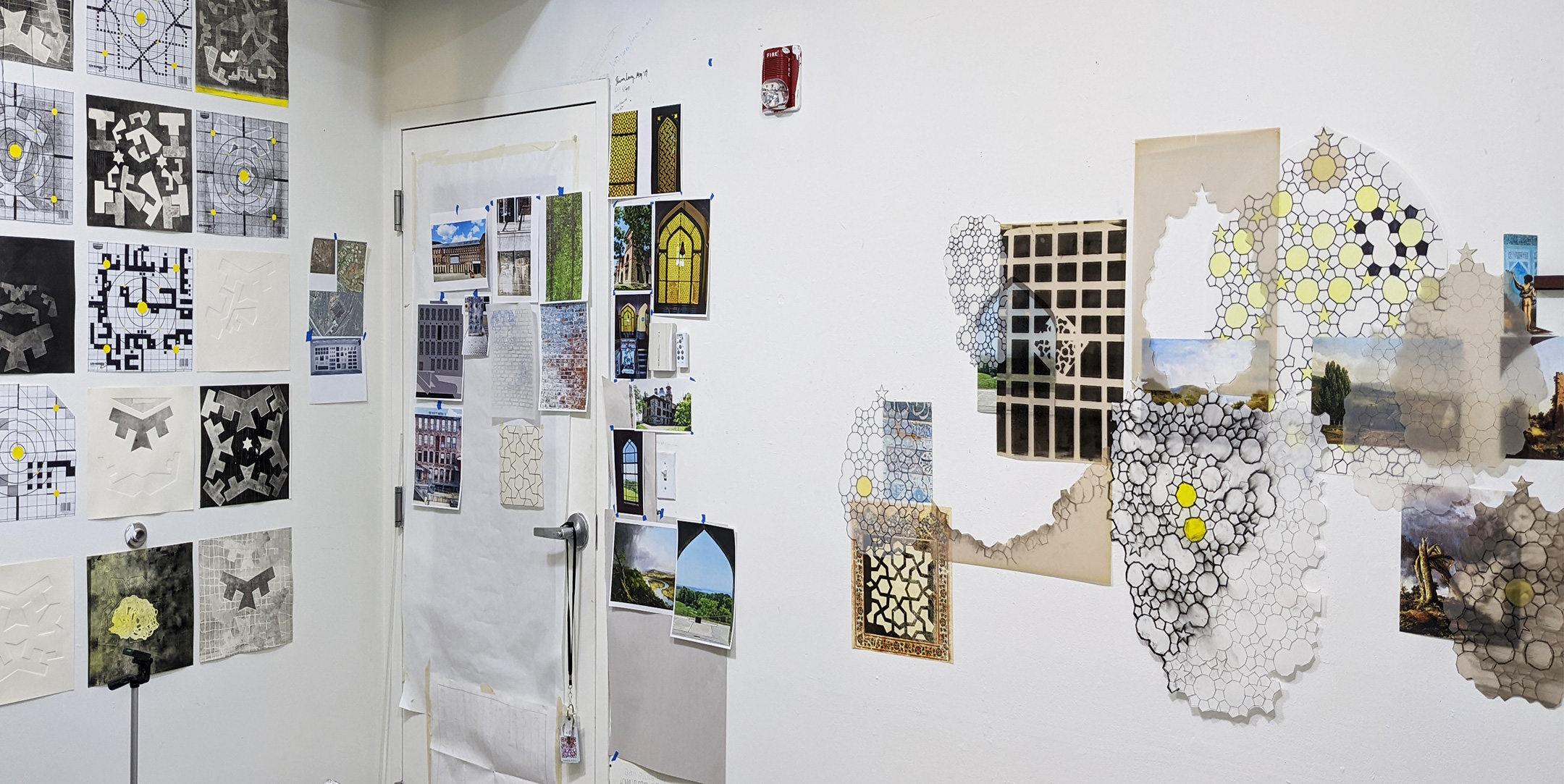
Persian Interiority, American Exteriority is inspired by Olana, the “Persian home” of Hudson River School painter Frederic Church, and by his painting The Oxbow, both of which I visited in May 2022. Through Persian arches, geometric patterns, and stained-glass–like windows, Church frames the American landscape while selectively obscuring parts of it. In doing so, I interpret his architecture as expressing a desire to possess and domesticate both the landscape and the cultures he admired from afar. Olana becomes a story of a Persian interior confronting an American exterior: one carefully constructed and occupied, the other viewed through the lens of a colonizer.
Research
Topkapi scroll, a late medieval Iranian document housed at the Topkapi Palace in Türkiye. These tiles feature geometric designs and Square Kufic script.
Pasted at one end to a wooden rod, this paper scroll compiles a collection of 114 rectangular and square geometric architectural drawings and tiling patterns with Kufic script, in black and red inks. The Topkapi scroll is a significant example of the interconnectivity of science and art.
Olana House, “Persian Home” of the Hudson River painter Fredrick Church.