Garden of Tension and Harmony, 2024
I Will Rise In Slow Accession project, 2024-
Palo Alto Art Center, CA
This installation was funded by the Palo Alto Art Center Foundation
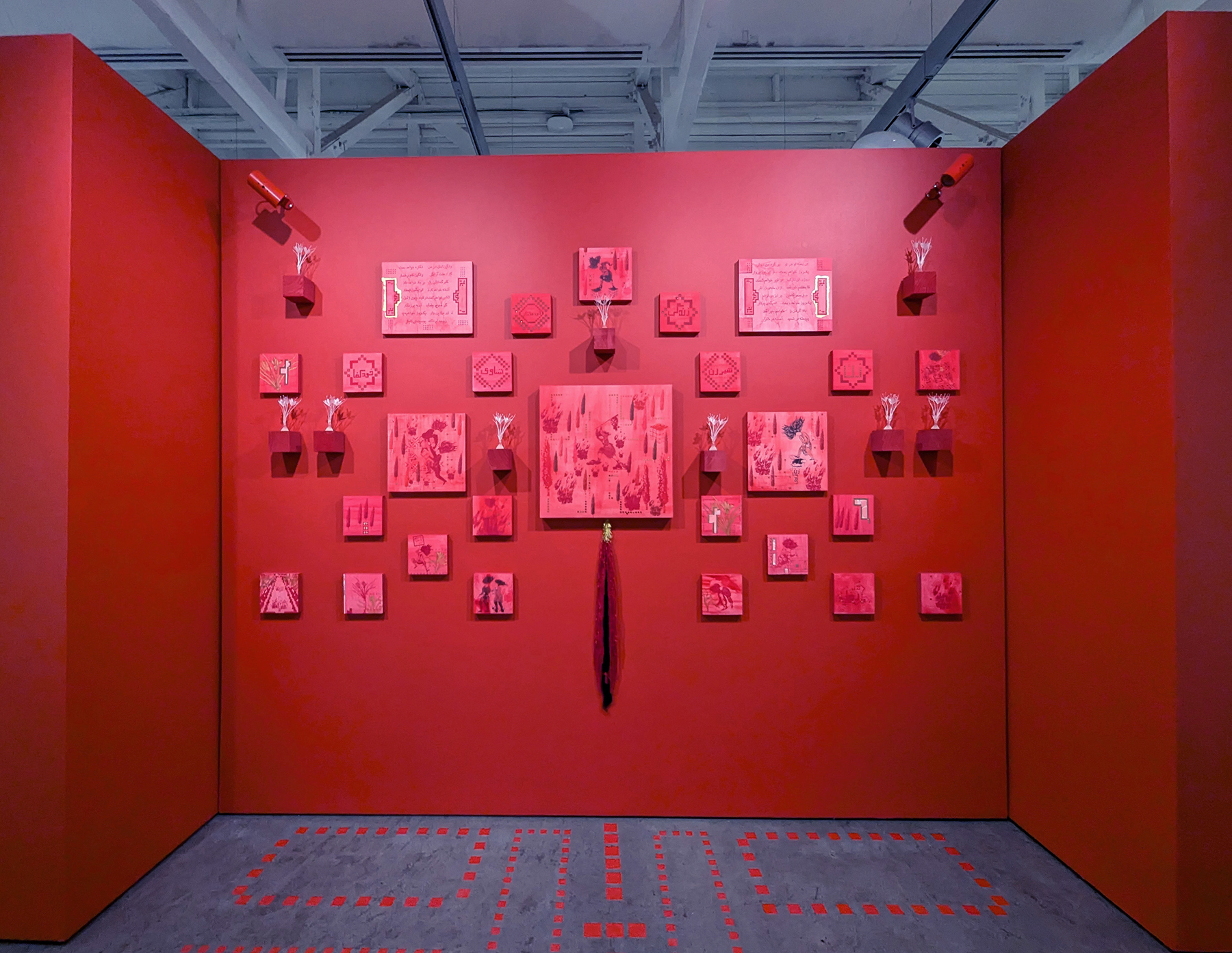
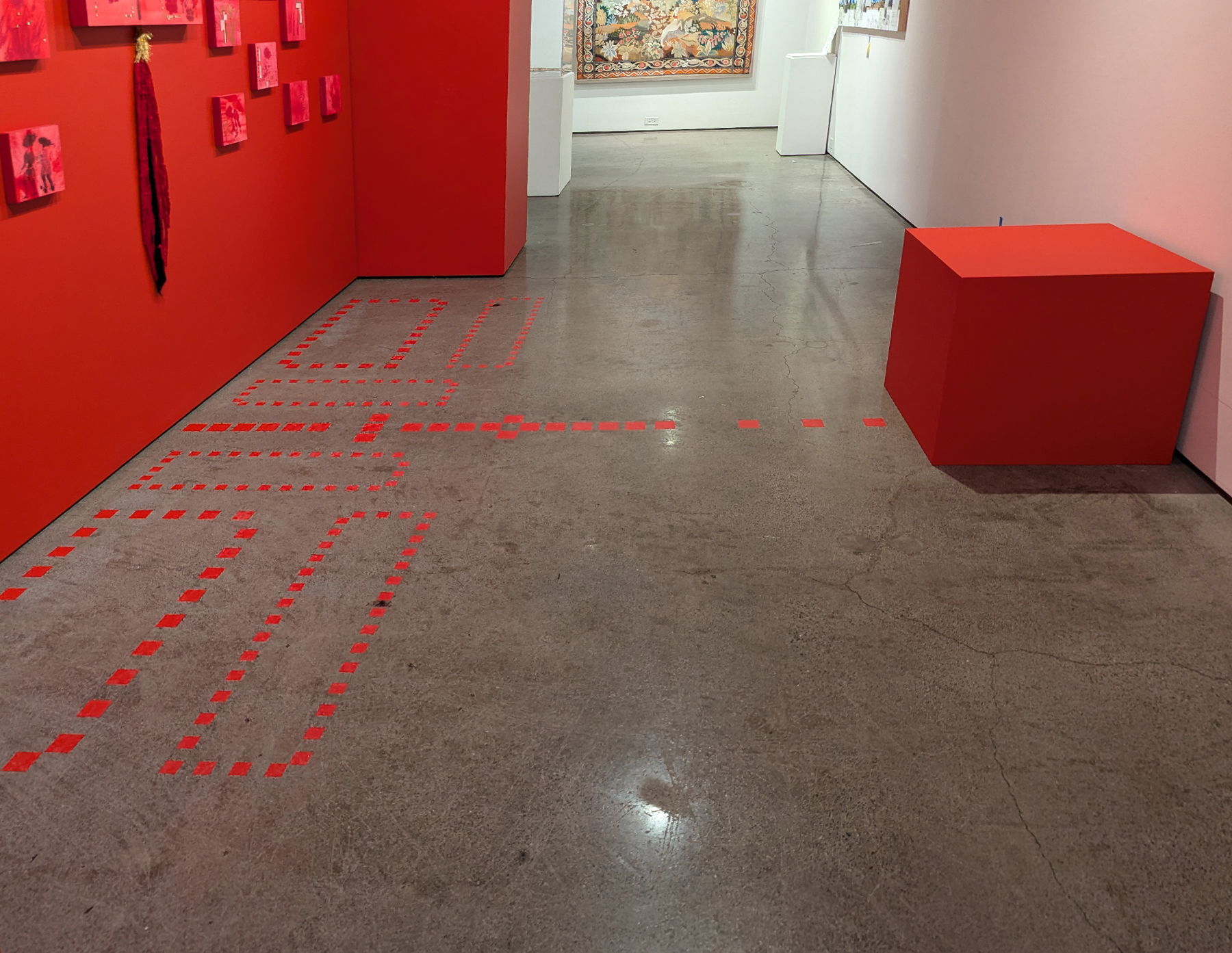
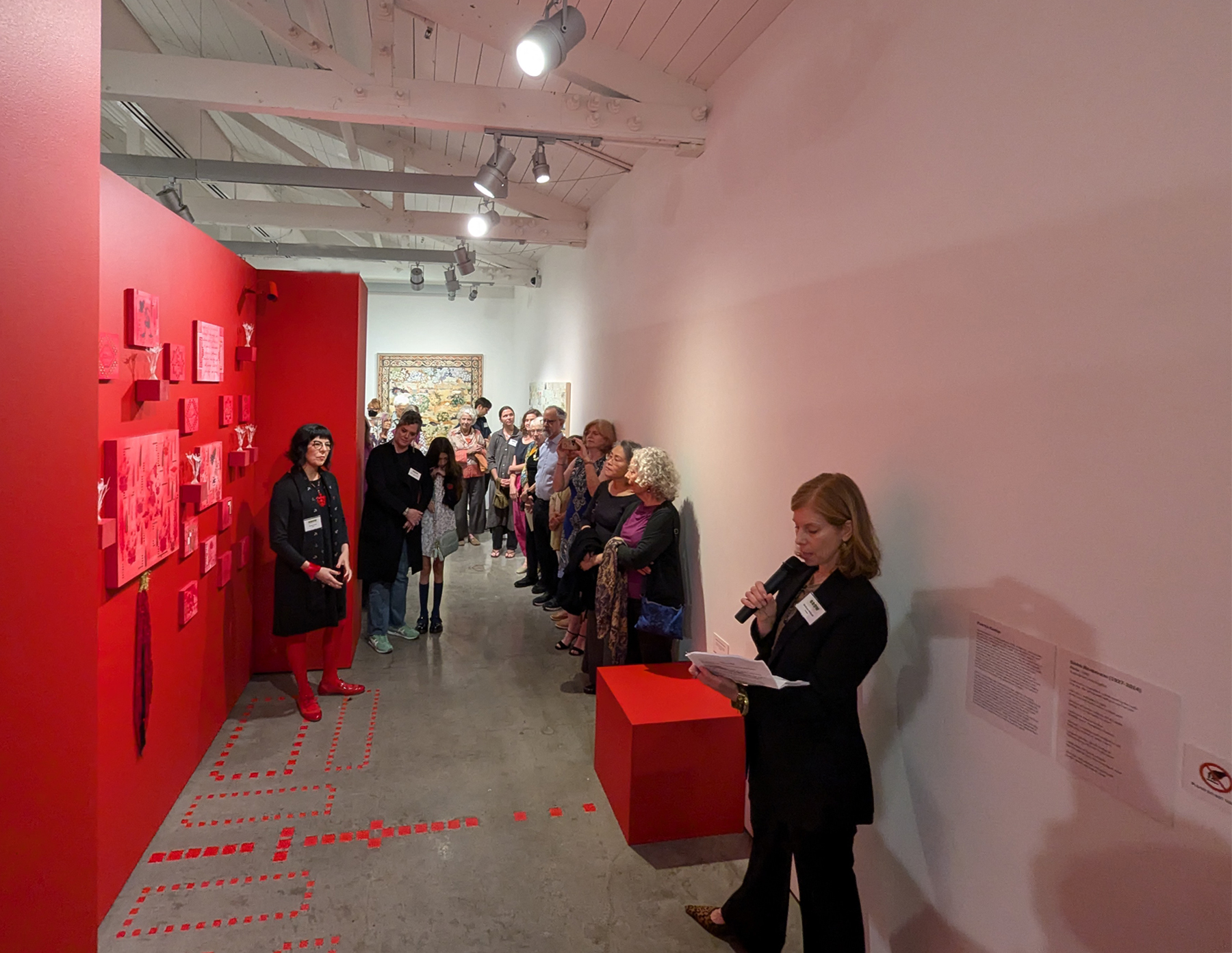
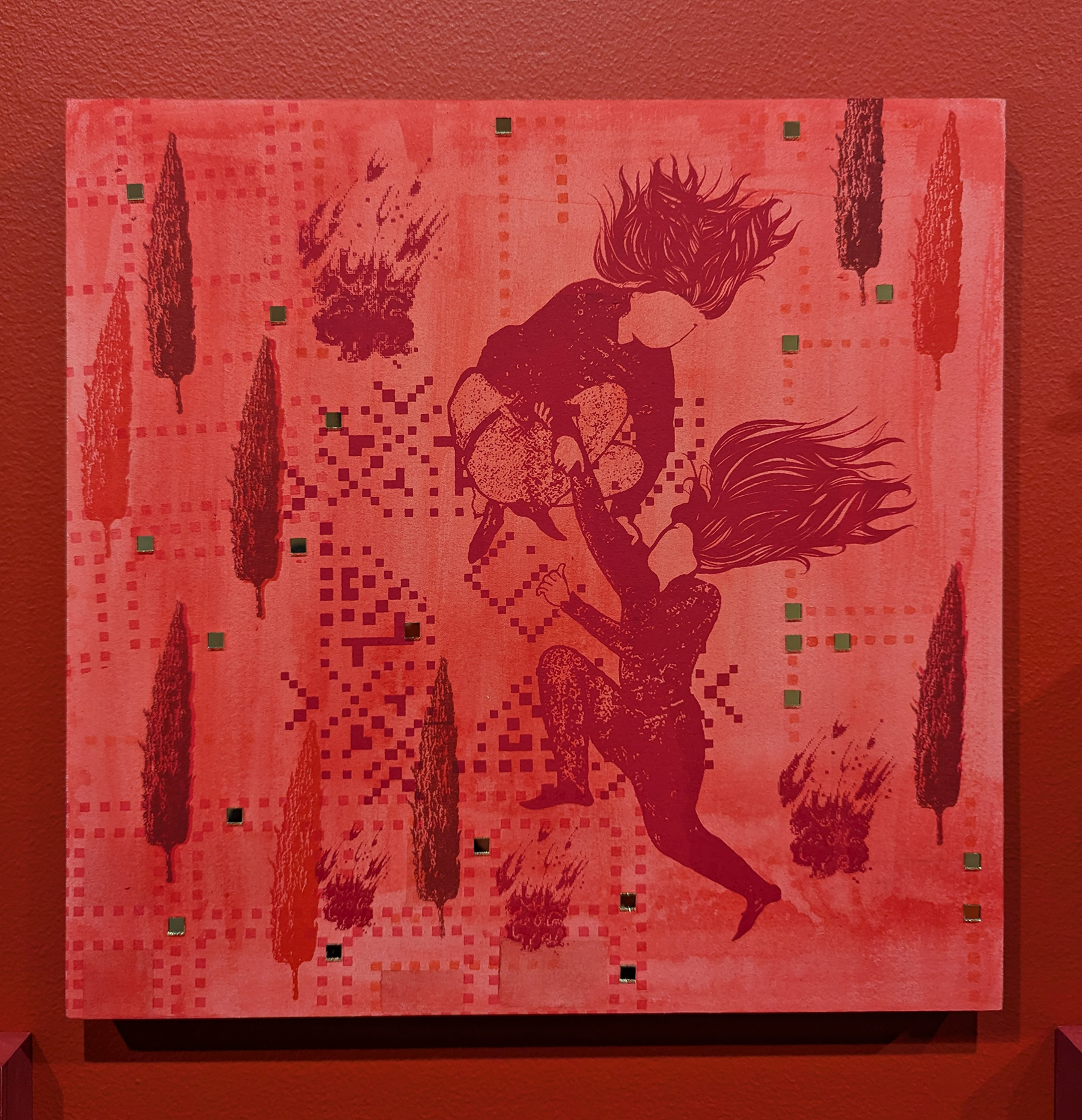
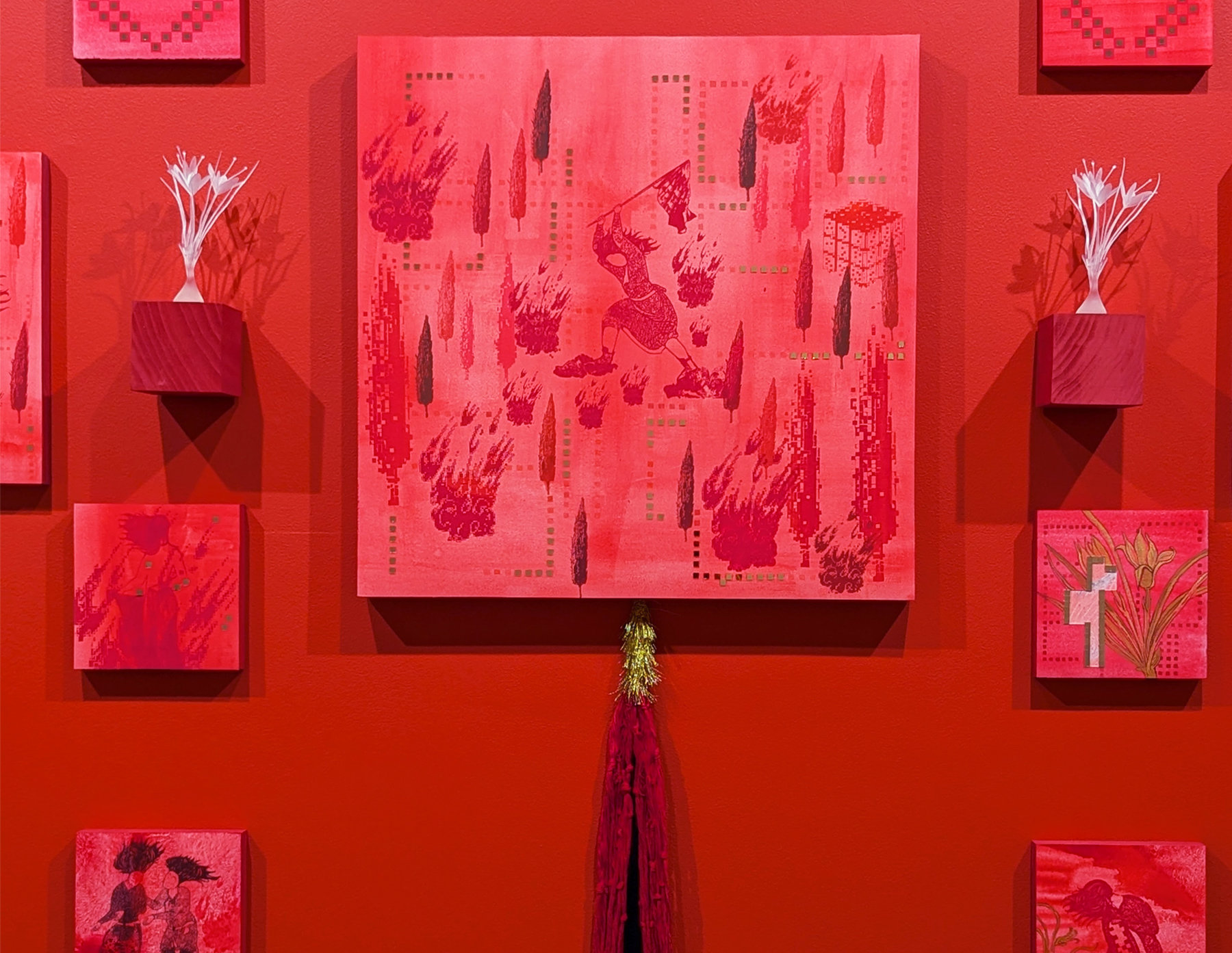
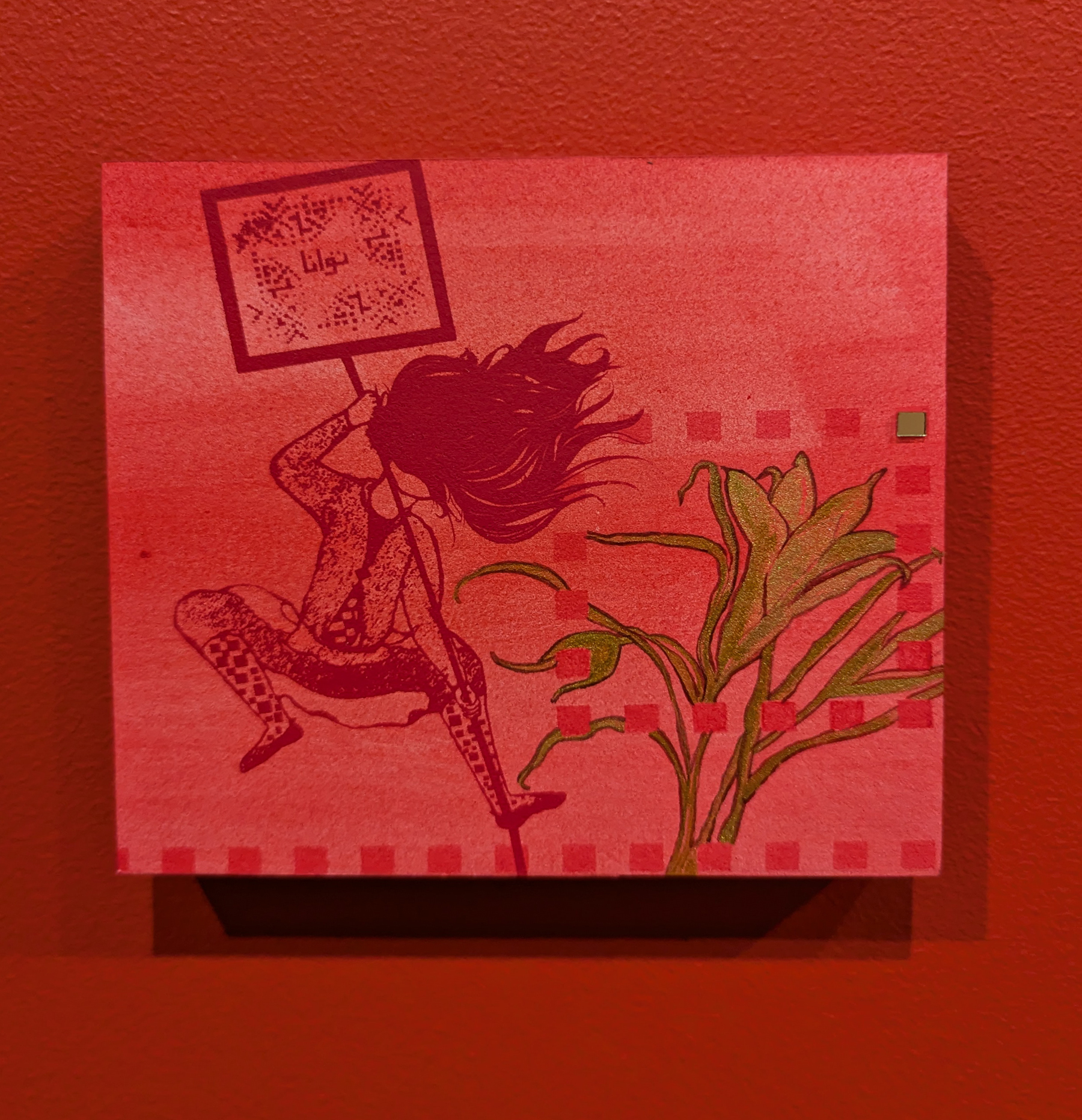
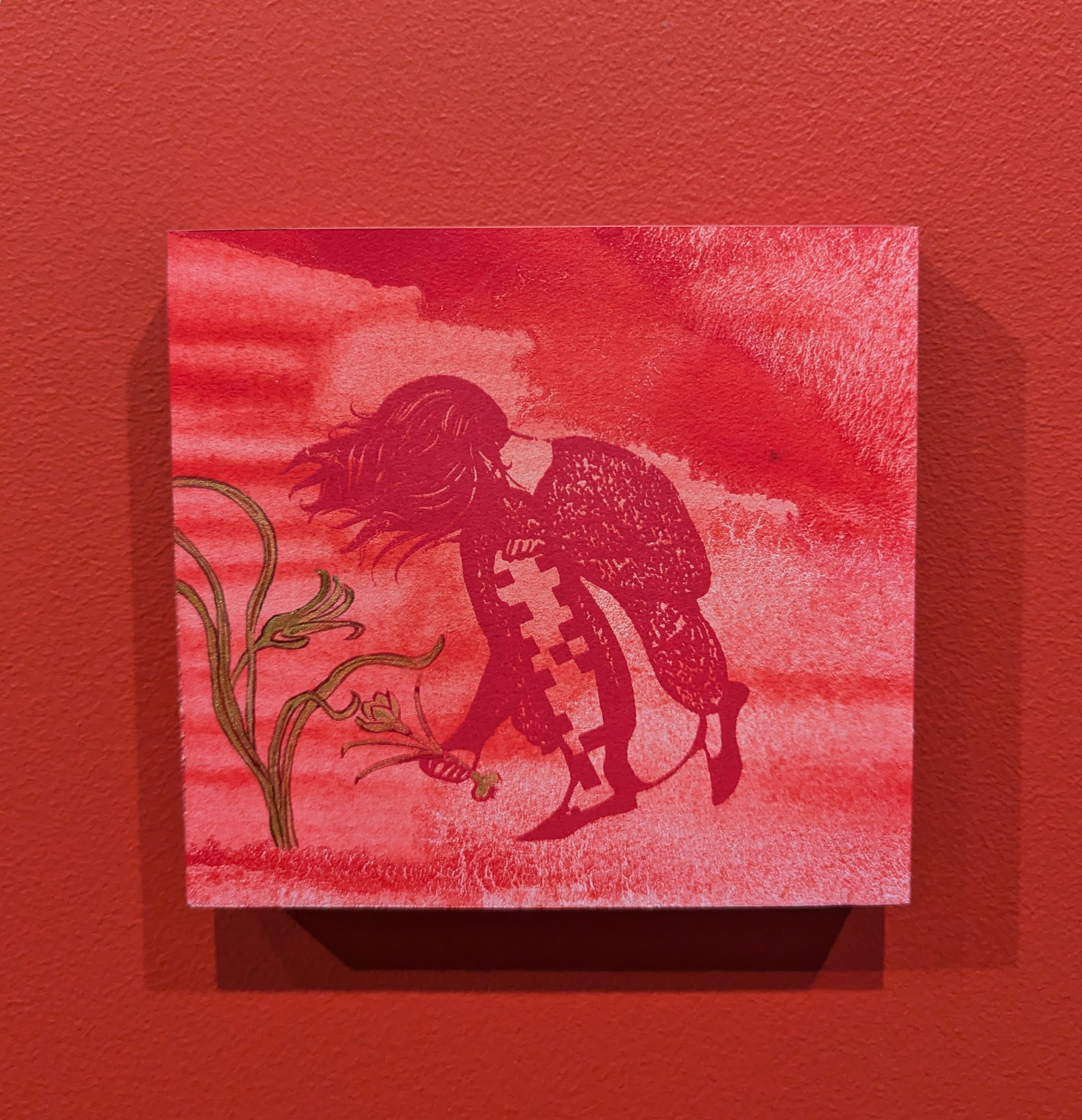
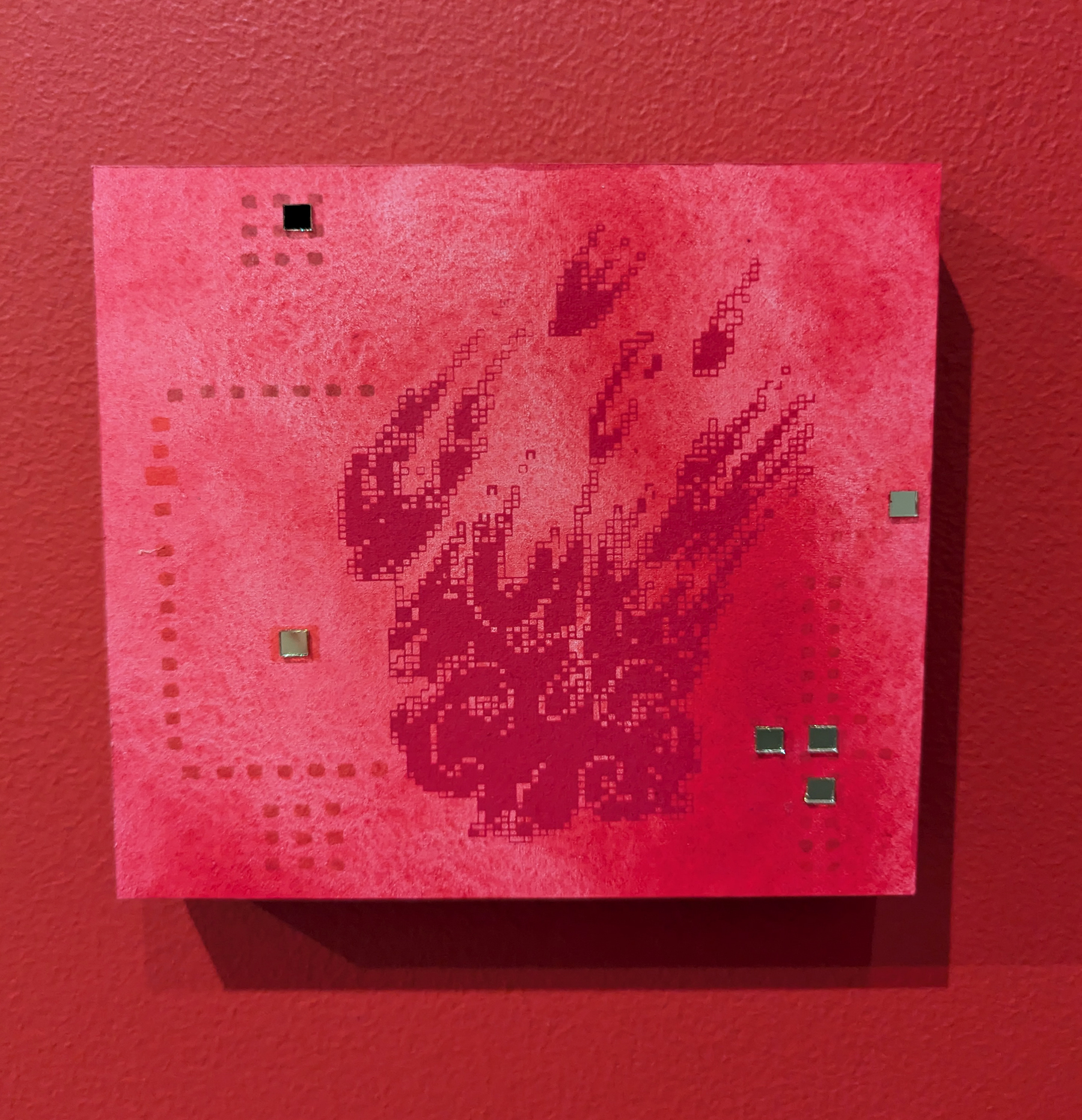
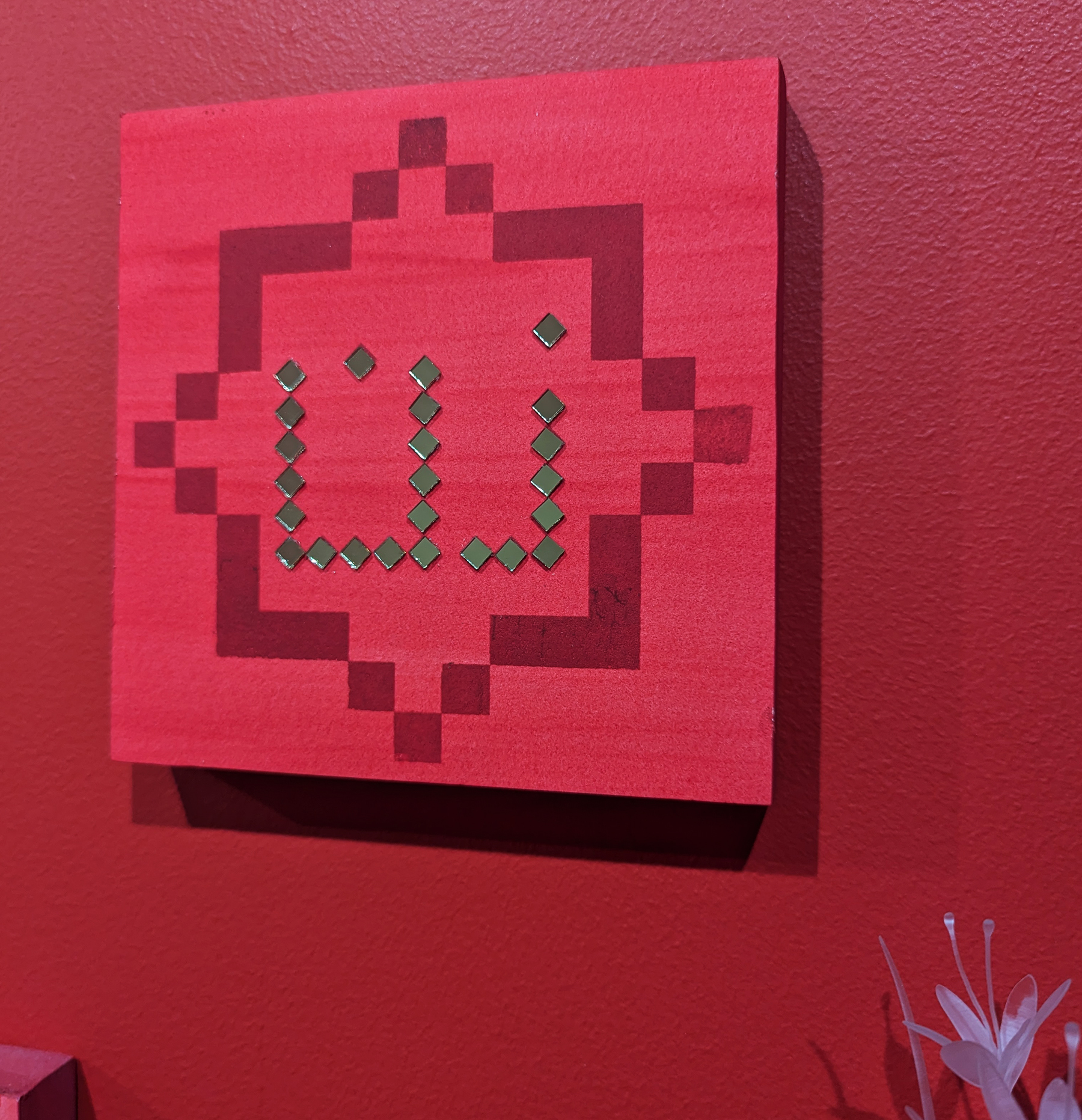
In this multimedia installation, I transform the garden—a place traditionally associated with serenity—into a site of tension using the color red and surveillance. The installation comprises thirty-seven pieces and draws inspiration from the key elements of classical Persian painting, including figures, vegetation, and text. The layout follows a geometric grid reminiscent of Persian garden designs, with vinyl pathways mapped across the floor. Hand-printed text on the wall features the poem by Iranian poet Simin Behbahani (1927–2014), A Line of Speed and Fire (1981). It was written two years after the 1979 Iranian Revolution, during the early years of Iran’s compulsory hijab policy. Visitors sat in the red garden on the bench, listening to the sound of a water fountain, while sensing the unease of being “surveilled” by CCTV cameras.
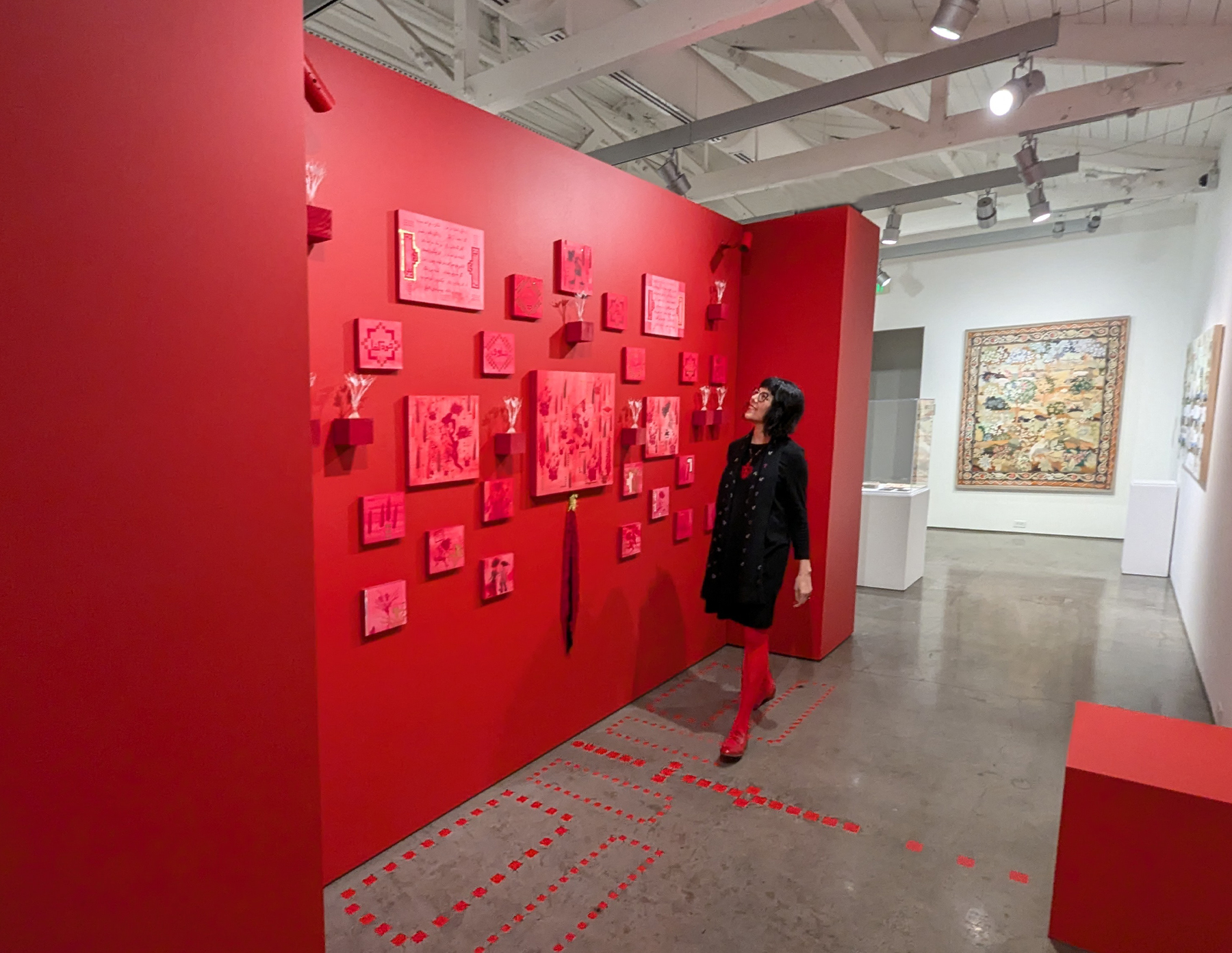
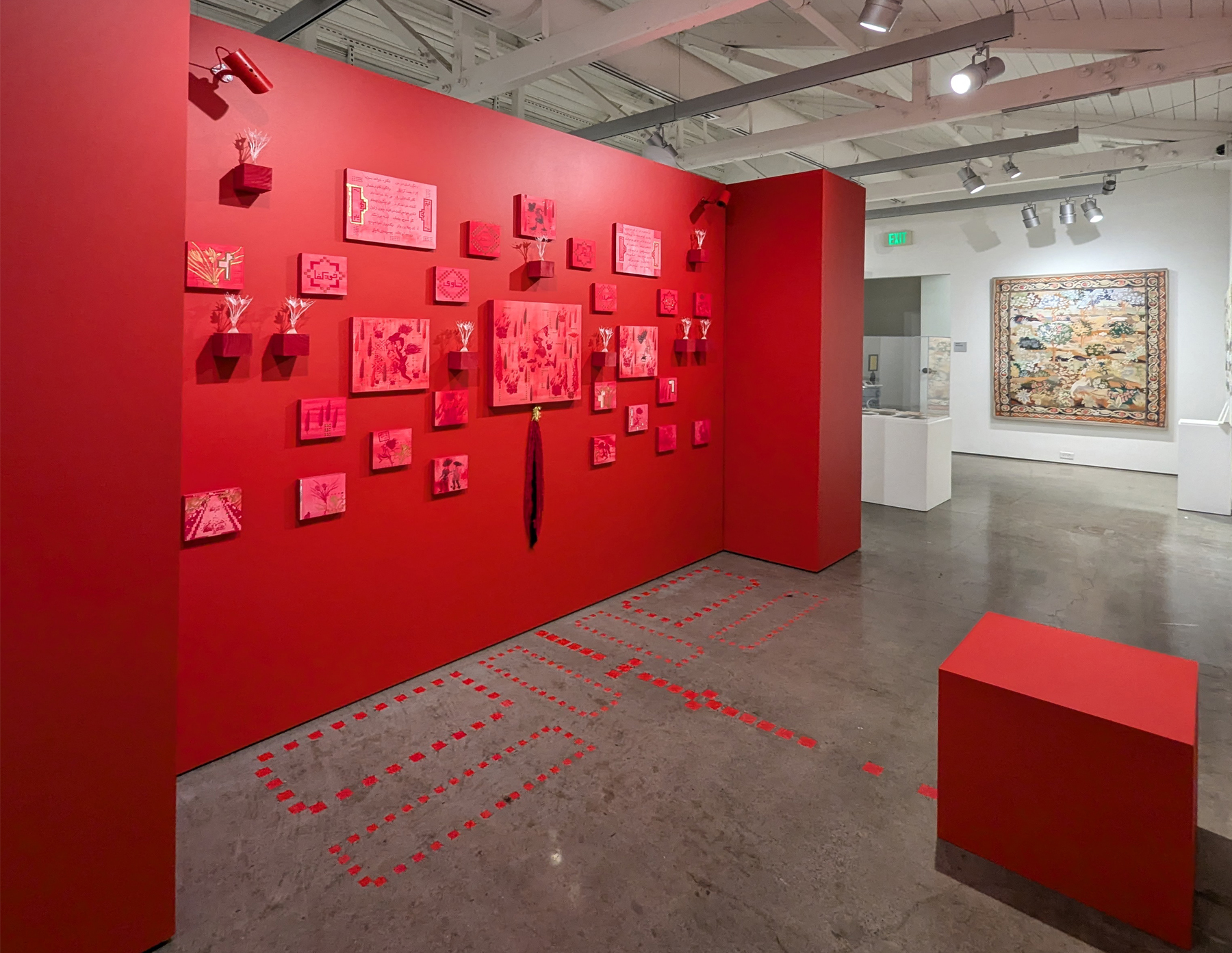
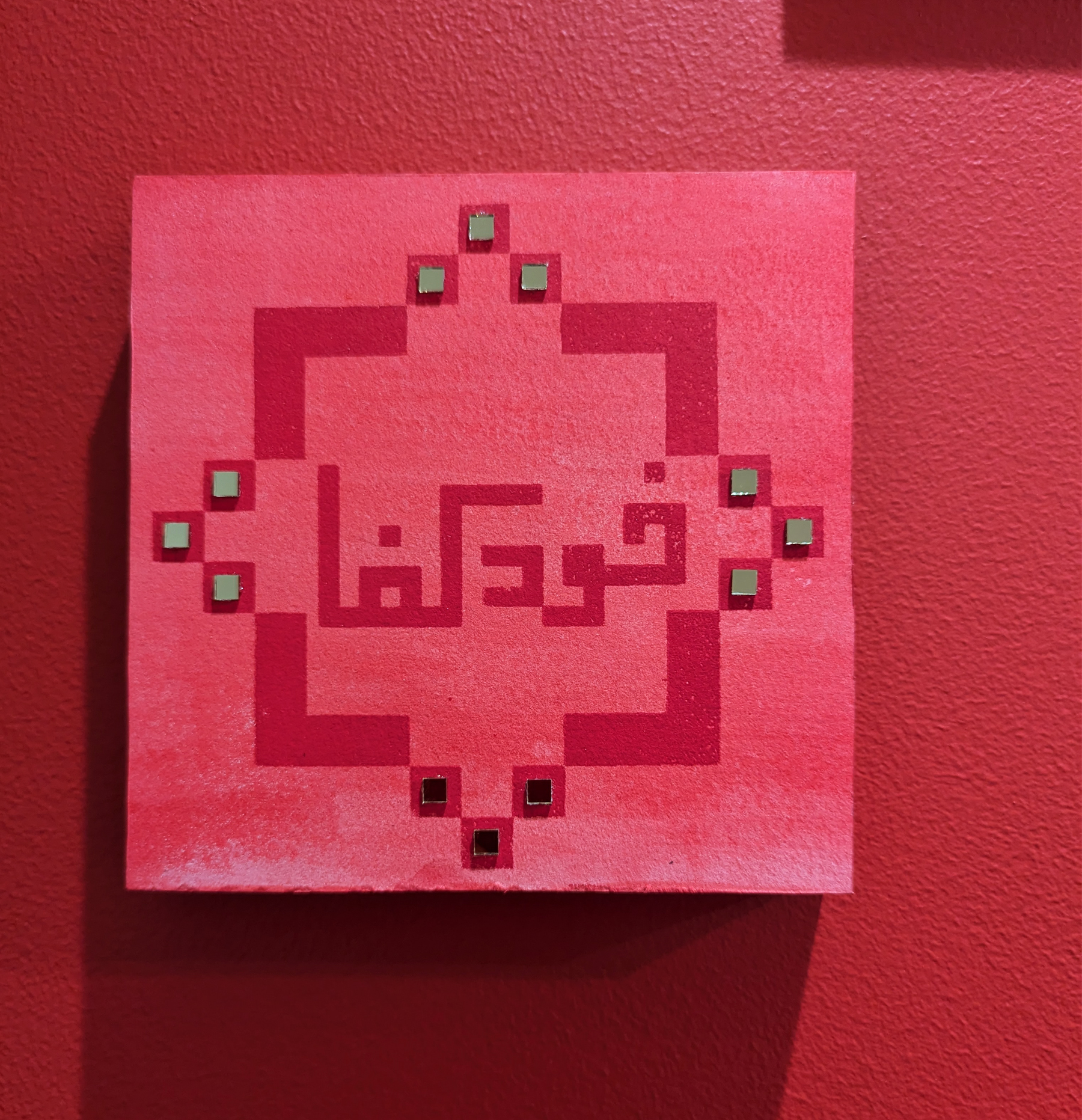
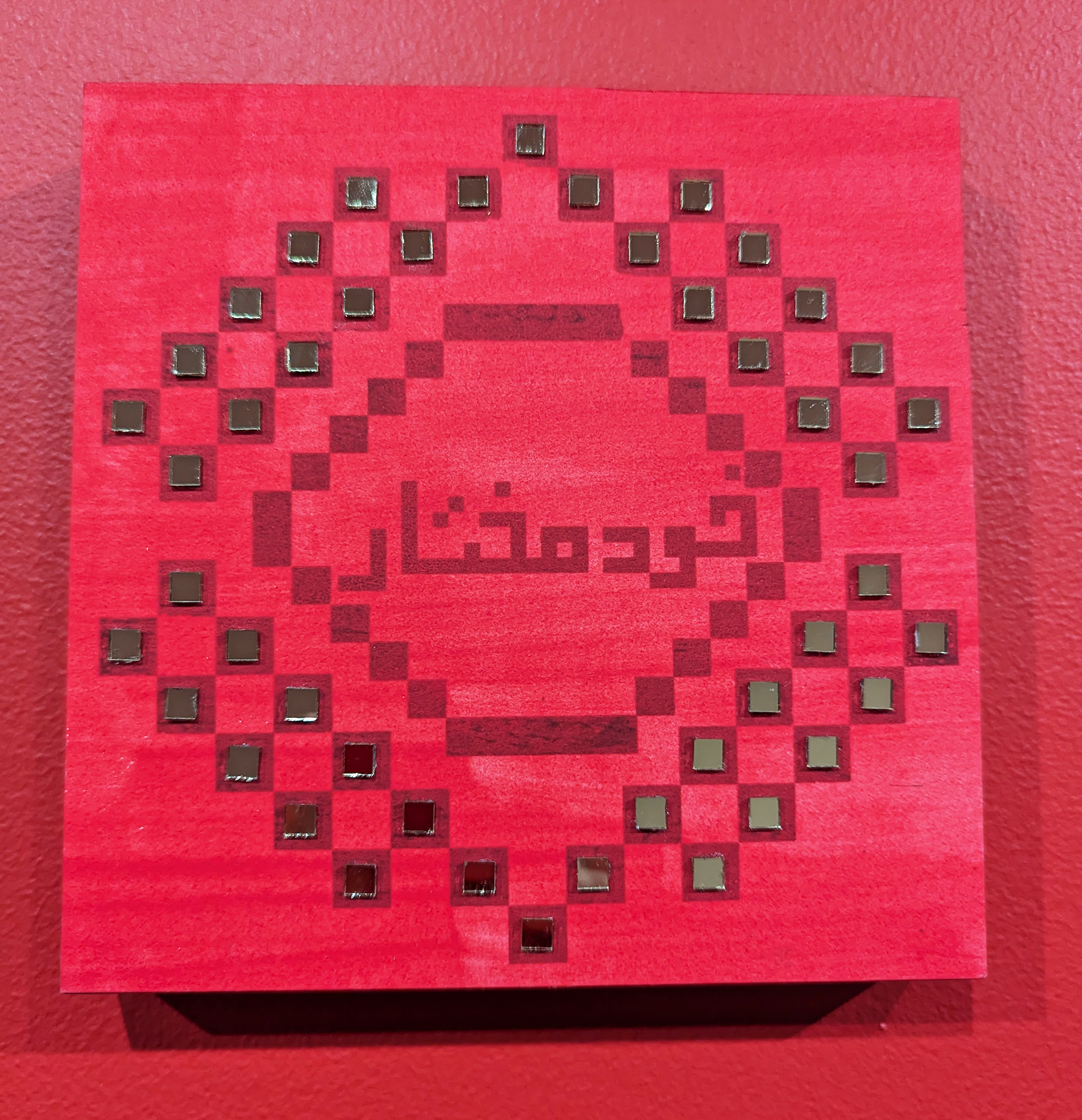
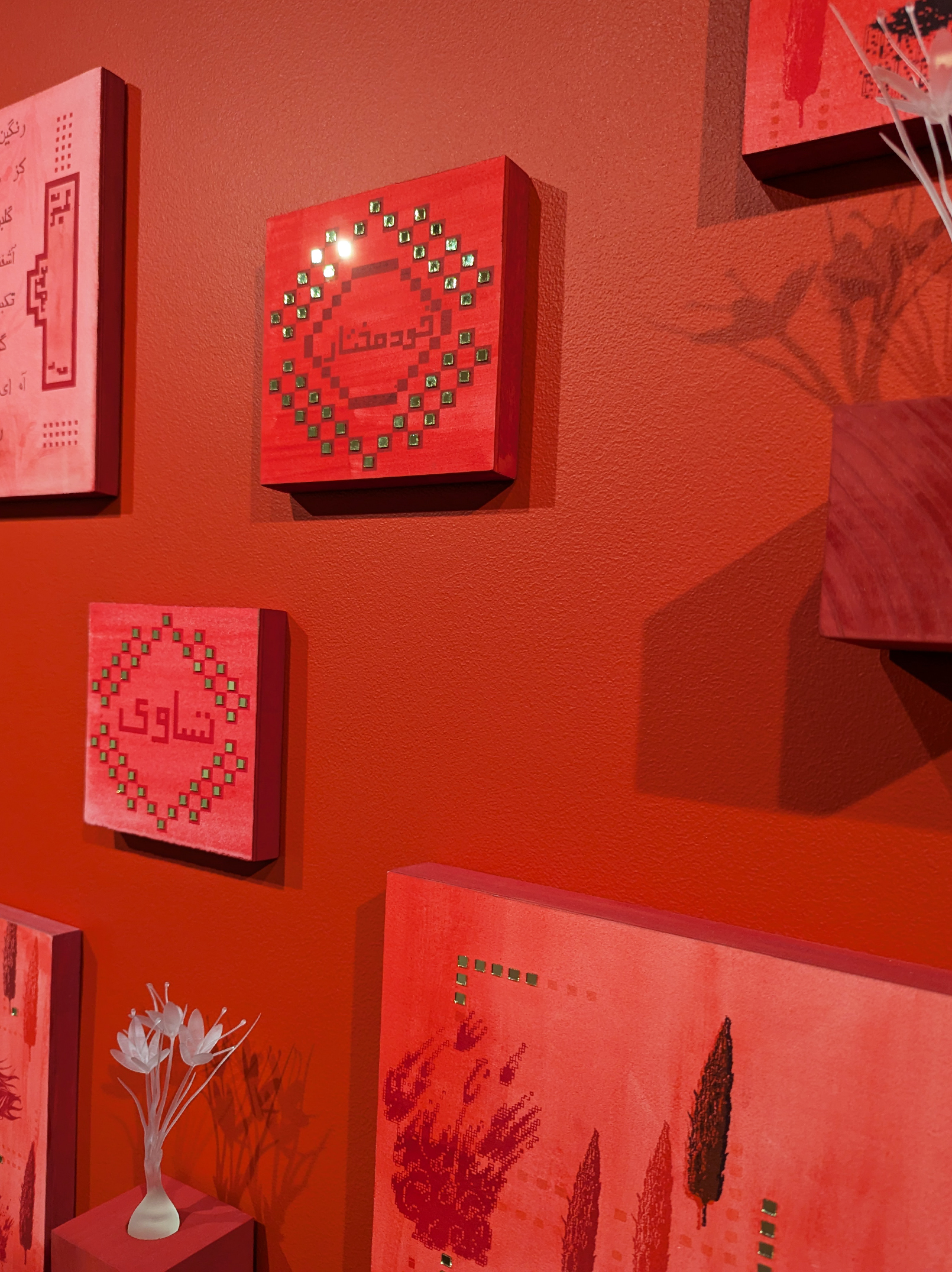
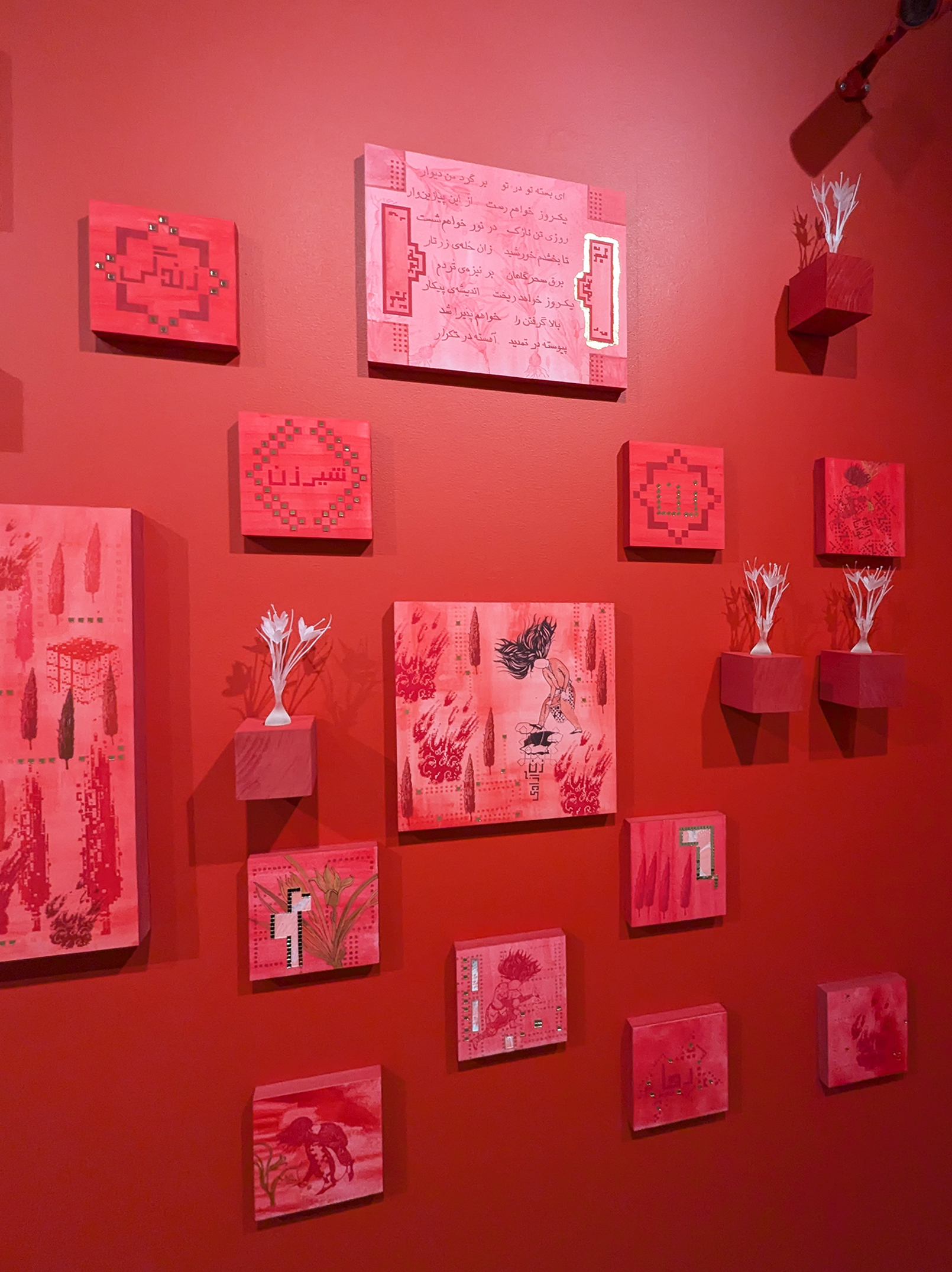


Media and Dimensions:
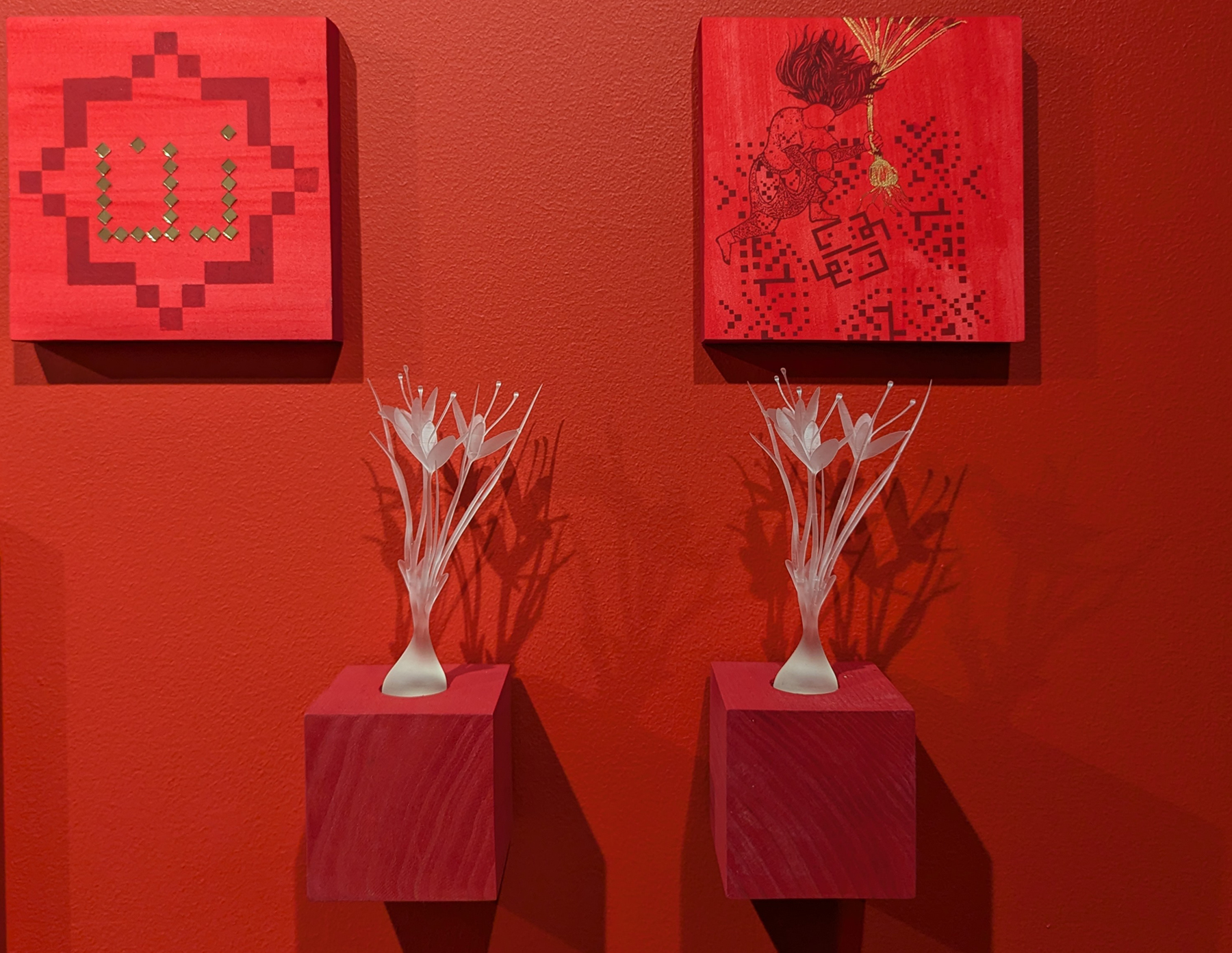
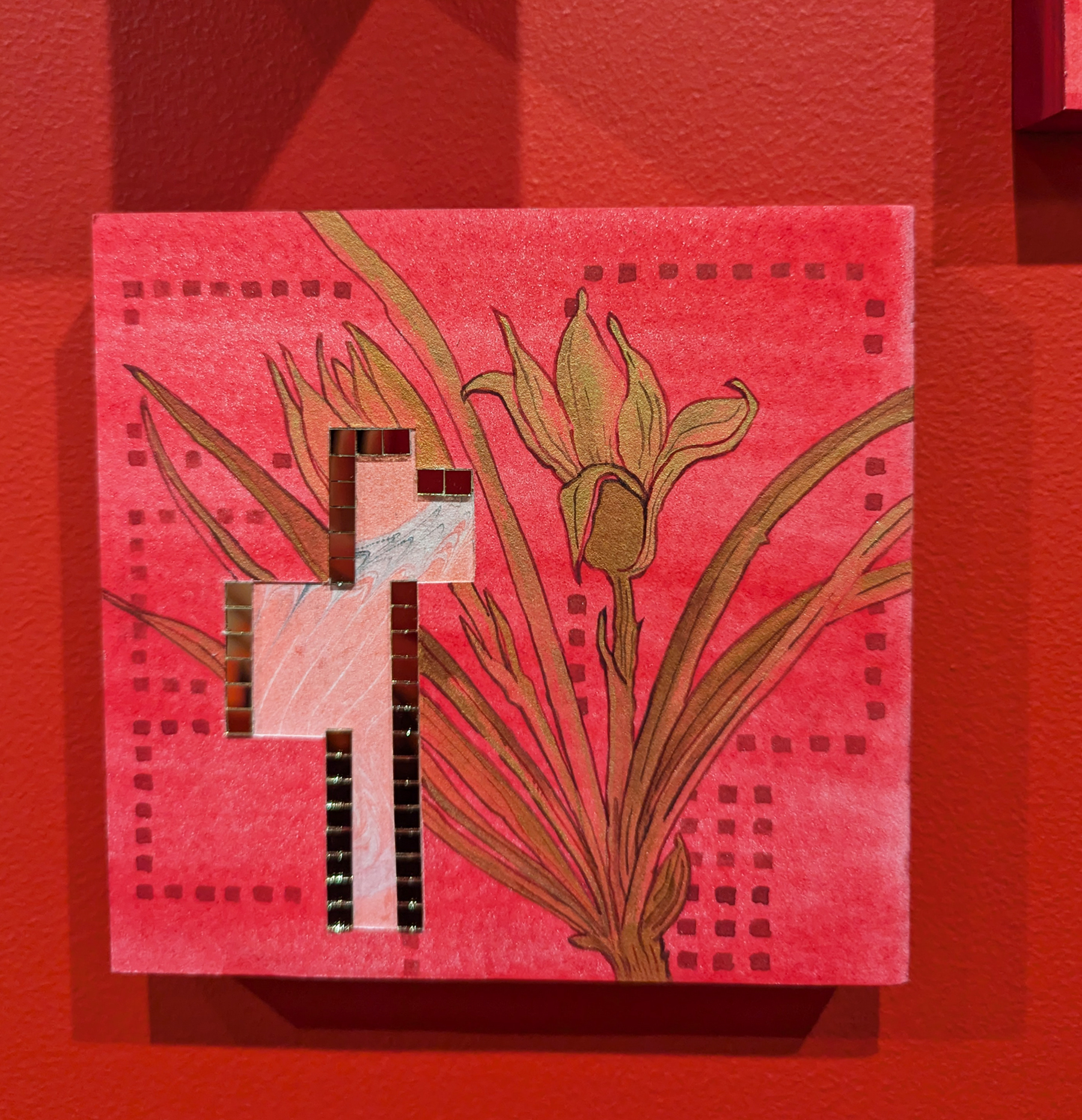
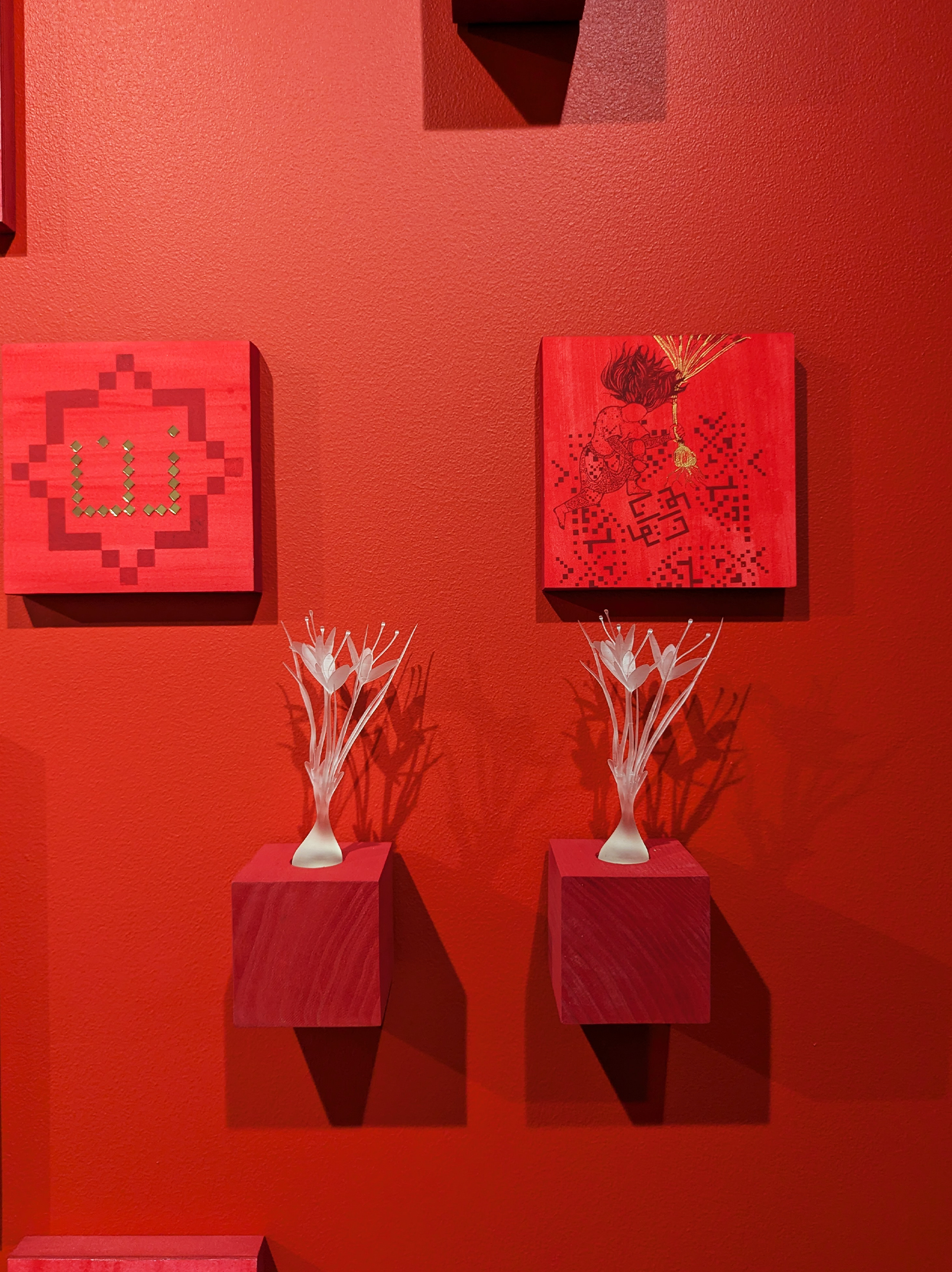
Silkscreen, marbling, gold and red acrylic, watercolor and pixel mirror on hand-colored paper mounted on 26 wooden panels (sizes: 6”×6”, 8”×8”, 12”×12”, 11”x14” and 20”×20”)
1 hand-made tassel: black wool and red silk threads and gold trims (approx. 20.5”x 3.5”)
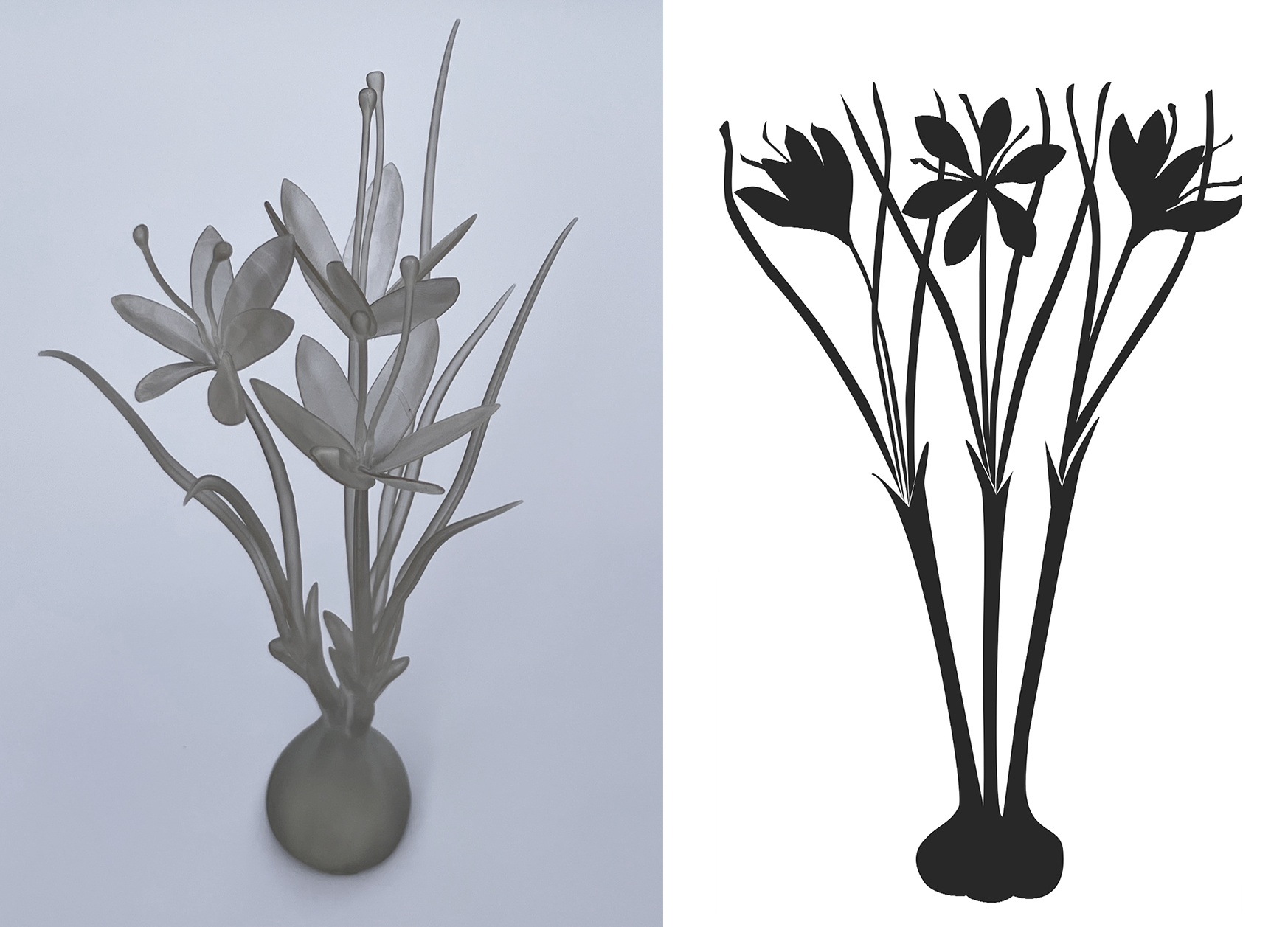
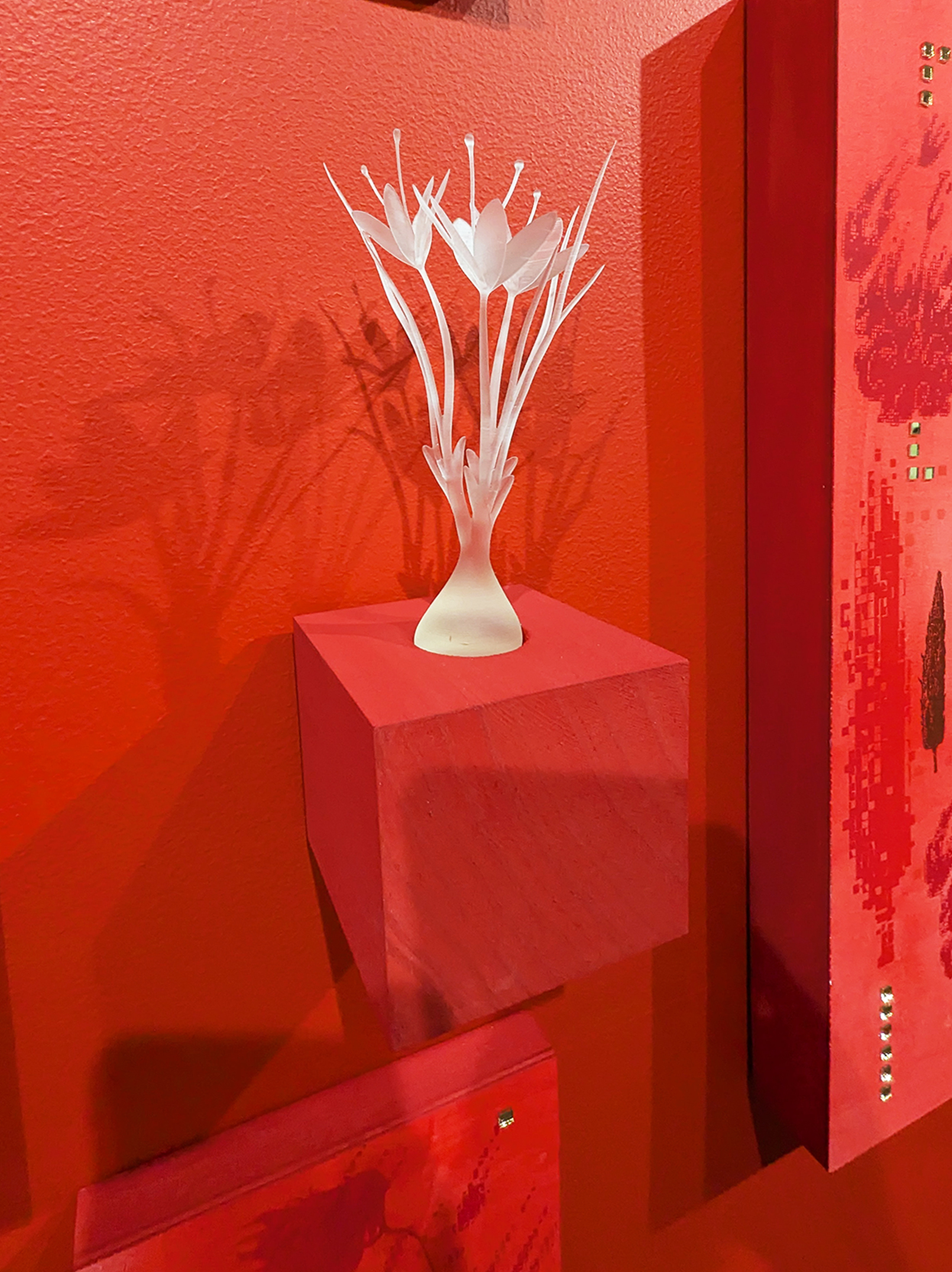
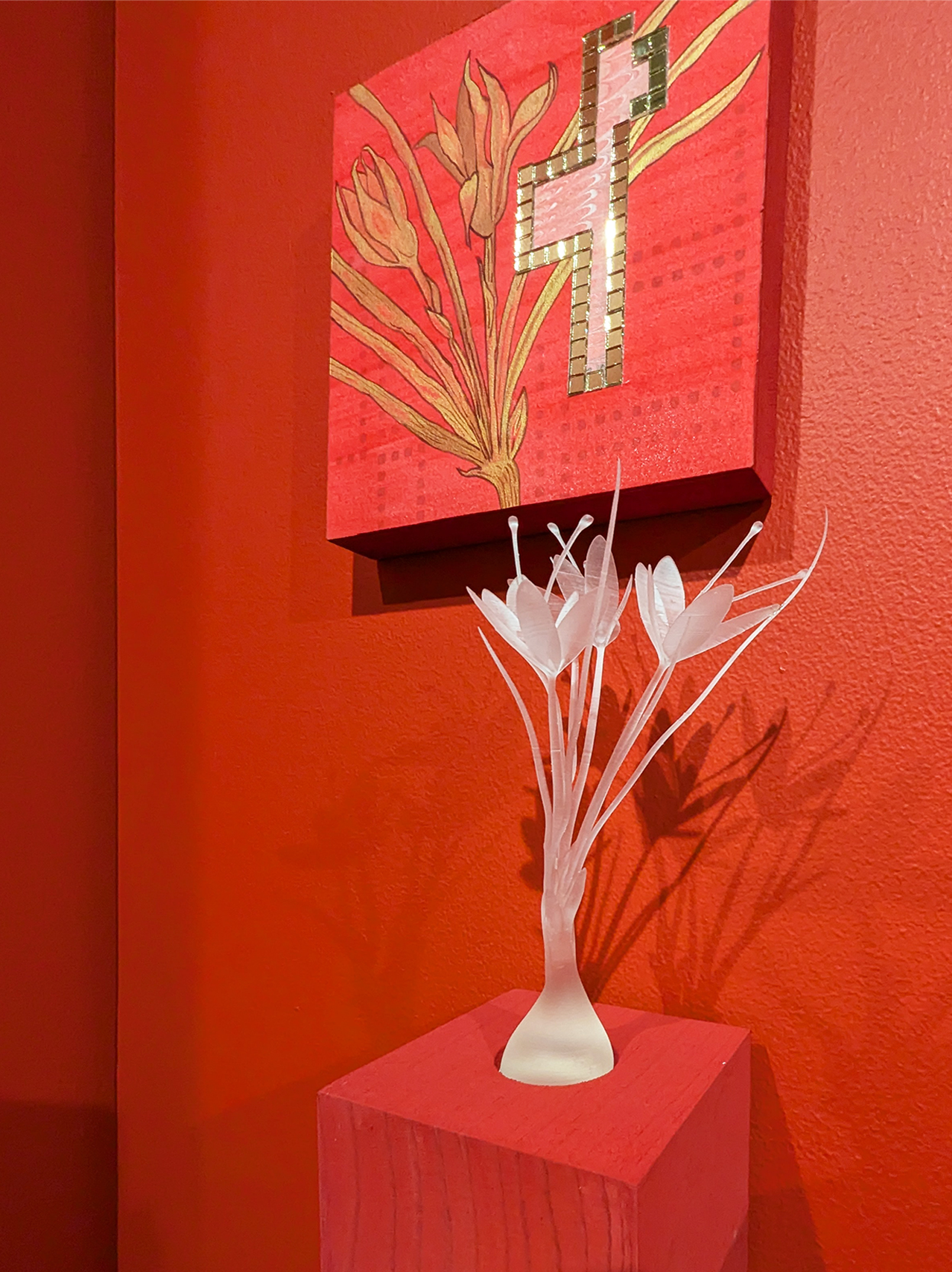
9 saffron crocus 3D printed-sculptures: white filament (each 6”x3”x1”)
9 hand-made cube vases: wood, paint and metal cleat hanger (each 3.15×3.15×3.15”)
2 CCTV cameras (each 3.8” x 9.5”)
1 hand-made cube garden bench: wood and paint (20”×20”×20”)
Garden plan on the floor: pixel vinyl (each pixel 1.5”x1.5”)
A Line of Speed and Fire, 1981, poem by Simin Behbahani (1927-2014). She wrote this poem during the early days of Iran’s compulsory hijab policy
Translated into English in 2024 by Hamid Karimi
Confined in a sweatbox, surrounded by the walls
One day, the falling walls will give me free rein
One day, I will bathe in light
& the sun will clothe me in radiant gold
Glimpse of sunrise reflects off my spear
Calling me to the battle at dawn
I will rise in slow accession
Steadily stern, repeatedly rhythmic
One day, a rainbow will manifest in me
Adorning my face in seven colors
I impart the blue petals to the air
Delivering my silk scarf to the wind
I shall chant in the mountains
like Iris calling upon the morning to come
One day I will witness my accession
As the rotten will wither away
Inspiration and Research
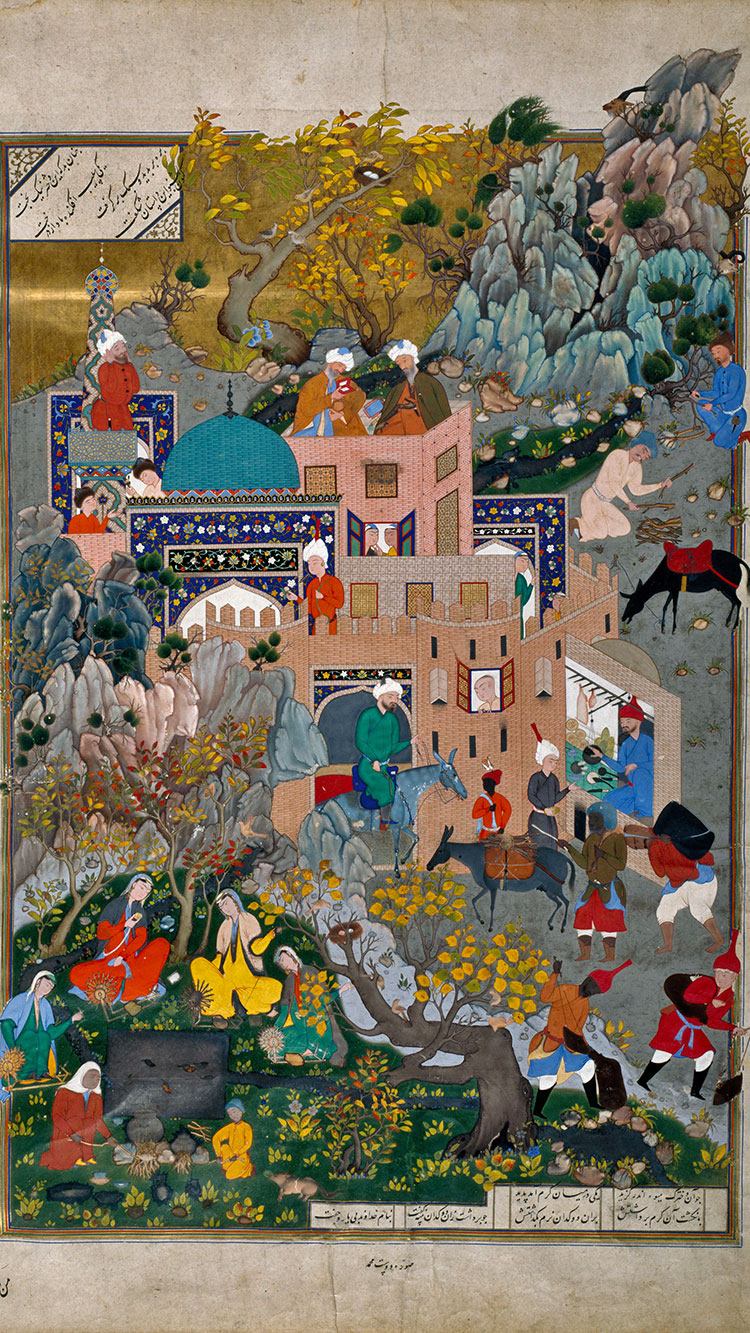
Why Female Characters from Late Medieval Persian Paintings? Artist Judy Chicago in an interview with Lucy Lippard in May 2001 said: “It took a hundred years before there was sufficient interest in Mary Cassatt’s work to mount a major retrospective. Imagine what it would have meant to us in terms of our understanding of women’s esthetic achievements if we had been able to see and study Mary Cassatt’s sixty-five-foot mural from the 1893 Women’s Building, portraying women passing down the fruits of knowledge to their daughters- probably the first major feminist work of art, actually, or woman-centered work of art. The fact that it was lost to history allowed Mary Cassatt to be portrayed as Degas’s student. Its presence would have posed a constant challenge to that idea. These losses have to stop. And women can stop them.”
Similarly, what if these historic Persian paintings, constructed by male artists in various Iranian dynasties, portrayed women in active and powerful roles? I challenge the representation of women in these historical paintings with the intention of normalizing powerful images and depictions of females in art today.
Why garden scenes? A section of my work revolves around medicinal botany, specifically saffron crocus. As a child, I regularly explored the public botanical gardens in Shiraz, Iran with my grandmother who firmly believed in the healing powers of herbal medicine and the importance of staying connected to the natural world. Public gardens are unique spaces that involve people, plants, and animals, offering a democratic space for all beings. Historic gardens’ layouts typically follow a geometric quadripartite structure with a focal water feature, connecting aqueducts, and surrounding trees and flowers, along with the strategic placement of pavilions in the center with a vista. Water is crucial for its soothing sound, ornamentation as well as irrigation. In Persian gardens, the pavilions and fountains are decorated with mirror works, and geometric or foliage ceramic tiles, creating a harmonious blend with their surroundings. Traditionally, Persian gardens were designed as private spaces that also served political and work-related functions, such as entertaining ambassadors.
These historic gardens are representative of diverse and complex architectural, cultural, and, contrastingly, political environments, offering the potential to explore them beyond their opulent visual aesthetics and healing qualities.
Built during the medieval period and expanded in the 19th century, Eram is one of Iran’s nine UNESCO World Heritage gardens.
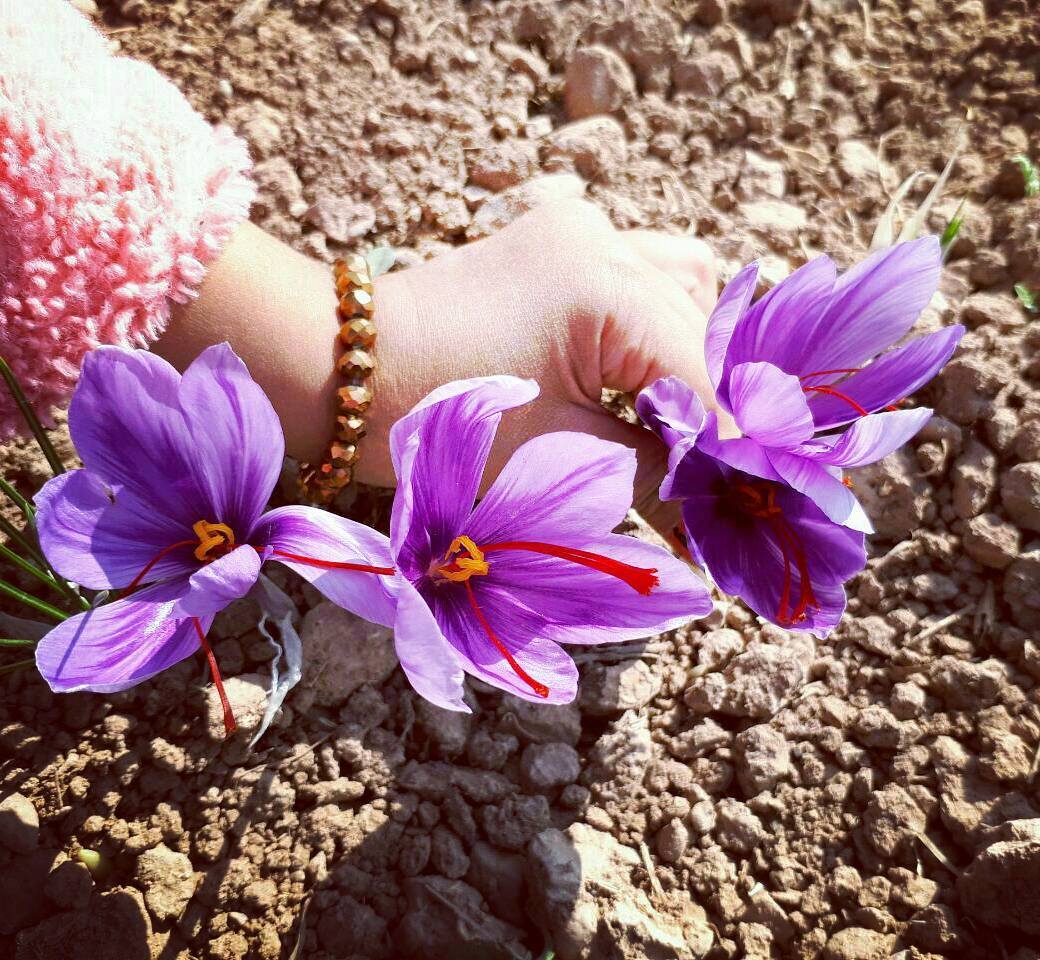
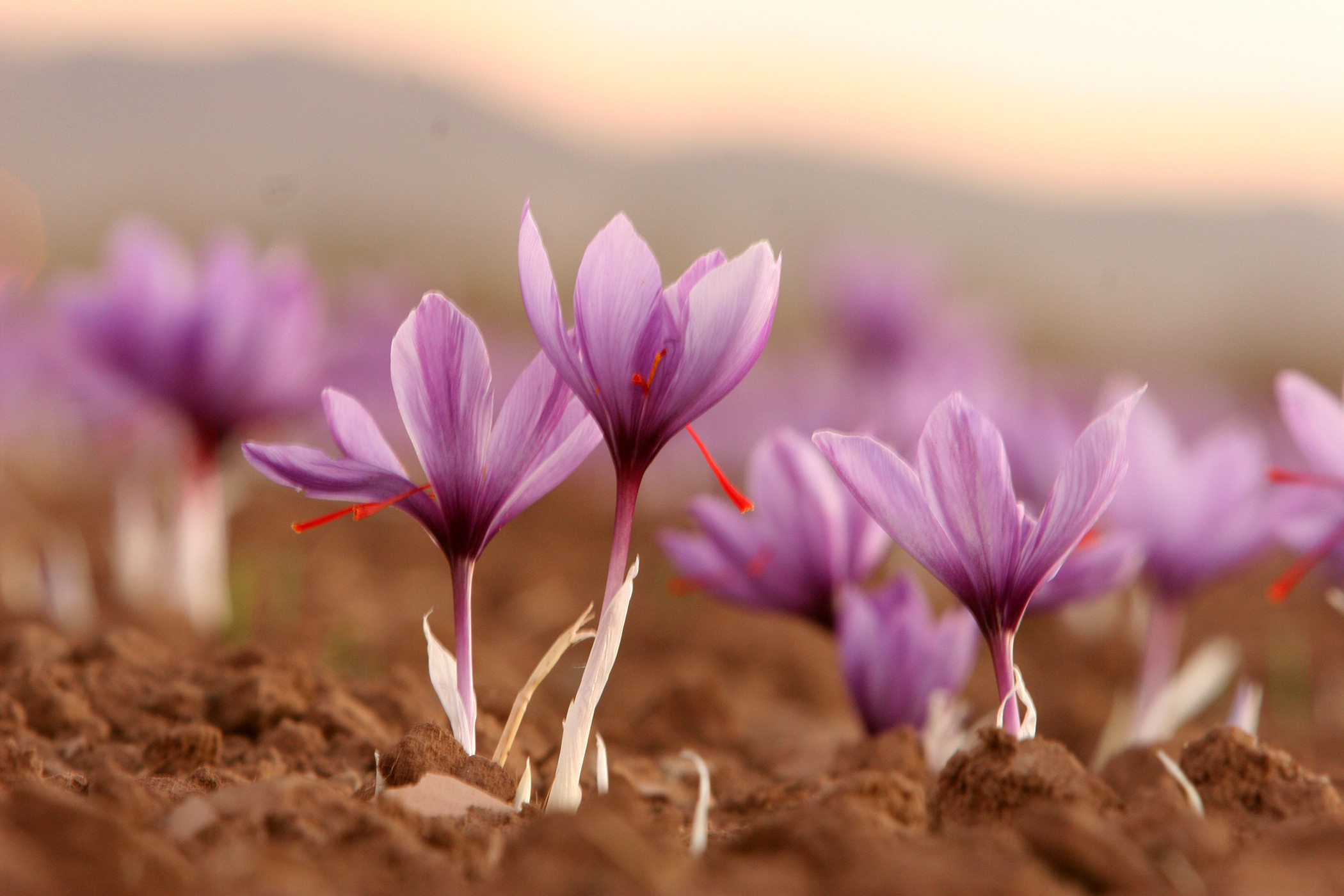
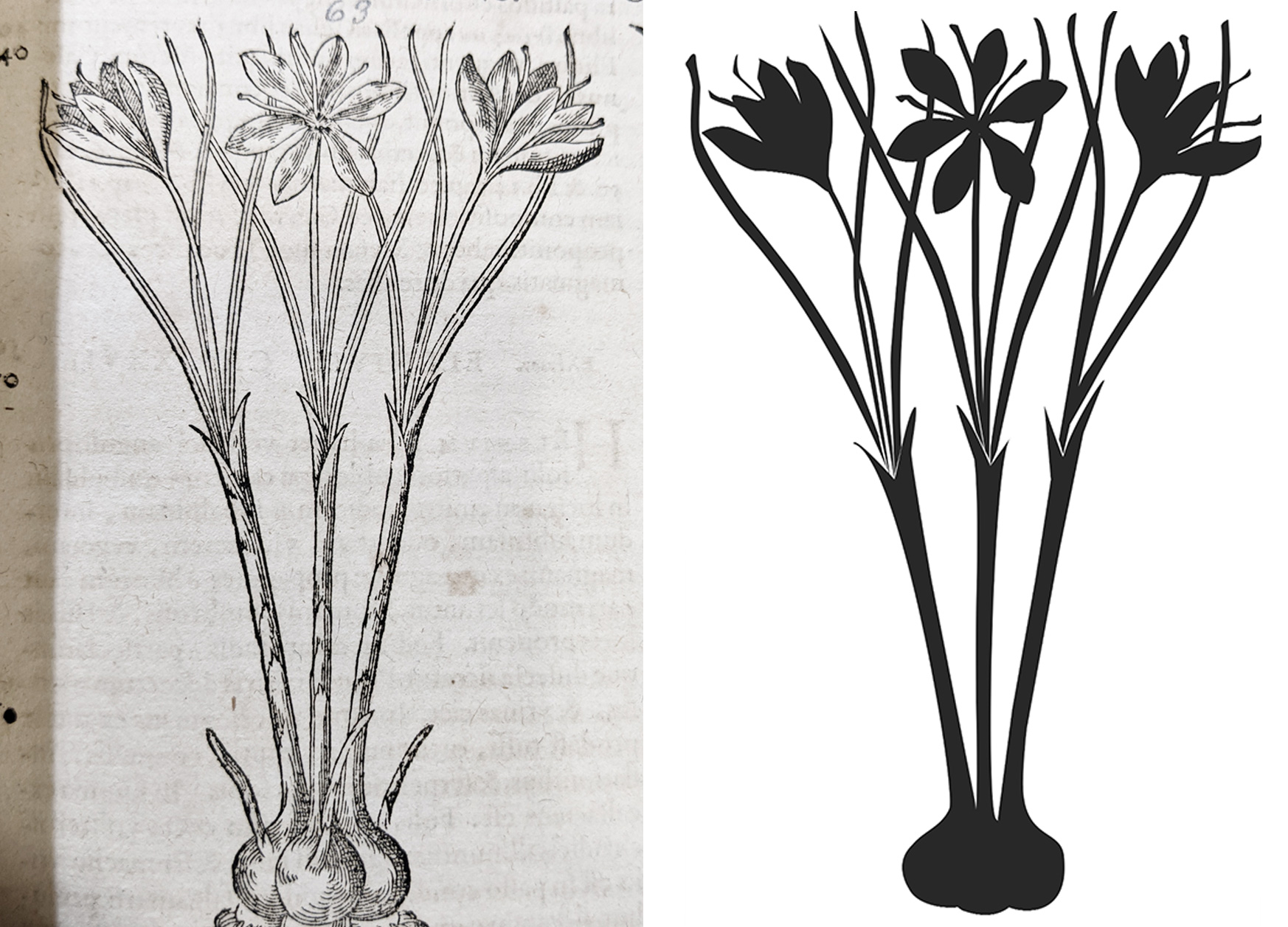
Why Saffron Crocus? Iran cultivates and produces the majority of the world’s saffron crocus and saffron spice, a medicinal plant that has healing properties. Production of 1 kilogram of saffron spice, requires handpicking 150,000 crocus flowers. The labor-intensive harvesting process is mainly done by women, for three weeks, in the late cold fall season in Iran’s northeast each year. Iranian saffron farmers struggle due to suffocating economic sanctions, endemic drought from global warming, and increasing shipping and labor costs. I use saffron as a metaphor for cultural and contemporary economic and agricultural challenges, convolved with ongoing political issues under the theocracy in Iran. The 3-D saffron crocus sculptures included in the installation were manufactured in collaboration with the UCSF Library Makers Lab in the Spring of 2024. The saffron crocus sculptures in hand-made cube vases are modeled after the depiction of the saffron crocus from a 16th-century medicinal botanical book preserved in the UCSF Library’s collection.
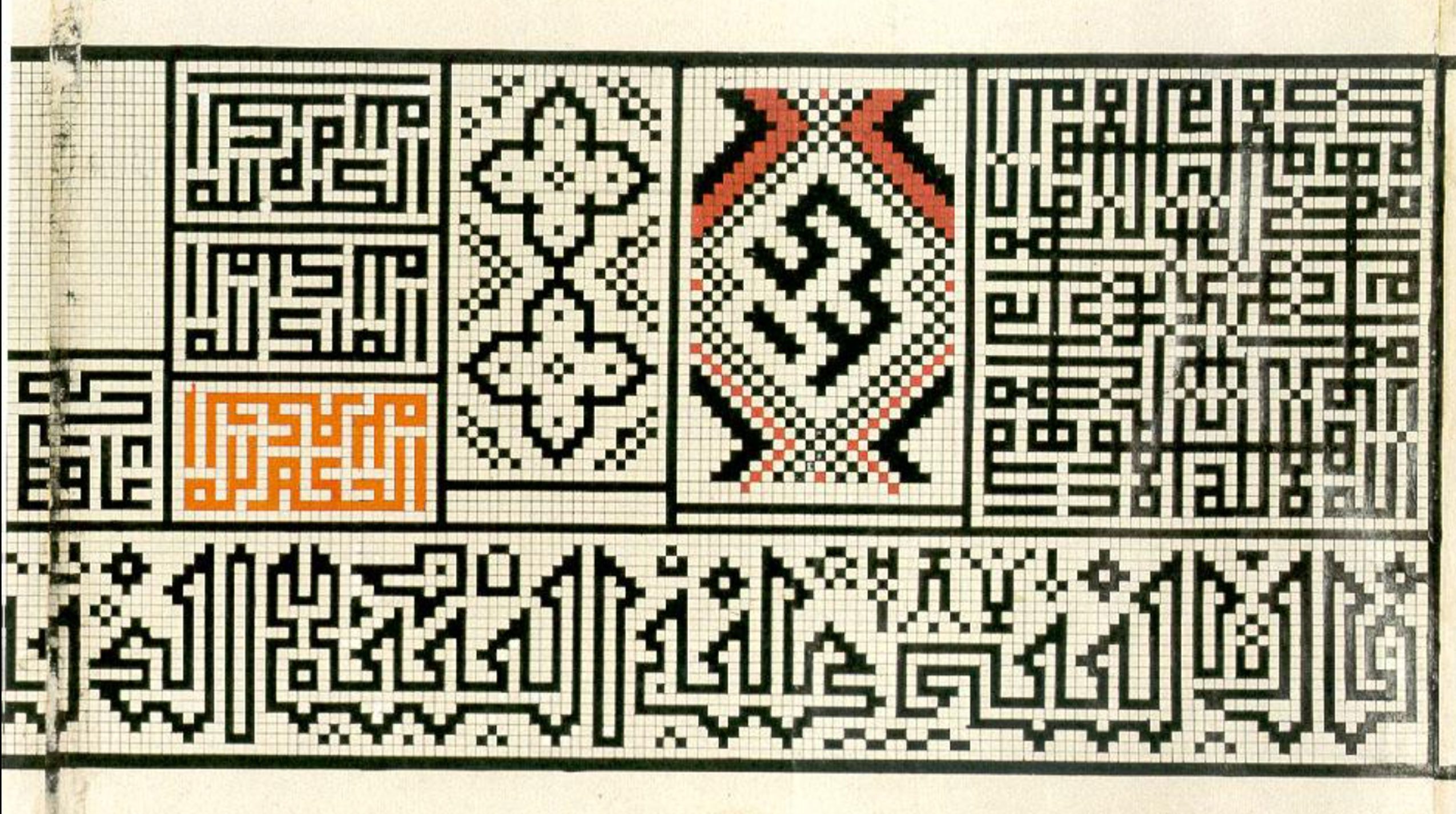
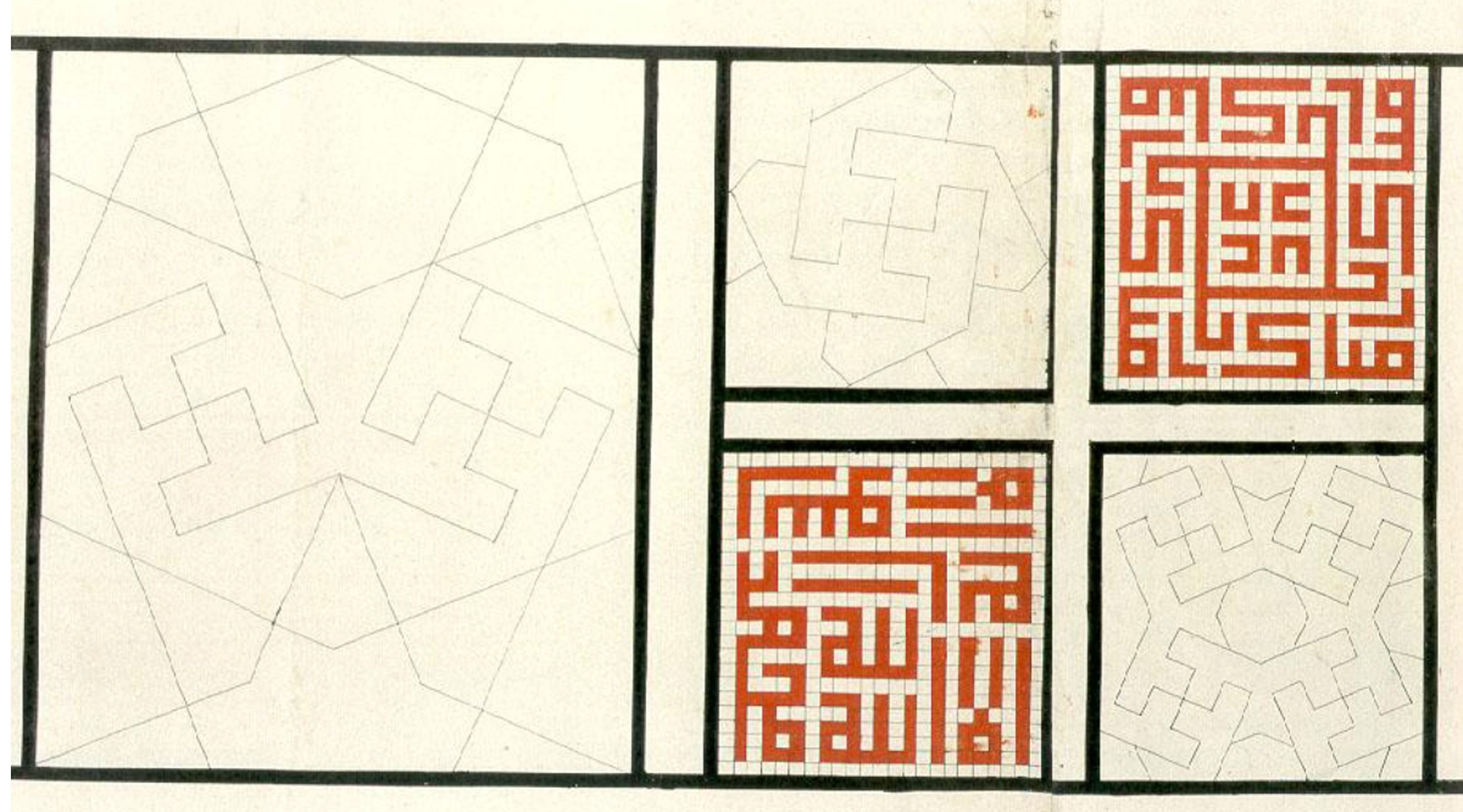
Why Pixelated Elements? The tile design was inspired by those found in the Topkapı scroll, a late medieval Iranian document that compiled 114 architectural geometric patterns and tiles composed of Square Kufic scripts, housed at the Topkapı Palace in Istanbul, Türkiye. Starting in the 12th century, these tiles were composed of small square pieces (pixels) used to create intricate religious words in Kufic script, and motifs such as eight and twelve-pointed stars, on the domes, minarets, or facades of buildings using ceramic tiles. Pixels and grids are also prominent in Iranian crafts and carpet weaving. The unity achieved through these micro pixels, piece by piece, has formed magical macro images of the universe on buildings using ceramic tiles and images of Persian gardens on carpets using wool or silk. I use these word-tiles to facilitate powerful denotation and connotation beyond their harmonic visuals and I continue to repurpose them in my works.
I decorate some of my tiles and images using pixel mirrors as a reference to the Iranian mirrorwork (Āina-kāri), where geometric, calligraphic, or foliage forms adorn buildings using cut mirrors and create a sense of awe and divinity.
I use the cube to represent a three-dimensional pixel with which I imbue multifaceted significance, encompassing philosophy, geometry, and religion. Cube symbolizes a wide range of meanings, reflecting the complexity of form and our associations with it. In the philosophy of Plato, the cube is a Platonic solid that represents the earth. For me, the cube is also a reminder of the Kaaba (the Muslim holy site).